Results by title

6 books match the query 'Healthy Living'
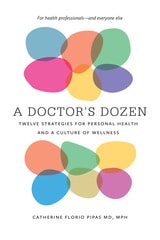
cover of A Doctor's Dozen: Twelve Strategies for Personal Health and a Culture of Wellness

A Doctor's Dozen

Twelve Strategies for Personal Health and a Culture of Wellness

Catherine Florio Pipas

Dartmouth College Press, 2018

Burnout affects a third of our population and over half of our health professionals. For the second group, the impact is magnified, as consequences play out not only on a personal level, but also on a societal level and lead to medical errors, suboptimal care, low levels of patient satisfaction, and poor clinical outcomes. Achieving wellbeing requires strategies for change. In this book, Dr. Pipas shares twelve lessons and strategies for improved health that she has learned from patients, students, and colleagues over her twenty years working as a family physician. Each lesson is based on observation and research, and begins with a story of an exemplary patient whose challenges and successes reflect the theme of the lesson. Along with the lessons, the author offers plans for action, which taken together create the framework for a healthy life. Each lesson concludes with resources and a “health challenge.”
[more]
cover of More Fire: How to Run the Kenyan Way

More Fire

How to Run the Kenyan Way

Toby Tanser

Westholme Publishing, 2008

An Essential Book for Runners of All Abilities
All of the Author’s Proceeds Go to Shoes4Africa to Support the Construction of Children’s Hospitals in Kenya

Kenya has produced the greatest concentration of world-class runners, and fellow athletes have long been intrigued by their remarkable success. Toby Tanser has devoted much of his professional career living and training among Kenyan runners in order to better understand the unique status of East African athletes. In More Fire: How to Run the Kenyan Way, the author builds upon the success of his acclaimed Train Hard, Win Easy, the first book to provide insights into the Kenyan "magic" that so many runners and coaches had sought. Instead of special foods or secret techniques, Tanser found that Kenyan runners simply trained incredibly hard, much harder than anyone had realized. By adapting their training regime—which includes three workouts a day—and following their example, runners, whether novices or champions, are able to improve both their performance and enjoyment in running. For those training for a marathon or any other distance race, this book is both practical and inspirational.

Divided into four parts, the book begins with a description of running in Kenya, the landscape, the physical conditions, and the people; the second part concentrates on details of Kenyan training camps, training methods, and their typical training diet; the third profiles individual runners and coaches from the past and present, with each explaining their approach to running so that readers can gain further insight into their methods. The book ends with a discussion on how the reader can adapt Kenyan training practices for their own running requirements. More Fire: How to Run the Kenyan Way is essential reading for runners of all levels and experience.
[more]
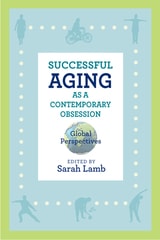
cover of Successful Aging as a Contemporary Obsession: Global Perspectives

Successful Aging as a Contemporary Obsession

Global Perspectives

Lamb, Sarah

Rutgers University Press, 2017

In recent decades, the North American public has pursued an inspirational vision of successful aging—striving through medical technique and individual effort to eradicate the declines, vulnerabilities, and dependencies previously commonly associated with old age. On the face of it, this bold new vision of successful, healthy, and active aging is highly appealing. But it also rests on a deep cultural discomfort with aging and being old.
 
The contributors to Successful Aging as a Contemporary Obsession explore how the successful aging movement is playing out across five continents. Their chapters investigate a variety of people, including Catholic nuns in the United States; Hindu ashram dwellers; older American women seeking plastic surgery; aging African-American lesbians and gay men in the District of Columbia; Chicago home health care workers and their aging clients; Mexican men foregoing Viagra; dementia and Alzheimer sufferers in the United States and Brazil; and aging policies in Denmark, Poland, India, China, Japan, and Uganda. This book offers a fresh look at a major cultural and public health movement of our time, questioning what has become for many a taken-for-granted goal—aging in a way that almost denies aging itself.
 
[more]
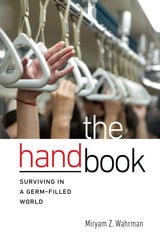
cover of The Hand Book: Surviving in a Germ-Filled World

The Hand Book

Surviving in a Germ-Filled World

Miryam Z. Wahrman

Brandeis University Press, 2016
Handwashing, as part of basic hygiene, is a no-brainer. Whenever there’s an outbreak of a contagious disease, we are advised that the first line of defense is proper handwashing. Nonetheless, many people, including healthcare workers, ignore this advice and routinely fail to wash their hands. Those who neglect to follow proper handwashing protocols put us at risk for serious disease—and even death. In this well-researched book, Wahrman discusses the microbes that live among us, both benign and malevolent. She looks at how ancient cultures dealt with disease and hygiene and how scientific developments led to the germ theory, which laid the foundation for modern hygiene. She investigates hand hygiene in clinical settings, where lapses by medical professionals can lead to serious, even deadly, complications. She explains how microbes found on environmental surfaces can transmit disease and offers strategies to decrease transmission from person to person. The book's final chapter explores initiatives for grappling with ever more complex microbial issues, such as drug resistance and the dangers of residing in an interconnected world, and presents practical advice for hand hygiene and reducing infection. With chapters that conclude with handy reference lists, The Hand Book serves as a road map to safer hands and better hygiene and health. It is essential reading for the general public, healthcare professionals, educators, parents, community leaders, and politicians.
[more]
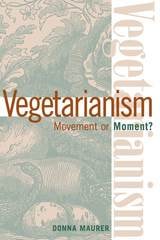
cover of Vegetarianism: Movement Or Moment: Promoting A Lifestyle For Cult Change

Vegetarianism

Movement Or Moment: Promoting A Lifestyle For Cult Change

Donna Maurer

Temple University Press, 2002

Vegetarianism seems to be increasing in popularity and acceptance in the United States and Canada, yet, quite surprisingly, the percentage of the population practicing vegetarian diets has not changed dramatically over the past 30 years. People typically view vegetarianism as a personal habit or food choice, even though organizations in North America have been promoting vegetarianism as a movement since the 1850s. This book examines the organizational aspects of vegetarianism and tries to explain why the predominant movement strategies have not successfully attracted more people to adopt a vegetarian identity.Vegetarianism: Movement or Moment? is the first book to consider the movement on a broad scale from a social science perspective. While this book takes into account the unique history of North American vegetarianism and the various reasons why people adopt vegetarian diets, it focuses on how movement leaders' beliefs regarding the dynamics of social change contributes to the selection of particular strategies for attracting people to vegetarianism. In the context of this focus, this book highlights several controversies about vegetarianism that have emerged in nutrition and popular media over the past 30 years.
[more]
cover of Worried Sick: How Stress Hurts Us and How to Bounce Back

Worried Sick

How Stress Hurts Us and How to Bounce Back

Carr, Deborah

Rutgers University Press, 2014

Comments like “I’m worried sick” convey the conventional wisdom that being “stressed out” will harm our health. Thousands of academic studies reveal that stressful life events (like a job loss), ongoing strains (like burdensome caregiving duties), and even daily hassles (like traffic jams on the commute to work) affect every aspect of our physical and emotional well-being. Cutting through a sea of scientific research and theories, Worried Sick answers many questions about how stress gets under our skin, makes us sick, and how and why people cope with stress differently. Included are several standard stress and coping checklists, allowing readers to gauge their own stress levels.

We have all experienced stressful times—maybe a major work deadline or relocating cross-country for a new job—when we came out unscathed, feeling not only emotionally and physically healthy, but better than we did prior to the crisis. Why do some people withstand adversity without a scratch, while others fall ill or become emotionally despondent when faced with even a seemingly minor hassle? Without oversimplifying the discussion, Deborah Carr succinctly provides readers with key themes and contemporary research on the concept of stress. Understanding individuals’ own sources of strength and vulnerability is an important step toward developing personal strategies to minimize stress and its unhealthy consequences. Yet Carr also challenges the notion that merely reducing stress in our lives will help us to stay healthy. Many of the stressors that we face in everyday life are not our problems alone; rather, they are symptoms of much larger, sweeping problems in contemporary U.S. society.

To readers interested in the broad range of chronic, acute, and daily life stressors facing Americans in the twenty-first century, as well as those with interest in the many ways that our physical and emotional health is shaped by our experiences, this brief book will be an immediate and quick look at these significant issues.

View a three minute video of Deborah Carr speaking about Worried Sick.
[more]