Results by title
6 books match the query 'Hebrew literature, Modern'
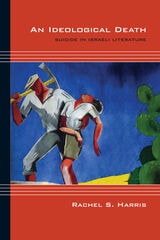
An Ideological Death
Suicide in Israeli LiteratureRachel S. Harris
Northwestern University Press, 2014
Yehudit Katzir, Etgar Keret, Amos Oz, Yaakov Shabtai, Benjamin Tammuz, and A. B. Yehoshua are among the writers who engage with depictions of suicide in a critical and rhetorical process that reconsiders myths at the heart of the Zionist project. In Israeli literature, suicide is linked to a society’s compulsion to create impossible ideals that leave its populace disappointed and deluded. Yet, as Rachel S. Harris shows, even at their harshest these writers also acknowledge the idealism that helped build Israel as a modern nation-state.
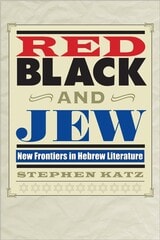
Red, Black, and Jew
New Frontiers in Hebrew LiteratureBy Stephen Katz
University of Texas Press, 2009
Between 1890 and 1924, more than two million Jewish immigrants landed on America's shores. The story of their integration into American society, as they traversed the difficult path between assimilation and retention of a unique cultural identity, is recorded in many works by American Hebrew writers. Red, Black, and Jew illuminates a unique and often overlooked aspect of these literary achievements, charting the ways in which the Native American and African American creative cultures served as a model for works produced within the minority Jewish community.
Exploring the paradox of Hebrew literature in the United States, in which separateness, and engagement and acculturation, are equally strong impulses, Stephen Katz presents voluminous examples of a process that could ultimately be considered Americanization. Key components of this process, Katz argues, were poems and works of prose fiction written in a way that evoked Native American forms or African American folk songs and hymns. Such Hebrew writings presented America as a unified society that could assimilate all foreign cultures. At no other time in the history of Jews in diaspora have Hebrew writers considered the fate of other minorities to such a degree. Katz also explores the impact of the creation of the state of Israel on this process, a transformation that led to ambivalence in American Hebrew literature as writers were given a choice between two worlds.
Reexamining long-neglected writers across a wide spectrum, Red, Black, and Jew celebrates an important chapter in the history of Hebrew belles lettres.
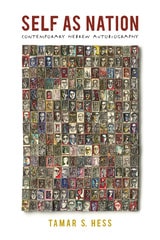
Self as Nation
Contemporary Hebrew AutobiographyTamar S. Hess
Brandeis University Press, 2016
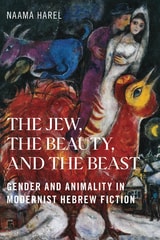
The Jew, the Beauty, and the Beast
Gender and Animality in Modernist Hebrew FictionNaama Harel
Rutgers University Press, 2026
The Jew, the Beauty, and the Beast critically explores the tangled interplay between Jewishness, gender, and animality and its manifestation in modernist Hebrew fiction. Through interdiscursive analysis and close readings, the effeminate Jew is examined vis-à-vis the animalized woman. Intertwining cutting-edge theoretical frameworks of posthumanism and animal studies with established scholarship of Hebrew literature, Jewish studies, and gender studies, Naama Harel offers new Hebrew literary historiography and innovative perspectives on canonical works by Shmuel Yosef Agnon, Devorah Baron, Micha Yosef Berdichevsky, Yosef Haim Brenner, Uri Nissan Gnessin, and David Vogel.
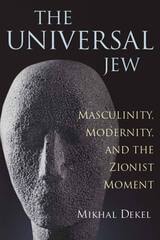
The Universal Jew
Masculinity, Modernity, and the Zionist MomentMikhal Dekel
Northwestern University Press, 2010
Such prototypical characters transform the symbol of the Jew from a racially or religiously defined minority subject to a "post-Jewish," particularuniversal, and fundamentally liberal majority subject. The Universal Jew situates the "Zionist moment" horizontally, within the various intellectual currents that make up the turn of the twentieth century: the discourse on modernity, the crisis in liberalism, Nietzsche’s critique of the Enlightenment, psychoanalysis, early feminism, and fin de siècle interrogation of sexual identities. The book examines the symbolic roles that Jews are assigned within these discourses and traces the ways in which Jewish literary citizens are shaped, both out of and in response to them. Beginning with an analysis of George Eliot’s construction of the character Deronda and its reception in Zionist circles, the Universal Jew ends with the self-fashioning of male citizens in fin de siècle and post-statehood Hebrew works, through the aesthetics oftragedy. Throughout her readings, Dekel analyzes the political meaning of these nascent images of citizens, uncovering in particular the gendered arrangements out of which they are born.
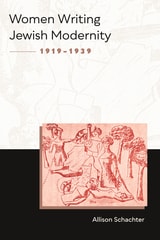
Women Writing Jewish Modernity, 1919–1939
Allison Schachter
Northwestern University Press, 2022
In Women Writing Jewish Modernity, 1919–1939, Allison Schachter rewrites Jewish literary modernity from the point of view of women. Focusing on works by interwar Hebrew and Yiddish writers, Schachter illuminates how women writers embraced the transgressive potential of prose fiction to challenge the patriarchal norms of Jewish textual authority and reconceptualize Jewish cultural belonging.
Born in the former Russian and Austro‑Hungarian Empires and writing from their homes in New York, Poland, and Mandatory Palestine, the authors central to this book—Fradl Shtok, Dvora Baron, Elisheva Bikhovsky, Leah Goldberg, and Debora Vogel—seized on the freedoms of social revolution to reimagine Jewish culture beyond the traditionally male world of Jewish letters. The societies they lived in devalued women’s labor and denied them support for their work. In response, their writing challenged the social hierarchies that excluded them as women and as Jews. As she reads these women, Schachter upends the idea that literary modernity was a conversation among men about women, with a few women writers listening in. Women writers revolutionized the very terms of Jewish fiction at a pivotal moment in Jewish history, transcending the boundaries of Jewish minority identities. Schachter tells their story and in so doing calls for a new way of thinking about Jewish cultural modernity.