Results by title
4 books match the query 'Herbert Hoover'

Herbert Hoover As Secretary Of Commerce
New Era Thought And PracticeEllis W. Hawley
University of Iowa Press, 1981
In this second volume in the Hoover Centennial Seminars series, seven scholars reexamine a major segment of Herbert Hoover's public career and in doing so offer fresh perspectives on the political, administrative, and diplomatic history of the 1920s. Drawing upon new materials and new insights, they reconstruct Hoover's transformation of the Commerce secretariat, explore his thinking and action in a variety of policy areas, and explode conventional depictions of Hoover's political conservatism. These essays show a resourceful and creative mind wrestling with the central problems of twentieth-century America and projecting solutions remarkably similar to current proposals for public use of the private sector.
Herbert Hoover
Great War And Its AftermathLawrence E. Gelfand
University of Iowa Press, 1979
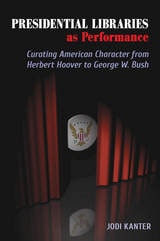
Presidential Libraries as Performance
Curating American Character from Herbert Hoover to George W. BushJodi Kanter
Southern Illinois University Press, 2016
Kanter considers the moments in the presidents’ lives the museums choose to interpret, and not to interpret, and how the libraries approach common subjects in the presidential museum narrative—the presidents’ early years in relation to cultural ideals, the libraries’ representations of presidential failures, personal and political, and the question of presidential legacy. Identifying the limited number of strategies the libraries currently use to represent the diversity of the American experience and American character, Kanter offers concrete suggestions for reinventing and reshaping the practices of museum professionals and visitors within the walls of these institutions.
Presidential museums can tell us important things about the relationships between performance and politics, entertainment and history, and leaders and the people they lead. Kanter demonstrates how the presidential libraries generate normative narratives about individual presidents, historical events, and what it means to be an American.

The Good Ruler
From Herbert Hoover to Richard NixonKuklick, Bruce
Rutgers University Press, 1989
Which American presidents have been good? Which have been bad? Experts on the presidency have never been able to agree on their assessments. Bruce Kuklick suggests that historians and political scientists have approached the problem of defining successful leadership without adequately considering the essential factor. Instead of trying to evaluate which presidents set consistent and worthy policies and brought them to fruition, Kuklick asks us to pay more attention to how the American people feel about their presidents. The citizenry and its emotional responses are sued as the measure of a successful president, rather than the ostensibly rational appraisals of scholars.
Applying this measure to the presidents from the Depression to Watergate, Kuklick begins by tracing the way in which Franklin Roosevelt established the parameters of the inspirational presidency and how his success shaped the study of political history. He then explores the triumphs of Eisenhower and Kennedy and contrasts these triumphs too the failures of Hoover, Truman, Johnson, and Nixon. The ability of leaders to win the respect and admiration of the citizenry is, for Kuklick, the crucial touchstone by which the success of a president is judged.
To highlight this position that is not useful for historians to justify the merits or failures of a president by pointing out what he would have done had he lived longer or in a different era, Kiklick includes and entertaining and enlightening fable, an imaginary view of historical events: Nixon is elected in 1960, giving a youthful tone to the White House until his assassination in 1967; Kennedy is elected in 1968 but resigns after he is accused of misconduct. The fable demonstrates that the specific events are less important than a president’s ability to evoke a positive emotional response from the citizenry. The Good Ruler analyzes our recent political history without partisan bias and examines the basic premises of American democratic politics.