Results by title
6 books match the query 'Hero worship'
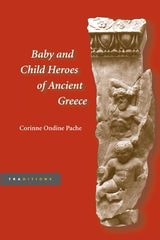
Baby and Child Heroes in Ancient Greece
Corinne Ondine Pache
University of Illinois Press, 2004
Examining literary, pictorial, and numismatic representations, Pache opens up a vast territory once occupied by children such as Charila, Opheltes, Melikertes, and the children of Herakles and Medea. She elegantly argues that the stories, songs, and sanctuaries honoring these heroes express parental fears and guilt about children's death. Pache further demonstrates that while the myths and rituals articulate basic human anxieties, their emphasis is ultimately on the beauty that transcends the gruesomeness of the narrative, turning their dread into poetry. By showing the continuity of child heroes in Greek religion, she is able to throw new light on iconographies that have previously defied explanation.
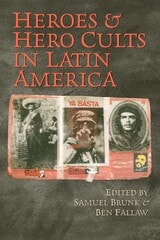
Heroes and Hero Cults in Latin America
Edited by Samuel Brunk and Ben Fallaw
University of Texas Press, 2006
Latin American history traditionally has been defined by larger-than-life heroes such as Símon Bolívar, Emiliano Zapata, and Evita Perón. Recent scholarship, however, tends to emphasize social and cultural factors rather than great leaders. In this new collection, Samuel Brunk and Ben Fallaw bring heroes back to the center of the debate, arguing that heroes not only shape history, they also "tell us a great deal about the places from which they come."
The original essays in this collection examine ten modern Latin American heroes whose charisma derived from the quality of their relationships with admirers, rather than their innate personal qualities. The rise of mass media, for instance, helped pave the way for populists such as radio actress-turned-hero Evita Perón. On the other hand, heroes who become president often watch their images crumble, as policies replace personality in the eyes of citizens. In the end, the editors argue, there is no formula for Latin American heroes, who both forge, and are forged by, unique national events. The conclusion points toward Mexico, where the peasant revolutions that elevated Miguel Hidalgo and, later, Emiliano Zapata are so revered that today's would-be heroes, such as the EZLN's Subcomandante Marcos, must link themselves to peasant mythology even when their personal roots are far from native ground. The enduring (or, in some cases, fading) influence of those discussed in this volume validates the central placement of heroes in Latin American history.
Heroes, Hero Worship, and Brigham Young
Ronald W. Walker
Utah State University Press, 0
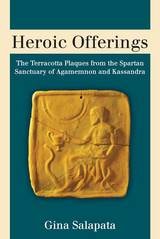
Heroic Offerings
The Terracotta Plaques from the Spartan Sanctuary of Agamemnon and KassandraGina Salapata
University of Michigan Press, 2015
This volume focuses on a large group of decorated terracotta plaques, from the sixth to fourth centuries BCE. These molded plaques were discovered with other offerings in a sanctuary deposit excavated near Sparta more than fifty years ago, but they have remained unpublished until now. They number over 1,500 complete and fragmentary pieces. In technique, style, and iconography they form a homogeneous group unlike any other from mainland Greece. The large number of plaques and variety of types reveal a stable and vigorous coroplastic tradition in Lakonia during the late Archaic and Classical period.
Heroic Offerings will be of interest to students and scholars of Greek history, art, and archaeology, to those interested in ancient religious practice in the Mediterranean, and to all inspired by Athens’ chief political rival, Sparta.
This volume received financial support from the Archaeological Institute of America.

Sports Immortals
Deifying the American AthletePeter Williams
University of Wisconsin Press, 1994
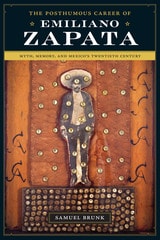
The Posthumous Career of Emiliano Zapata
Myth, Memory, and Mexico's Twentieth CenturyBy Samuel Brunk
University of Texas Press, 2008
Before there was Che Guevara, there was Emiliano Zapata, the charismatic revolutionary who left indelible marks on Mexican politics and society. The sequel to Samuel Brunk's 1995 biography of Zapata, The Posthumous Career of Emiliano Zapata traces the power and impact of this ubiquitous, immortalized figure.
Mining the massive extant literature on Zapata, supplemented by archival documents and historical newspaper accounts, Brunk explores frameworks of myth and commemoration while responding to key questions regarding the regime that emerged from the Zapatista movement, including whether it was spawned by a genuinely "popular" revolution.
Blending a sophisticated analysis of hegemonic systems and nationalism with lively, accessible accounts of ways in which the rebel is continually resurrected decades after his death in a 1919 ambush, Brunk delves into a rich realm of artistic, geographical, militaristic, and ultimately all-encompassing applications of this charismatic icon.
Examining all perspectives, from politicized commemorations of Zapata's death to popular stories and corridos, The Posthumous Career of Emiliano Zapata is an eloquent, engaging portrait of a legend incarnate.