Results by title
2 books match the query 'Heterosexism in literature'
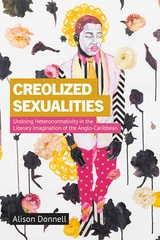
Creolized Sexualities
Undoing Heteronormativity in the Literary Imagination of the Anglo-CaribbeanAlison Donnell
Rutgers University Press, 2022
Creolized Sexualities: Undoing Heteronormativity in the Literary Imagination of the Anglo-Caribbean draws attention to a wide, and surprising, range of writings that craft inclusive and pluralizing representations of sexual possibilities within the Caribbean imagination. Reading across an eclectic range of writings from V.S. Naipaul to Marlon James, Shani Mootoo to Junot Diaz, Andrew Salkey to Thomas Glave, Curdella Forbes to Colin Robinson, this bold work of literary criticism brings into view fictional worlds where Caribbeanness and queerness correspond and reconcile. Through inspired close readings Donnell gathers evidence and argument for the Caribbean as an exemplary creolized ecology of fluid possibilities that can illuminate the prospect of a non-heteronormalizing future. Indeed, Creolized Sexualities hows how writers have long rendered sexual plasticity, indeterminacy, and pluralism as an integral part of Caribbeanness and as one of the most compelling if unacknowledged ways of resisting the disciplining regimes of colonial and neocolonial power.
[more]
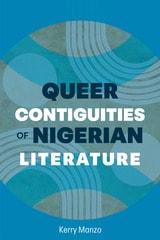
Queer Contiguities of Nigerian Literature
Kerry Manzo
Michigan State University Press, 2026
Queer Contiguities of Nigerian Literature explores how normative ideas of sex and gender have shaped the development of Nigerian literature. Tracing this influence from the rise of mid-twentieth-century modernist writing to the contemporary appearance of LGBTQIA literature, Kerry Manzo presents a new framework for understanding Nigerian literature, one in which sexuality and gender—or more specifically, their containment through national discourses of heteronormativity in colonial and postcolonial Nigeria—are central to its problematics and poetics. Drawing on interdisciplinary research and archival materials, including institutional records, personal letters, small publications, and other ephemera, Manzo illuminates the historical and material conditions that have placed limitations on the literary representation of women and sexual minorities and shaped the national masculine tradition of letters.
[more]