Results by title
715 books match the query 'Higher' and 66 start with a
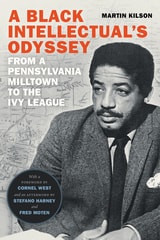
A Black Intellectual's Odyssey
From a Pennsylvania Milltown to the Ivy LeagueMartin Kilson
Duke University Press, 2021
He gives a sweeping sociological tour of Ambler as a multiethnic, working-class company town while sketching the social, economic, and racial elements that marked everyday life. From narrating the area's history of persistent racism and the racial politics in the integrated schools to describing the Black church's role in buttressing the town's small Black community, Kilson vividly renders his experience of northern small-town life during the 1930s and 1940s.
At Lincoln University, Kilson's liberal political views coalesced as he became active in the local NAACP chapter. While at Lincoln and during his graduate work at Harvard, Kilson observed how class, political, and racial dynamics influenced his peers' political engagement, diverse career paths, and relationships with white people. As a young professor, Kilson made a point of assisting Harvard's African American students in adapting to life at a white institution.
Throughout his career, Kilson engaged in pioneering scholarship while mentoring countless students. A Black Intellectual's Odyssey features contributions from three of his students: a foreword by Cornel West and an afterword by Stefano Harney and Fred Moten.

A Chance to Make a Difference
A MemoirJohn P. Schaefer
University of Arizona Press, 2025
Southwest Books of the Year Top Pick
John P. Schaefer was only thirty-six years old when he assumed the role of fifteenth president of the University of Arizona in 1971. The son of hardworking German immigrants, Schaefer grew up in Queens, New York, where childhood centered on sports, academics, and the great outdoors.
Earning a PhD in chemistry in 1958, Dr. Schaefer’s career skyrocketed through the ranks of academia, moving him from junior faculty to university president in a mere decade. As president, he led the University of Arizona through a transformational period of growth and is credited with securing the university’s status as a top-tier research institution.
A Chance to Make a Difference recounts poignant, eye-opening, and often humorous stories from childhood to presidency, revealing the characteristics of an inspiring university leader.
A Connected Curriculum for Higher Education
Dilly Fung
University College London, 2017
A Feminist Perspective in the Academy
The Difference It MakesEdited by Elizabeth Langland and Walter Gove
University of Chicago Press, 1983
In the essays collected here, nine distinguished scholars provide an overview of the differences the feminist perspective makes—and could make—in scholarship in the humanities and social sciences. Carefully documented and judiciously critical, these essays inform the reader about developments in feminist scholarship in literary criticism, the performing arts, religion, history, political science, economics, anthropology, psychology, and sociology. The authors point out achievements of lasting value and indicate how these might become an integral part of the various disciplines.
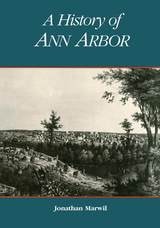
A History of Ann Arbor
Jonathan Marwil
University of Michigan Press, 1991
A History of Physical Education and Athletics at Oberlin College
Lee C. Drickamer with Fredrick D. Shults
The Ohio State University Press, 2022
A History of the Rutgers University Glee Club
David F. Chapman
Rutgers University Press, 2022
Founded in 1872, the Glee Club is Rutgers University’s oldest continuously active student organization, as well as one of the first glee clubs in the United States. For the past 150 years, it has represented the university and presented an image of the Rutgers man on a national and international stage.
This volume offers a comprehensive history of the Rutgers Glee Club, from its origins adopting traditions from the German Männerchor and British singing clubs to its current manifestation as a world-recognized ensemble. Along the way, we meet the colorful and charismatic men who have directed the group over the years, from the popular composer and minstrel performer Loren Bragdon to the classically-trained conductor Patrick Gardner. And of course, we learn what the club has meant to the generations of talented and dedicated young men who have sung in it.
A History of the Rutgers University Glee Club recounts the origins of the group’s most beloved traditions, including the composition of the alma mater’s anthem “On the Banks of the Old Raritan” and the development of the annual Christmas in Carol and Song concerts. Meticulously researched, including a complete discography of the club’s recordings, this book is a must-have for all the Rutgers Glee Club’s many fans and alumni.
A History of the University of Chicago, Founded by John D. Rockefeller
The First Quarter-CenturyThomas Wakefield Goodspeed
University of Chicago Press, 1973
As Goodspeed shows, once the main roles were cast—in the persons of John D. Rockefeller and William Rainey Harper—the University of Chicago was irrevocably headed for greatness. Without the support of both of these men it would never have become one of the nation's major universities in a mere quarter century. Although Harper died in 1906, his innovative mind and unflagging energy left an indelible mark on the university during the fifteen years of his presidency. The study provides detailed information on the founding of the university, the procurement of funds, the recruitment of faculty, the construction of buildings, student life, and the problems of continuing growth.
A Life on the Middle West's Never-Ending Frontier
Willard L. Boyd
University of Iowa Press, 2019
His memoir, interspersed with personal wisdom gleaned over more than six decades of service and leadership, encapsulates Sandy’s shrewd yet optimistic view of the public university as an institution. At every stage in his life—in the U.S. Navy during World War II, while practicing law or teaching, and in leadership positions at Chicago’s Field Museum and the University of Iowa— Sandy relied on his principles of open disclosure, inclusiveness, and respect for differences to guide him on issues that matter.
This chronicle of Sandy’s experiences throughout his life shows us the evolution both of the University of Iowa and of the nation writ large. More importantly, this book gives us a lens through which to examine our present situation, whether debating free speech on campus, the role of the arts and humanities in civil society, or the importance of funding for educational and cultural institutions.
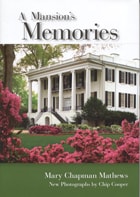
A Mansion's Memories
Mary Chapman Mathews
University of Alabama Press, 2006
An engaging history of The University of Alabama President’s Mansion
As part of The University of Alabama’s 175th anniversary celebration (2006), the new edition of A Mansion’s Memories includes details of the tenures of the four presidents who have served since the Mathews term. Profusely illustrated with 69 black-and-white and 17 color photographs, this classic is sure to be welcomed anew by alumni and friends of the University and all lovers of fine old buildings that still function in their original capacities.
A New Deal for the Humanities
Liberal Arts and the Future of Public Higher EducationHutner, Gordon
Rutgers University Press, 2015
The contributors offer spirited and thought-provoking debates on a diverse range of topics. For instance, they deplore the push by administrations to narrow learning into quantifiable outcomes as well as the demands of state governments for more practical, usable training. Indeed, for those who suggest that a college education should be “practical”—that it should lean toward the sciences and engineering, where the high-paying jobs are—this book points out that while a few nations produce as many technicians as the United States does, America is still renowned worldwide for its innovation and creativity, skills taught most effectively in the humanities. Most importantly, the essays in this collection examine ways to make the humanities even more effective, such as offering a broader array of options than the traditional major/minor scheme, options that combine a student’s professional and intellectual interests, like the new medical humanities programs.
A democracy can only be as energetic as the minds of its citizens, and the questions fundamental to the humanities are also fundamental to a thoughtful life. A New Deal for the Humanities takes an intrepid step in making the humanities—and our citizens—even stronger in the future.
A New Insurgency
The Port Huron Statement and Its TimesHoward Brick and Gregory Parker, eds.
Michigan Publishing Services, 2018
This volume features three never-before-published “manifesto drafts” written by Tom Hayden in early 1962 that generated the discussion leading to the Port Huron meeting. Other highlights include recollections from leading women in the Port Huron deliberations who, three years later, protested the subordination of women within the radical movements, thus setting the stage for the rise of women’s liberation. A New Insurgency is based on the University of Michigan’s conference commemorating the fiftieth anniversary of the Port Huron Statement in 2012.
“The fiftieth anniversary of the Port Huron Statement has drawn a great number of reflections and commemorations, but this carefully conceived volume offers an account of unrivaled ambition, exceptional breadth, and surprising insight. It both excavates the event itself—vividly, perceptively, exhaustively—and gives it the largest and most illuminating of contexts. A New Insurgency is as close to definitive as any volume of this kind can become.”
—Geoff Eley, Karl Pohrt Distinguished University Professor of Contemporary History, University of Michigan
A Perfect Mess
The Unlikely Ascendancy of American Higher EducationDavid F. Labaree
University of Chicago Press, 2017
And the best it is: today America’s universities and colleges produce the most scholarship, earn the most Nobel prizes, hold the largest endowments, and attract the most esteemed students and scholars from around the world. But this was not an inevitability. Weakly funded by the state, American schools in their early years had to rely on student tuition and alumni donations in order to survive. This gave them tremendous autonomy to seek out sources of financial support and pursue unconventional opportunities to ensure their success. As Labaree shows, by striving as much as possible to meet social needs and fulfill individual ambitions, they developed a broad base of political and financial support that, grounded by large undergraduate programs, allowed for the most cutting-edge research and advanced graduate study ever conducted. As a result, American higher education eventually managed to combine a unique mix of the populist, the practical, and the elite in a single complex system.
The answers to today’s problems in higher education are not easy, but as this book shows, they shouldn’t be: no single person or institution can determine higher education’s future. It is something that faculty, administrators, and students—adapting to society’s needs—will determine together, just as they have always done.
A Perfect Mess
The Unlikely Ascendancy of American Higher EducationDavid F. Labaree
University of Chicago Press, 2017
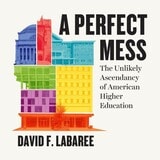
Read the news about America’s colleges and universities—rising student debt, affirmative action debates, and conflicts between faculty and administrators—and it’s clear that higher education in this country is a total mess. But as David F. Labaree reminds us in this book, it’s always been that way. And that’s exactly why it has become the most successful and sought-after source of learning in the world. Detailing American higher education’s unusual struggle for survival in a free market that never guaranteed its place in society—a fact that seemed to doom it in its early days in the nineteenth century—he tells a lively story of the entrepreneurial spirit that drove American higher education to become the best.
And the best it is: today America’s universities and colleges produce the most scholarship, earn the most Nobel prizes, hold the largest endowments, and attract the most esteemed students and scholars from around the world. But this was not an inevitability. Weakly funded by the state, American schools in their early years had to rely on student tuition and alumni donations in order to survive. This gave them tremendous autonomy to seek out sources of financial support and pursue unconventional opportunities to ensure their success. As Labaree shows, by striving as much as possible to meet social needs and fulfill individual ambitions, they developed a broad base of political and financial support that, grounded by large undergraduate programs, allowed for the most cutting-edge research and advanced graduate study ever conducted. As a result, American higher education eventually managed to combine a unique mix of the populist, the practical, and the elite in a single complex system.
The answers to today’s problems in higher education are not easy, but as this book shows, they shouldn’t be: no single person or institution can determine higher education’s future. It is something that faculty, administrators, and students—adapting to society’s needs—will determine together, just as they have always done.
A Pictorial History of the University of Iowa
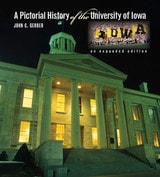
An Expanded EditionJohn C. Gerber
University of Iowa Press, 1988
A Primer for Teaching Pacific Histories
Ten Design PrinciplesMatt K.Matsuda
Duke University Press, 2020
A Problem of Fit
How the Complexity of College Pricing Hurts Students—and UniversitiesPhillip B. Levine
University of Chicago Press, 2022
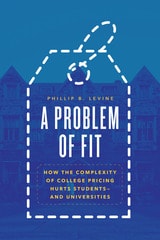
How much does it cost to attend college in the United States today? The answer is more complex than many realize. College websites advertise a sticker price, but uncovering the actual price—the one after incorporating financial aid—can be difficult for students and families. This inherent uncertainty leads some students to forgo applying to colleges that would be the best fit for them, or even not attend college at all. The result is that millions of promising young people may lose out on one of society’s greatest opportunities for social mobility. Colleges suffer too, losing prospective students and seeing lower enrollments and less socioeconomic diversity. If markets require prices to function well, then the American higher-education system—rife as it is with ambiguity in its pricing—amounts to a market failure.
In A Problem of Fit, economist Phillip B. Levine explains why institutions charge the prices they do and discusses the role of financial aid systems in facilitating—and discouraging—access to college. Affordability issues are real, but price transparency is also part of the problem. As Levine makes clear, our conversations around affordability and free tuition miss a larger truth: that the opacity of our current college-financing systems is a primary driver of inequities in education and society. In a clear-eyed assessment of educational access and aid in a post-COVID-19 economy, A Problem of Fit offers a trenchant new argument for educational reforms that are well within reach.
A Professor at the End of Time
The Work and Future of the ProfessoriateBest, John
Rutgers University Press, 2017
A Reason Open to God
Pope Benedict XVI Brown
Catholic University of America Press, 2013
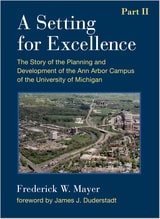
A Setting For Excellence, Part II
The Story of the Planning and Development of the Ann Arbor Campus of the University of MichiganFrederick W. Mayer
University of Michigan Press, 2017
By tracing the development of the Ann Arbor campus from its early days to the present, within the context of the evolution of higher education in America, Mayer provides a strong argument for the importance of rigorous and enlightened campus planning as a critical element of the learning environment of the university. His comprehensive history of campus planning, illustrated with photos, maps, and diagrams from Michigan’s history, is an outstanding contribution to the university’s history as it approaches its bicentennial.
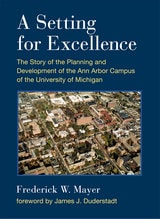
A Setting For Excellence
The Story of the Planning and Development of the Ann Arbor Campus of the University of MichiganFrederick W. Mayer
University of Michigan Press, 2015
By tracing the development of the Michigan campus from its early days to the present, within the context of the evolution of higher education in America, Mayer provides a strong argument for the importance of rigorous and enlightened campus planning as a critical element of the learning environment of the university. His comprehensive history of campus planning, illustrated with photos, maps, and diagrams from Michigan’s history, is an outstanding contribution to the university’s history as it approaches its bicentennial in 2017. Perhaps more important, Mayer’s book provides a valuable treatise on the evolution of campus planning as an architectural discipline.
A Student's Guide to Law School
What Counts, What Helps, and What MattersAndrew B. Ayers
University of Chicago Press, 2013
As a recent graduate and an appellate lawyer, Andrew Ayers knows how high the stakes are—he’s been there, and not only did he survive the experience, he graduated first in his class. In A Student’s Guide to Law School he shares invaluable insight on what it takes to make a successful law school journey. Originating in notes Ayers jotted down while commuting to his first clerkship with then-Judge Sonia Sotomayor, and refined throughout his first years as a lawyer, A Student’s Guide to Law School offers a unique balance of insider’s knowledge and professional advice.
Organized in four parts, the first part looks at tests and grades, explaining what’s expected and exploring the seven choices students must make on exam day. The second part discusses the skills needed to be a successful law student, giving the reader easy-to-use tools to analyze legal materials and construct clear arguments.
The third part contains advice on how to use studying, class work, and note-taking to find your best path. Finally, Ayers closes with a look beyond the classroom, showing students how the choices they make in law school will affect their career—and even determine the kind of lawyer they become.
The first law school guide written by a recent top-ranked graduate, A Student’s Guide to Law School is relentlessly practical and thoroughly relevant to the law school experience of today’s students. With the tools and advice Ayers shares here, students can make the most of their investment in law school, and turn their valuable learning experiences into a meaningful career.
A Taste for Language
Literacy, Class, and English StudiesJames Ray Watkins Jr.
Southern Illinois University Press, 2009
“This is a book about the American Dream as it has become embodied in the university in general and in the English department in particular,” writes James Ray Watkins at the start of A Taste for Language: Literacy, Class, and English Studies. In it, Watkins argues that contemporary economic and political challenges require a clear understanding of the identity of English studies, making elementary questions about literacy, language, literature, education, and class once again imperative.
A personal history of university-level English studies in the twentieth century, A Taste for Language combines biography, autobiography, and critical analysis to explore the central role of freshman English and literary studies in the creation and maintenance of the middle class. It tells a multi-generational story of the author and his father, intertwined with close reading of texts and historical analysis. The story moves from depression-era Mississippi, where the author's father was born, to a contemporary English department, where the author now teaches.
Watkins looks at not only textbooks, scholars, and the academy but also at families and other social institutions. A rich combination of biography, autobiography, and critical analysis, A Taste for Language questions what purpose an education in English language and literature serves in the lives of the educated in a class-based society and whether English studies has become wholly irrelevant in the twenty-first century.
A Third University Is Possible
la la paperson
University of Minnesota Press, 2017
A Third University is Possible unravels the intimate relationship between the more than 200 US land grant institutions, American settler colonialism, and contemporary university expansion. Author la paperson cracks open uncanny connections between Indian boarding schools, Black education, and missionary schools in Kenya; and between the Department of Homeland Security and the University of California. Central to la paperson’s discussion is the “scyborg,” a decolonizing agent of technological subversion.
Drawing parallels to Third Cinema and Black filmmaking assemblages, A Third University is Possible ultimately presents new ways of using language to develop a framework for hotwiring university “machines” to the practical work of decolonization.
Forerunners: Ideas First is a thought-in-process series of breakthrough digital publications. Written between fresh ideas and finished books, Forerunners draws on scholarly work initiated in notable blogs, social media, conference plenaries, journal articles, and the synergy of academic exchange. This is gray literature publishing: where intense thinking, change, and speculation take place in scholarship.
A University for the 21st Century
James J. Duderstadt
University of Michigan Press, 2000
ABC Learning Design
Active, Blended, Connected and BeyondEdited by Clive Young, Nataša Perovic, Leo Havemann, and Karen Shackleford-Cesare
University College London, 2026
A practical, step-by-step guide to the ABC Learning Design method, designed for local adaptation and readily transferable across institutions committed to educational reform.
ABC Learning Design is a popular and effective rapid design method for developing educational programs, modules, and short courses that has been widely adopted across the UK and Europe. This book introduces ABC Learning Design to a new audience, adding insights from institutions that have localised and implemented the method in diverse contexts.
Academic Charisma and the Origins of the Research University
William Clark
University of Chicago Press, 2005
William Clark argues that the research university—which originated in German Protestant lands and spread globally in the nineteenth and twentieth centuries—developed in response to market forces and bureaucracy, producing a new kind of academic whose goal was to establish originality and achieve fame through publication. With an astonishing wealth of research, Academic Charisma and the Origins of the Research University investigates the origins and evolving fixtures of academic life: the lecture catalogue, the library catalog, the grading system, the conduct of oral and written exams, the roles of conversation and the writing of research papers in seminars, the writing and oral defense of the doctoral dissertation, the ethos of "lecturing with applause" and "publish or perish," and the role of reviews and rumor. This is a grand, ambitious book that should be required reading for every academic.
Academic Freedom
The Global ChallengeMichael Ignatieff
Central European University Press, 2018
Academic Interactions
Communicating on CampusChristine B. Feak, Susan M. Reinhart, and Theresa N. Rohlck
University of Michigan Press, 2018
This version of the book matches 9780472033324 except it is not packaged with a DVD. All references to the DVD in the text have been replaced with "videos." Video access sold separately on Vitalsource, here: https://www.vitalsource.com/products/videos-to-accompany-academic-interactions-christine-b-feak-susan-m-v9780472003631?term=9780472003631.
The ability to understand and be understood when communicating with professors and with native speakers is crucial to academic success. Academic Interactions focuses on actual academic speaking events, particularly classroom interactions and office hours, and gives students practice improving the ways that they communicate in a college/university setting.
Academic Interactions addresses skills like using names and names of locations correctly on campus, giving directions, understanding instructors and their expectations, interacting during office hours, participating in class and in seminars, and delivering formal and informal presentations. In addition, advice is provided for communicating via email with professors and working in groups with native speakers (including negotiating tasks in groups).
The text uses transcripts from MICASE (the Michigan Corpus of Academic Spoken English) to ensure that students learn the vocabulary and communication strategies that will be most effective in their academic pursuits. Units also feature language use issues like ellipsis, hedging, and apologies.
Academic Skills for Interdisciplinary Studies
Revised EditionKoen van der Gaast
Amsterdam University Press, 2019
As an interdisciplinary student, you delve into theories and research methods from a whole range of disciplines. Academic skills are the tools that you can use to take in, develop, integrate and question knowledge. This guide provides specific instructions, tips and examples to help students develop these skills, both during and after their studies.
As academic education focuses on research, the empirical cycle forms a key theme of the book, including when discussing the following skills:
- Searching for, critically reading and analysing scholarly texts
- Formulating research questions
- Making concepts measurable, qualitatively and quantitatively
- Organizing literature and data
- Analysing and formulating an argument
- Academic writing
- Collaborating
- Reflecting
- Presenting

Academic Tribes
Hazard Adams
University of Illinois Press, 1988
Academically Adrift
Limited Learning on College CampusesRichard Arum and Josipa Roksa
University of Chicago Press, 2010
In spite of soaring tuition costs, more and more students go to college every year. A bachelor’s degree is now required for entry into a growing number of professions. And some parents begin planning for the expense of sending their kids to college when they’re born. Almost everyone strives to go, but almost no one asks the fundamental question posed by Academically Adrift: are undergraduates really learning anything once they get there?
For a large proportion of students, Richard Arum and Josipa Roksa’s answer to that question is a definitive no. Their extensive research draws on survey responses, transcript data, and, for the first time, the state-of-the-art Collegiate Learning Assessment, a standardized test administered to students in their first semester and then again at the end of their second year. According to their analysis of more than 2,300 undergraduates at twenty-four institutions, 45 percent of these students demonstrate no significant improvement in a range of skills—including critical thinking, complex reasoning, and writing—during their first two years of college. As troubling as their findings are, Arum and Roksa argue that for many faculty and administrators they will come as no surprise—instead, they are the expected result of a student body distracted by socializing or working and an institutional culture that puts undergraduate learning close to the bottom of the priority list.
Academically Adrift holds sobering lessons for students, faculty, administrators, policy makers, and parents—all of whom are implicated in promoting or at least ignoring contemporary campus culture. Higher education faces crises on a number of fronts, but Arum and Roksa’s report that colleges are failing at their most basic mission will demand the attention of us all.
Access for All
Expanding Opportunity and Programs to Support Successful Student Outcomes at University of Nevada, RenoMelisa N. Choroszy
University of Nevada Press, 2019
This collection of essays, written by University of Nevada, Reno (UNR) faculty and students, is an examination of the programs and strategies created to support first-generation and other underrepresented student populations. In addition, it serves as a dedication to the families and students whose hopes and dreams include the attainment of a college degree. Readers will gain insight into the framework needed to provide accessible programs and services to a large and diverse student population before, during, and after college graduation as well as first-hand success stories from the students themselves.
Each generation hopes for a better life for their children. Higher education, in particular, has been a dream for many in this country that has been made possible through public and private financial support. Every new generation of college-bound students faces new and evolving challenges, but the fierce dedication and commitment demonstrated in these pages define the key to developing a thriving and diverse institution that helps all students succeed.
Acres Of Diamonds
Russell Conwell
Temple University Press, 2002
Action versus Contemplation
Why an Ancient Debate Still MattersJennifer Summit and Blakey Vermeule
University of Chicago Press, 2018
It is truly an ancient debate: Is it better to be active or contemplative? To do or to think? To make an impact, or to understand the world more deeply? Aristotle argued for contemplation as the highest state of human flourishing. But it was through action that his student Alexander the Great conquered the known world. Which should we aim at? Centuries later, this argument underlies a surprising number of the questions we face in contemporary life. Should students study the humanities, or train for a job? Should adults work for money or for meaning? And in tumultuous times, should any of us sit on the sidelines, pondering great books, or throw ourselves into protests and petition drives?
With Action versus Contemplation, Jennifer Summit and Blakey Vermeule address the question in a refreshingly unexpected way: by refusing to take sides. Rather, they argue for a rethinking of the very opposition. The active and the contemplative can—and should—be vibrantly alive in each of us, fused rather than sundered. Writing in a personable, accessible style, Summit and Vermeule guide readers through the long history of this debate from Plato to Pixar, drawing compelling connections to the questions and problems of today. Rather than playing one against the other, they argue, we can discover how the two can nourish, invigorate, and give meaning to each other, as they have for the many writers, artists, and thinkers, past and present, whose examples give the book its rich, lively texture of interplay and reference.
This is not a self-help book. It won’t give you instructions on how to live your life. Instead, it will do something better: it will remind you of the richness of a life that embraces action and contemplation, company and solitude, living in the moment and planning for the future. Which is better? Readers of this book will discover the answer: both.
Adapting the Past to Reimagine Possible Futures
Celebrating and Critiquing WAC at 50Megan J. Kelly
University Press of Colorado, 2024
Addressing Violence Against Women on College Campuses
Catherine Kaukinen
Temple University Press, 2017
Violence against women on college campuses has remained underreported and often under addressed by both campus security and local law enforcement, as well as campus administrators. The researchers, practitioners, and activists who contribute to this pertinent volume Addressing Violence Against Women on College Campuses examine the extent, nature, dynamic and contexts of violence against women at institutions of higher education.
This book is designed to facilitate an ongoing discussion and provide direction on how best to prevent and investigate violence against women, and intervene to assist victims while reducing the impact of these crimes. Chapters detail the necessary changes and implications that are part of Title IX and other federal legislation and initiatives as well as the effect these changes have had for higher education actors, including campus administrators, victim advocates, and student activists. The contributors also explore the importance of campus efforts to estimate the extent of violence against women; educating young men and women on the nature of sexual and dating violence; and shifting efforts to both make offenders accountable for their crimes and prompt all bystanders to act.
Addressing Violence Against Women on College Campuses urgently argues to make violence prevention is not separate from but rather an integral part of the student experience.
Contributors include: Antonia Abbey, Joanne Belknap, Ava Blustein, Stephanie Bonnes, Alesha Cameron, Sarah L. Cook, Walter S. DeKeseredy. Helen Eigenberg, Kate Fox, Christopher P. Krebs, Jennifer Leili, Christine Lindquist, Sarah McMahon, Caitlyn Meade, Christine Mouton, Matt R. Nobles, Callie Marie Rennison, Meredith M. Smith, Carmen Suarez, and the editors.
After Admission
From College Access to College SuccessJames E. Rosenbaum
Russell Sage Foundation, 2006
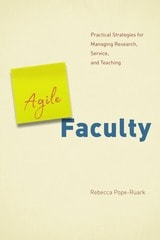
Agile Faculty
Practical Strategies for Managing Research, Service, and TeachingRebecca Pope-Ruark
University of Chicago Press, 2017
Agile work strategies are a staple of the software development world, developed out of the need to be flexible and responsive to fast-paced change at times when “business as usual” could not work. These techniques call for breaking projects into phases and short-term goals, managing assignments collectively, and tracking progress openly.
Agile Faculty is a comprehensive roadmap for scholars who want to incorporate Agile practices into all aspects of their academic careers, be it research, service, or teaching. Rebecca Pope-Ruark covers the basic principles of Scrum, one of the most widely used models, and then through individual chapters shows how to apply that framework to everything from individual research to running faculty committees to overseeing student class work. Practical and forward-thinking, Agile Faculty will help readers not only manage their time and projects but also foster productivity, balance, and personal and professional growth.
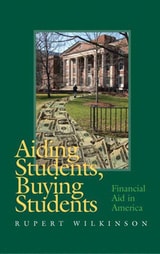
Aiding Students, Buying Students
Financial Aid in AmericaRupert Wilkinson
Vanderbilt University Press, 2005
From the first scholarship donated to Harvard in 1643 to today's world of "enrollment management" and federal grants and loans, the author gives a lively social and economic history of the conflicting purposes of student aid and makes proposals for the future. His research for this book is based on archives and interviews at 131 public and private institutions across the United States.
In the words of Joe Paul Case, Dean and Director of Financial Aid, Amherst College, "Wilkinson has mined the archives of dozens of institutions to create a mosaic that details the progress of student assistance from the 17th century to the present. He gives particular attention to the origins of need-based assistance, from the charitable benevolence of early colleges to the regulation-laden policies of the federal government. He gives due consideration to institutional motive--he challenges the egalitarian platitudes of affluent colleges and questions the countervailing market and economic forces that may imperil need-based aid at less competitive institutions. By drawing on scores of personal interviews and exchanges of correspondence with aid practitioners, Wilkinson fleshes out recent decades, helping the reader to understand new trends in the provision of aid."
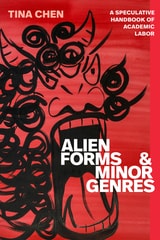
Alien Forms and Minor Genres
A Speculative Handbook of Academic LaborTina Chen
Duke University Press, 2026
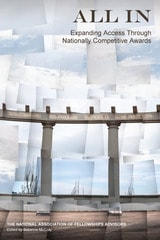
All In
Expanding Access through Nationally Competitive AwardsSuzanne McCray
University of Arkansas Press, 2013
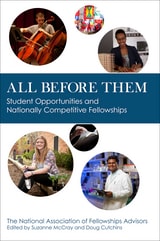
All before Them
Student Opportunities and Nationally Competitive FellowshipsSuzanne McCray
University of Arkansas Press, 2015
This collection of essays helps advisors by providing information about major changes in the fellowship and scholarship landscape. Included is guidance on the new Schwarzman scholarship for study in China, the recently added video interview for the Mitchell scholarship, and the new rules for the Rhodes personal statement (an advisor’s take). Additionally, seasoned advisors share practical advice, ranging from workshops that engage students and faculty to helpful technological tools to personal statements and office assessments. Keeping the focus on the scholar in the scholarship process is a central theme. All before Them is an important addition to any faculty mentor’s or scholarship advisor’s toolkit.
All the Essential Half-Truths about Higher Education
George Dennis O'Brien
University of Chicago Press, 1997
"O'Brien's historical overview of the transition from 19th-century denominational colleges to 20th-century research-driven and largely secular ones is provocative. Cleverly written and well-focused, the book addresses the financial pressures facing higher education and asks vital questions about cutbacks and curricula."—Publishers Weekly
"Lively, engaging, and richly suggestive." —Francis Oakley, Commonweal
"O'Brien employs calm, powerful reason, without sensationalism. His perspective is illuminating. . . . All the Essential Half-Truths About Higher Education is one of the wisest and most useful treatments of American higher education." —John Attarian, Detroit News
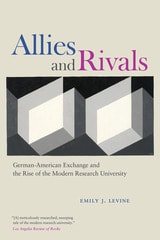
Allies and Rivals
German-American Exchange and the Rise of the Modern Research UniversityEmily J. Levine
University of Chicago Press, 2021
During the nineteenth century, nearly ten thousand Americans traveled to Germany to study in universities renowned for their research and teaching. By the mid-twentieth century, American institutions led the world. How did America become the center of excellence in higher education? And what does that story reveal about who will lead in the twenty-first century?
Allies and Rivals is the first history of the ascent of American higher education seen through the lens of German-American exchange. In a series of compelling portraits of such leaders as Wilhelm von Humboldt, Martha Carey Thomas, and W. E. B. Du Bois, Emily J. Levine shows how academic innovators on both sides of the Atlantic competed and collaborated to shape the research university. Even as nations sought world dominance through scholarship, universities retained values apart from politics and economics. Open borders enabled Americans to unite the English college and German PhD to create the modern research university, a hybrid now replicated the world over.
In a captivating narrative spanning one hundred years, Levine upends notions of the university as a timeless ideal, restoring the contemporary university to its rightful place in history. In so doing she reveals that innovation in the twentieth century was rooted in international cooperation—a crucial lesson that bears remembering today.
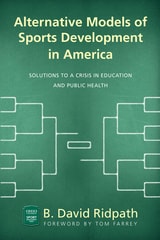
Alternative Models of Sports Development in America
Solutions to a Crisis in Education and Public HealthB. David Ridpath
Ohio University Press, 2017
In the United States, the entanglement of sports and education has persisted for over a century. Multimillion-dollar high school football stadiums, college coaches whose salaries are many times those of their institutions’ presidents, psychological and educational tolls on student-athletes, and high-profile academic scandals are just symptoms of a system that has come under increasing fire. Institutions large and small face persistent quandaries: which do they value more, academic integrity or athletic success? Which takes precedence: prioritizing elite teams and athletes, or making it possible for all students to participate in sports? How do we create opportunities for academic—not just athletic—development for players?
In Alternative Models of Sports Development in America, B. David Ridpath—a leading sports development researcher who has studied both the US system and the European club model—offers clear steps toward creating a new status quo. He lays out four possible alternative models that draw various elements from academic, athletic, and European approaches. His proposals will help increase access of all young people to the benefits of sports and exercise, allow athletes to also thrive as students, and improve competitiveness. The result is a book that will resonate with sports development professionals, academic administrators, and parents.
Always an Academic Immigrant
A Collective MemoirDafna Lemish
Rutgers University Press, 2025
Always an Academic Immigrant is a collective memoir that gives voice to eighty-one academics who immigrated from thirty-seven countries for a career in an institution of higher education, in either the United States or one of ten other countries. Through in-depth interviews and observations from her own experiences as an immigrant scholar, Dafna Lemish shares the highs and the lows that academic immigrants feel as they search for both a country and an institution they can call home. She discovers the formative events that led these scholars to pursue careers outside their native lands and details the challenges they faced adapting to unspoken expectations in their new countries and workplaces. Ultimately, this book reveals the strategies that immigrant professors use to bridge their native and adoptive cultures while highlighting the vital contributions they have made to academia as scholars, teachers, and leaders.
America, Compromised
Lawrence Lessig
University of Chicago Press, 2018
So begins Lawrence Lessig's sweeping indictment of contemporary American institutions and the corruption that besets them. We can all see it—from the selling of Congress to special interests to the corporate capture of the academy. Something is wrong. It’s getting worse.
And it’s our fault. What Lessig shows, brilliantly and persuasively, is that we can’t blame the problems of contemporary American life on bad people, as our discourse all too often tends to do. Rather, he explains, “We have allowed core institutions of America’s economic, social, and political life to become corrupted. Not by evil souls, but by good souls. Not through crime, but through compromise.” Every one of us, every day, making the modest compromises that seem necessary to keep moving along, is contributing to the rot at the core of American civic life. Through case studies of Congress, finance, the academy, the media, and the law, Lessig shows how institutions are drawn away from higher purposes and toward money, power, quick rewards—the first steps to corruption.
Lessig knows that a charge so broad should not be levied lightly, and that our instinct will be to resist it. So he brings copious, damning detail gleaned from years of research, building a case that is all but incontrovertible: America is on the wrong path. If we don’t acknowledge our own part in that, and act now to change it, we will hand our children a less perfect union than we were given. It will be a long struggle. This book represents the first steps.
American Academic Cultures
A History of Higher EducationPaul H. Mattingly
University of Chicago Press, 2017
Mattingly sketches out seven broad generational cultures: evangelical, Jeffersonian, republican/nondenominational, industrially driven, progressively pragmatic, internationally minded, and the current corporate model. What we see through his close analysis of each of these cultures in their historical moments is that the politics of higher education, both inside and outside institutions, are ultimately driven by the dominant culture of the time. By looking at the history of higher education in this new way, Mattingly opens our eyes to our own moment, and the part its culture plays in generating its politics and promise.
American Idyll
Academic Antielitism as Cultural CritiqueCatherine Liu
University of Iowa Press, 2011
A trenchant critique of failure and opportunism across the political spectrum, American Idyll argues that social mobility, once a revered hallmark of American society, has ebbed, as higher education has become a mechanistic process for efficient sorting that has more to do with class formation than anything else. Academic freedom and aesthetic education are reserved for high-scoring, privileged students and vocational education is the only option for economically marginal ones.
Throughout most of American history, antielitist sentiment was reserved for attacks against an entrenched aristocracy or rapacious plutocracy, but it has now become a revolt against meritocracy itself, directed against what insurgents see as a ruling class of credentialed elites with degrees from exclusive academic institutions. Catherine Liu reveals that, within the academy and stemming from the relatively new discipline of cultural studies, animosity against expertise has animated much of the Left’s cultural criticism.
By unpacking the disciplinary formation and academic ambitions of American cultural studies, Liu uncovers the genealogy of the current antielitism, placing the populism that dominates headlines within a broad historical context. In the process, she emphasizes the relevance of the historical origins of populist revolt against finance capital and its political influence. American Idyll reveals the unlikely alliance between American pragmatism and proponents of the Frankfurt School and argues for the importance of broad frames of historical thinking in encouraging robust academic debate within democratic institutions. In a bold thought experiment that revives and defends Richard Hofstadter’s theories of anti-intellectualism in American life, Liu asks, What if cultural populism had been the consensus politics of the past three decades?
American Idyll shows that recent antielitism does nothing to redress the source of its discontent—namely, growing economic inequality and diminishing social mobility. Instead, pseudopopulist rage, in conservative and countercultural forms alike, has been transformed into resentment, content merely to take down allegedly elitist cultural forms without questioning the real political and economic consolidation of powers that has taken place in America during the past thirty years.