Results by title
2 books match the query 'Hindi Cinema'
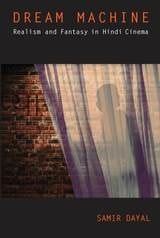
Dream Machine
Realism and Fantasy in Hindi CinemaSamir Dayal
Temple University Press, 2015
Popular Hindi films offer varied cinematic representations ranging from realistic portraits of patriotic heroes to complex fantasies that go beyond escapism. In Dream Machine, Samir Dayal provides a history of Hindi cinema starting with films made after India’s independence in 1947. He constructs a decade-by-decade consideration of Hindi cinema’s role as a site for the construction of “Indianness.”
Dayal suggests that Hindi cinema functions as both mirror and lamp, reflecting and illuminating new and possible representations of national and personal identity, beginning with early postcolonial films including Awaara and Mother India, a classic of the Golden Age. More recent films address critical social issues, such as My Name is Khan and Fire, which concern terrorism and sexuality, respectively. Dayalalso chronicles changes in the industry and in audience reception, and the influence of globalization, considering such films as Slumdog Millionaire.
Dream Machine analyzes the social and aesthetic realism of these films concerning poverty and work, the emergence of the middle class, crime, violence, and the law while arguing for their sustained and critical attention to forms of fantasy.
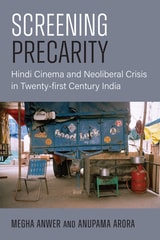
Screening Precarity
Hindi Cinema and Neoliberal Crisis in Twenty-first Century IndiaMegha Anwer and Anupama Arora
University of Michigan Press, 2025