Results by title
8 books match the query 'Hiroshima-shi (Japan)'
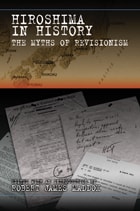
Hiroshima in History
The Myths of RevisionismEdited with an introduction by Robert James Maddox
University of Missouri Press, 2007
When President Harry Truman authorized the use of atomic weapons against Japan, he did so to end a bloody war that would have been bloodier still had the planned invasion of Japan proved necessary. Revisionists claim that Truman’s real interest was a power play with the Soviet Union and that the Japanese would have surrendered even earlier had the retention of their imperial system been assured. Truman wanted the war to continue, they insist, in order to show off America’s powerful new weapon.
This anthology exposes revisionist fallacies about Truman’s motives, the cost of an invasion, and the question of Japan’s surrender. Essays by prominent military and diplomatic historians reveal the hollowness of revisionist claims, exposing the degree to which these agenda-driven scholars have manipulated the historical record to support their contentions. They show that, although some Japanese businessmen and minor officials indicated a willingness to negotiate peace, no one in a governmental decision-making capacity even suggested surrender. And although casualty estimates for an invasion vary considerably, the more authoritative approximations point to the very bloodbath that Truman sought to avoid.
Volume editor Robert Maddox first examines the writings of revisionist Gar Alperovitz to expose the unscholarly methods Alperovitz employed to support his claims, then distinguished Japanese historian Sadao Asada reveals how difficult it was for his country’s peace faction to prevail even after the bombs had been dropped. Other contributors point to continuing Japanese military buildups, analyze the revisionists’ low casualty estimates for an invasion, reveal manipulations of the Strategic Bombing Survey of 1946, and show how even the exhibit commemorating the fiftieth anniversary of the bombing at the Smithsonian National Air and Space Museum hewed to the revisionist line. And a close reading of Tsuyoshi Hasegawa’s acclaimed Racing the Enemy exposes many grave discrepancies between that recent revisionist text and its sources.
The use of atomic bombs against Japan remains one of the most controversial issues in American history. Gathered in a single volume for the first time, these insightful readings take a major step toward settling that controversy by showing how insubstantial Hiroshima revisionism really is—and that sometimes history cannot proceed without decisive action, however regrettable.
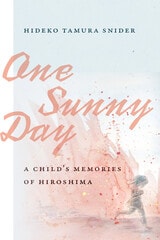
One Sunny Day
A Child's Memories of HiroshimaHideko Tamura Snider
Oregon State University Press, 2023
Hideko was ten years old when the atomic bomb devastated her home in Hiroshima. In this eloquent and moving narrative, Hideko recalls her life before the bomb, the explosion itself, and the influence of that trauma upon her subsequent life in Japan and the United States. Her years in America have given her unusual insights into the relationship between Japanese and American cultures and the impact of Hiroshima on our lives.
This new edition includes two expanded chapters and revisions throughout. A new epilogue brings the story up to date. This poignant story of courage and resilience remains deeply relevant today, offering a profoundly personal testament against the ongoing threat of nuclear warfare.
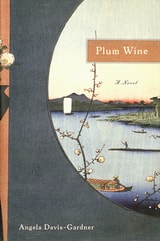
Plum Wine
A NovelAngela Davis-Gardner
University of Wisconsin Press, 2006
Barbara Jefferson, a young American teaching in Tokyo in the 1960s, is set on a life-changing quest when her Japanese surrogate mother, Michi, dies, leaving her a tansu of homemade plum wines wrapped in rice paper. Within the papers Barbara discovers writings in Japanese calligraphy that comprise a startling personal narrative. With the help of her translator, Seiji Okada, Barbara begins to unravel the mysteries of Michi's life, a story that begins in the early twentieth century and continues through World War II and its aftermath.
As Barbara and Seiji translate the plum wine papers they form an intimate bond, with Michi a ghostly third in what becomes an increasingly uneasy triangle. Barbara is deeply affected by the revelation that Michi and Seiji are hibakusha, survivors of the atomic bombing in Hiroshima, and even harder for her to understand are the devastating psychological effects wrought by war. Plum Wine examines human relationships, cultural differences, and the irreparable consequences of war in a story that is both original and timeless.
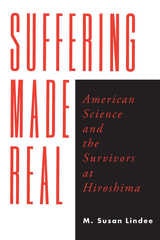
Suffering Made Real
American Science and the Survivors at HiroshimaM. Susan Lindee
University of Chicago Press, 1994
Suffering Made Real is the first comprehensive history of the ABCC's research on how radiation affected the survivors of the atomic bomb. Arguing that Cold War politics and cultural values fundamentally shaped the work of the ABCC, M. Susan Lindee tells the compelling story of a project that raised disturbing questions about the ethical implications of using human subjects in scientific research.
How did the politics of the emerging Cold War affect the scientists' biomedical research and findings? How did the ABCC document and publicly present the effects of radiation? Why did the ABCC refuse to provide medical treatment to the survivors? Through a detailed examination of ABCC policies, archival materials, the minutes of committee meetings, newspaper accounts, and interviews with ABCC scientists, Lindee explores how political and cultural interests were reflected in the day-to-day operations of this controversial research program.
Set against a period of conflicting views of nuclear weapons and nuclear power, Suffering Made Real follows the course of a politically charged research program and reveals in detail how politics and cultural values can shape the conduct, results, and uses of science.
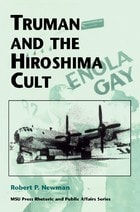
Truman and the Hiroshima Cult
Robert P. Newman
Michigan State University Press, 1995
The United States dropped atomic bombs on Japan in 1945 to end World War II as quickly and with as few casualties as possible. That is the compelling and elegantly simple argument Newman puts forward in his new study of World War II's end, Truman and the Hiroshima Cult. According to Newman: (1) The U.S. Strategic Bombing Survey conclusions that Japan was ready to surrender without "the Bomb" are fraudulent; (2) America’s "unconditional surrender" doctrine did not significantly prolong the war; and (3) President Harry S. Truman’s decision to use atomic weapons on Japanese cities was not a "racist act," nor was it a calculated political maneuver to threaten Joseph Stalin’s Eastern hegemony. Simply stated, Newman argues that Truman made a sensible military decision. As commander in chief, he was concerned with ending a devastating and costly war as quickly as possible and with saving millions of lives.
Yet, Newman goes further in his discussion, seeking the reasons why so much hostility has been generated by what happened in the skies over Hiroshima and Nagasaki in early August, 1945. The source of discontent, he concludes, is a "cult" that has grown up in the United States since the 1960s. It was weaned on the disillusionment spawned by concerns about a military industrial complex, American duplicity and failure in the Vietnam War, and a mistrust of government following Watergate. The cult has a shrine, a holy day, a distinctive rhetoric of victimization, various items of scripture, and, in Japan, support from a powerful Marxist constituency. "As with other cults, it is ahistorical," Newman declares. "Its devotees elevate fugitive and unrepresentative events to cosmic status. And most of all, they believe." Newman’s analysis goes to the heart of the process by which scholars interpret historical events and raises disturbing issues about the way historians select and distort evidence about the past to suit special political agendas.
Weapons for Victory
The Hiroshima Decision Fifty Years LaterRobert James Maddox
University of Missouri Press, 2004
The highly acclaimed Weapons for Victory originally appeared in 1995, the fiftieth anniversary of the end of World War II. Now, in this paperback edition, Robert James Maddox provides a new introduction about the ongoing controversy related to the decision to bomb Hiroshima.
When We Say “Hiroshima”
Selected PoemsKurihara Sadako; Translated with an Introduction by Richard H. Minear
University of Michigan Press, 1999
Writing Ground Zero
Japanese Literature and the Atomic BombJohn Whittier Treat
University of Chicago Press, 1994
Treat recounts the controversial history of Japanese public discourse around Hiroshima and Nagasaki—a discourse alternatively celebrated and censored—from August 6, 1945, to the present day. He includes works from the earliest survivor writers, including Hara Tamiki and Ota Yoko, to such important Japanese intellectuals today as Oe Kenzaburo and Oda Makoto. Treat argues that the insights of Japanese writers into the lessons of modern atrocity share much in common with those of Holocaust writers in Europe and the practitioners of recent poststructuralist nuclear criticism in America. In chapters that take up writers as diverse as Hiroshima poets, Tokyo critics, and Nagasaki women novelists, he explores the implications of these works for critical, literary, and cultural theory.
Treat summarizes the Japanese contribution to such ongoing international debates as the crisis of modern ethics, the relationship of experience to memory, and the possibility of writing history. This Japanese perspective, Treat shows, both confirms and amends many of the assertions made in the West on the shift that the death camps and nuclear weapons have jointly signaled for the modern world and for the future.
Writing Ground Zero will be read not only by students of Japan, but by all readers concerned with the fate of culture after the fact of nuclear war in our time.