Results by title
9 books match the query 'His World'

A Historian and His World
A Life of Christopher Dawson, 1889-1970Christina Scott
Catholic University of America Press, 2023
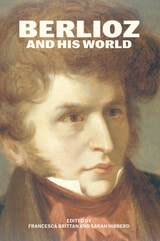
Berlioz and His World
Edited by Francesca Brittan and Sarah Hibberd
University of Chicago Press, 2024
Hector Berlioz (1803–1869) has long been a difficult figure to place and interpret. Famously, in Richard Wagner’s estimation, he hovered as a “transient, marvelous exception,” a composer woefully and willfully isolated. In the assessment of German composer Ferdinand Hiller, he was a fleeting comet who “does not belong in our musical solar system,” the likes of whom would never be seen again. For his contemporaries, as for later critics, Berlioz was simply too strange—and too noisy, too loud, too German, too literary, too cavalier with genre and form, and too difficult to analyze. He was, in many ways, a composer without a world.
Berlioz and His World takes a deep dive into the composer’s complex legacy, tracing lines between his musical and literary output and the scientific, sociological, technological, and political influences that shaped him. Comprising nine essays covering key facets of Berlioz’s contribution and six short “object lessons” meant as conversation starters, the book reveals Berlioz as a richly intersectional figure. His very difficulty, his tendency to straddle the worlds of composer, conductor, and critic, is revealed as a strength, inviting new lines of cross-disciplinary inquiry and a fresh look at his European and American reception.
Francois Vallé and His World
Upper Louisiana before Lewis and ClarkCarl J. Ekberg
University of Missouri Press, 2002
Winner of the Kemper & Leila Williams Prize in Louisiana History for excellence in historical scholarship for the year 2002, awarded by The Historic New Orleans Collection, The Louisiana Historical Association.
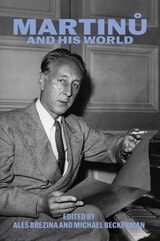
Martinu and His World
Edited by Aleš Brezina and Michael Beckerman
University of Chicago Press, 2025
Bohuslav Martinů was one of the most extraordinary and prolific composers of the twentieth century. Martinů and His World offers a portrait of the composer in all his complexity. Born in the present-day Czech Republic, Martinů was rendered stateless as a result of events around World War II and the Communist takeover of Czechoslovakia. He lived for more than a decade in the United States, where he had great success, and died in Switzerland.
Martinů composed more than four hundred works in all genres of instrumental and vocal music, and infused each with a special combination of the lyrical and the dramatic. Alongside an unerring sense of form, his works draw on a kaleidoscope of elements from such sources as Dvořák, American jazz of the 1920s, English Renaissance madrigals, the late Baroque concerto grosso, French Impressionism, Czech and Moravian folk songs, and the contemporary music of his day.
This volume pays special attention to Martinů’s little-known operatic works and presents for the first time both a recently discovered personal diary and a series of interviews with important figures who were part of his American years.
Martinů and His World reveals the composer as an essential voice of his time, an original thinker about music past and present, who lived through the political complexities of the twentieth century and stood up to them both as a human being and as an artist.
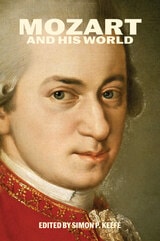
Mozart and His World
Edited by Simon P. Keefe
University of Chicago Press, 2026
A collection of essays that reinvigorates our understanding of some of Mozart's best-loved works.
One of the world’s most revered composers, Wolfgang Amadeus Mozart (1756–1791) wrote works in almost every genre. His life and work continue to fascinate scholars, performers, and music lovers alike. Mozart and His World brings original perspectives to perennially popular topics in Mozart studies. Through wide-ranging essays that address interpretive, biographical, and contextual themes, the volume simultaneously widens and refines our view of Mozart’s oeuvre.
Mozart and His World moves from studies of instrumental music and musicians to the interpretation and reception of Mozart’s operas, and finally to primary sources from the decade or so after Mozart’s death. Across original chapters and several archival documents, Mozart and His World points new ways forward in key areas of Mozart scholarship, including the study of intellectual and stylistic ideas informing his works and of musicians and institutions within his orbit. While the volume reshapes our understanding of some of Mozart’s best-loved works, including The Magic Flute and his other operas, it also probes works that have received less attention, such as his early string quartets, an opera parody, and wind-music culture and arrangements.
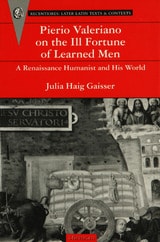
Pierio Valeriano on the Ill Fortune of Learned Men
A Renaissance Humanist and His WorldJulia Haig Gaisser
University of Michigan Press, 1999
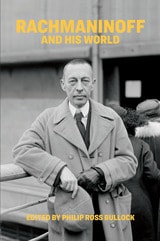
Rachmaninoff and His World
Edited by Philip Ross Bullock
University of Chicago Press, 2022
One of the most popular classical composers of all time, Sergei Rachmaninoff (1873–1943) has often been dismissed by critics as a conservative, nostalgic holdover of the nineteenth century and a composer fundamentally hostile to musical modernism. The original essays collected here show how he was more responsive to aspects of contemporary musical life than is often thought, and how his deeply felt sense of Russianness coexisted with an appreciation of American and European culture. In particular, the essays document his involvement with intellectual and artistic circles in prerevolutionary Moscow and how the form of modernity they promoted shaped his early output. This volume represents one of the first serious explorations of Rachmaninoff’s successful career as a composer, pianist, and conductor, first in late Imperial Russia, and then after emigration in both the United States and interwar Europe. Shedding light on some unfamiliar works, especially his three operas and his many songs, the book also includes a substantial number of new documents illustrating Rachmaninoff’s celebrity status in America.
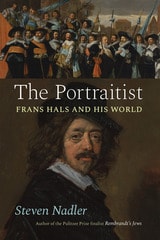
The Portraitist
Frans Hals and His WorldSteven Nadler
University of Chicago Press, 2022
Frans Hals was one of the greatest portrait painters in history, and his style transformed ideas and expectations about what portraiture can do and what a painting should look like.
Hals was a member of the great trifecta of Dutch Baroque painters alongside Rembrandt and Vermeer, and he was the portraitist of choice for entrepreneurs, merchants, professionals, theologians, intellectuals, militiamen, and even his fellow artists in the Dutch Golden Age. His works, with their visible brush strokes and bold execution, lacked the fine detail and smooth finish common among his peers, and some dismissed his works as sloppy and unfinished. But for others, they were fresh and exciting, filled with a sense of the sitter’s animated presence captured with energy and immediacy.
Steven Nadler gives us the first full-length biography of Hals in many years and offers a view into seventeenth-century Haarlem and this culturally rich era of the Dutch Republic. He tells the story not only of Hals’s life, but also of the artistic, social, political, and religious worlds in which he lived and worked.
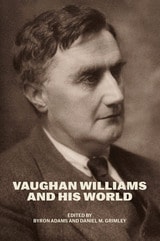
Vaughan Williams and His World
Edited by Byron Adams and Daniel M. Grimley
University of Chicago Press, 2023
Ralph Vaughan Williams (1872–1958) was one of the most innovative and creative figures in twentieth-century music, whose symphonies stand alongside those of Sibelius, Nielsen, Shostakovich, and Roussel. After his death, shifting priorities in the music world led to a period of critical neglect. What could not have been foreseen is that by the second decade of the twenty-first century, a handful of Vaughan Williams’s scores would attain immense popularity worldwide. Yet the present renown of these pieces has led to misapprehension about the nature of Vaughan Williams’s cultural nationalism and a distorted view of his international cultural and musical significance.
Vaughan Williams and His World traces the composer’s stylistic and aesthetic development in a broadly chronological fashion, reappraising Vaughan Williams’s music composed during and after the Second World War and affirming his status as an artist whose leftist political convictions pervaded his life and music. This volume reclaims Vaughan Williams’s deeply held progressive ethical and democratic convictions while celebrating his achievements as a composer.