Results by title
7 books match the query 'Hispanic American arts'

Abject Performances
Aesthetic Strategies in Latino Cultural ProductionLeticia Alvarado
Duke University Press, 2018
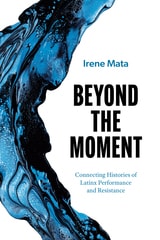
Beyond the Moment
Connecting Histories of Latinx Performance and ResistanceIrene Mata
University of Texas Press, 2026
Exploring cultural resistance by creating and archiving Latinx performance art
Performance is often seen as ephemeral, a condition that seemingly reduces its activist possibilities. After all, not everyone can take part or bear witness. Beyond the Moment shows how Latinx artists have responded with a theater of dissent that endures—performance art that also documents and can itself be archived, creating opportunities for sustained solidarity and resistance.
Through close readings of works such as Coco Fusco’s multi-genre performance A Field Guide for Female Interrogators, Irene Mata theorizes what she calls “textual mentoring.” This method involves tracing previous moments of resistance, archiving the creative process itself, and transforming the performance into a pedagogical tool. By means of textual mentoring, a work like The Panza Monologues becomes a lesson in confronting systemic oppression through collaborative storytelling. Mata also shows how the 2012 No Papers, No Fear Ride for Justice, a multistate immigrant-rights action, relies on a vocabulary of refusal of movements of the past—like the Freedom Rides of the Civil Rights era—and continues its activism beyond its immediate performance context by digitally archiving its process. With an emphasis on intersectional critique, Beyond the Moment positions performance as a radical form of resistance that educates and inspires across generations and movements.
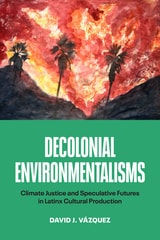
Decolonial Environmentalisms
Climate Justice and Speculative Futures in Latinx Cultural ProductionDavid J. Vázquez
University of Texas Press, 2025
A critical examination of the environmental movement and the Latinx voices that are shifting how to think about a future shaped by climate change.
In Decolonial Environmentalisms, David Vázquez argues that the mainstream environmental movement is implicated in racial capitalism, not least through its ignorance of environmental justice as it pertains to Latinx people. Through close readings of eco-minded novels, films, visual art, and short stories by Chicanx, Puerto Rican, Dominican, Cuban American, Peruvian, and Central American culture makers, Vázquez surfaces diverse Latinx visions for an equitable and sustainable humanity.
In the creations of Helena María Viramontes, Ester Hernández, Salvador Plascencia, the printmaking collective Dominican York Proyecto GRAFICA, and others, Vázquez locates a bracing critique of racist elisions and assumptions in hegemonic environmentalist thought. At the same time, he shows that the roles of Latinx people in the exploitation of the US West and the ruin of Indigenous communities are ripe for self-examination, in hopes of sparking reform. Indeed, Decolonial Environmentalisms is a work of guarded optimism, finding glimmers of possibility even in dystopic science fiction. The overlooked experiences of Latinx people, Vázquez suggests, can inspire environmental movements capable of transformative advocacy.
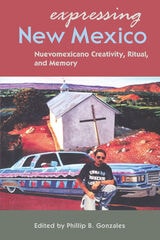
Expressing New Mexico
Nuevomexicano Creativity, Ritual, and MemoryEdited by Phillip B. Gonzales
University of Arizona Press, 2007
Intertwined with the concept of expressive culture is that of “place” in relation to New Mexico itself. Place is addressed directly by four of the authors in this anthology and is present in some way and in varying degrees among the rest. Place figures prominently in Nuevomexicano “character,” contributors argue. They assert that Nuevomexicanos and Nuevomexicanas construct and develop a sense of self that is shaped by the geography and culture of the state as well as by their heritage.
Many of the articles deal with recent events or with recent reverberations of important historical events, which imbues the collection with a sense of immediacy. Rituals, traditions, community commemorations, self-concepts, and historical revisionism all play key roles. Contributors include both prominent and emerging scholars united by their interest in, and fascination with, the distinctiveness of Nuevomexicano culture.
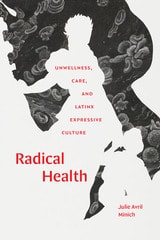
Radical Health
Unwellness, Care, and Latinx Expressive CultureJulie Avril Minich
Duke University Press, 2023
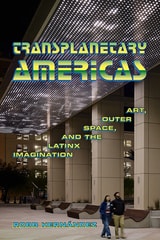
Transplanetary Americas
Art, Outer Space, and the Latinx ImaginationRobb Hernández
Duke University Press, 2026
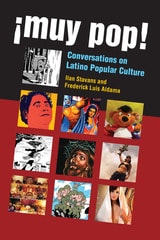
¡Muy Pop!
Conversations on Latino Popular CultureIlan Stavans and Frederick Luis Aldama
University of Michigan Press, 2013
Although investigations of Hispanic popular culture were approached for decades as part of folklore studies, in recent years scholarly explorations—of lucha libre, telenovelas, comic strips, comedy, baseball, the novela rosa and the detective novel, sci-fi, even advertising—have multiplied. What has been lacking is an overarching canvas that offers context for these studies, focusing on the crucial, framing questions: What is Hispanic pop culture? How does it change over time and from region to region? What is the relationship between highbrow and popular culture in the Hispanic world? Does it make sense to approach the whole Hispanic world as homogenized when understanding Hispanic popular culture? What are the differences between nations, classes, ethnic groups, religious communities, and so on? And what distinguishes Hispanic popular culture in the United States?
In ¡Muy Pop!, Ilan Stavans and Frederick Luis Aldama carry on a sustained, free-flowing, book-length conversation about these questions and more, concentrating on a wide range of pop manifestations and analyzing them at length. In addition to making Hispanic popular culture visible to the first-time reader, ¡Muy Pop! sheds new light on the making and consuming of Hispanic pop culture for academics, specialists, and mainstream critics.