Results by title

5 books match the query 'Hispanic American mass media'

cover of Abject Performances: Aesthetic Strategies in Latino Cultural Production

Abject Performances

Aesthetic Strategies in Latino Cultural Production

Leticia Alvarado

Duke University Press, 2018
In Abject Performances Leticia Alvarado draws out the irreverent, disruptive aesthetic strategies used by Latino artists and cultural producers who shun standards of respectability that are typically used to conjure concrete minority identities. In place of works imbued with pride, redemption, or celebration, artists such as Ana Mendieta, Nao Bustamante, and the Chicano art collective known as Asco employ negative affects—shame, disgust, and unbelonging—to capture experiences that lie at the edge of the mainstream, inspirational Latino-centered social justice struggles. Drawing from a diverse expressive archive that ranges from performance art to performative testimonies of personal faith-based subjection, Alvarado illuminates modes of community formation and social critique defined by a refusal of identitarian coherence that nonetheless coalesce into Latino affiliation and possibility.
[more]
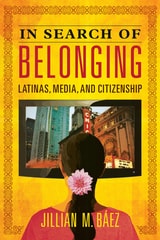
cover of In Search of Belonging: Latinas, Media, and Citizenship

In Search of Belonging

Latinas, Media, and Citizenship

Jillian M Baez

University of Illinois Press, 2018

In Search of Belonging explores the ways Latina/o audiences in general, and women in particular, make sense of and engage both mainstream and Spanish-language media. Jillian M. Báez’s eye-opening ethnographic analysis draws on the experiences of a diverse group of Latinas in Chicago. In-depth interviews reveal Latinas viewing media images through a lens of citizenship. These women search for nothing less than recognition—and belonging—through representations of Latinas in films, advertising, telenovelas, and TV shows like Ugly Betty and Modern Family. Báez's personal interactions and research merge to create a fascinating portrait, one that privileges the perspectives of the women themselves as they consume media in complex, unpredictable ways.

Innovative and informed by a wealth of new evidence, In Search of Belonging answers important questions about the ways Latinas perform citizenship in today’s America.

[more]
cover of Manufacturing Celebrity: Latino Paparazzi and Women Reporters in Hollywood

Manufacturing Celebrity

Latino Paparazzi and Women Reporters in Hollywood

Vanessa Diaz

Duke University Press, 2020
In Manufacturing Celebrity Vanessa Díaz traces the complex power dynamics of the reporting and paparazzi work that fuel contemporary Hollywood and American celebrity culture. Drawing on ethnographic fieldwork, her experience reporting for People magazine, and dozens of interviews with photographers, journalists, publicists, magazine editors, and celebrities, Díaz examines the racialized and gendered labor involved in manufacturing and selling relatable celebrity personas. Celebrity reporters, most of whom are white women, are expected to leverage their sexuality to generate coverage, which makes them vulnerable to sexual exploitation and assault. Meanwhile, the predominantly male Latino paparazzi can face life-threatening situations and endure vilification that echoes anti-immigrant rhetoric. In pointing out the precarity of those who hustle to make a living by generating the bulk of celebrity media, Díaz highlights the profound inequities of the systems that provide consumers with 24/7 coverage of their favorite stars.
[more]
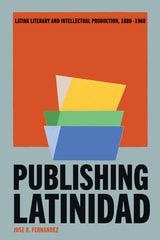
cover of Publishing Latinidad: Latinx Literary and Intellectual Production, 1880–1960

Publishing Latinidad

Latinx Literary and Intellectual Production, 1880–1960

Jose O. Fernandez

University of Arizona Press, 2025

Publishing Latinidad brings to light the overlooked contributions of early Latinx writers and intellectuals, offering a fresh perspective on their roles in shaping American literary and cultural landscapes.

Jose O. Fernandez meticulously examines the works of notable figures like José Martí, Arturo Schomburg, Jesús Colón, José de la Luz Sáenz, Adela Sloss-Vento, and Américo Paredes, illuminating their innovative approaches to circumventing exclusionary practices in the publishing world. He demonstrates how these writers and intellectuals entered literary, cultural, and intellectual discourses through alternative modes of literary production: crónicas, translations, paratexts, bibliographies, archival practices, sketches, diaries, biographies, unpublished fiction, and scholarly monographs. Through these examples, Fernandez situates Latinx literary production in this time period within the broader context of racial and ethnic solidarity movements in the United States.

Publishing Latinidad is essential reading for anyone interested in the social and cultural underpinnings of Latinx literature and intellectual thought. It challenges traditional narratives and enriches our appreciation of the diverse voices that have long been instrumental in the fight for justice.
[more]
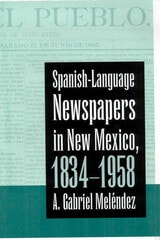
cover of Spanish-Language Newspapers in New Mexico, 1834-1958

Spanish-Language Newspapers in New Mexico, 1834-1958

A. Gabriel Meléndez

University of Arizona Press, 2005

For more than a century, Mexican American journalists used their presses to voice socio-historical concerns and to represent themselves as a determinant group of communities in Nuevo México, a particularly resilient corner of the Chicano homeland. This book draws on exhaustive archival research to review the history of newspapers in these communities from the arrival of the first press in the region to publication of the last edition of Santa Fe’s El Nuevo Mexicano.

Gabriel Meléndez details the education and formation of a generation of Spanish-language journalists who were instrumental in creating a culture of print in nativo communities. He then offers in-depth cultural and literary analyses of the texts produced by los periodiqueros, establishing them thematically as precursors of the Chicano literary and political movements of the 1960s and ’70s.

Moving beyond a simple effort to reinscribe Nuevomexicanos into history, Meléndez views these newspapers as cultural productions and the work of the editors as an organized movement against cultural erasure amid the massive influx of easterners to the Southwest. Readers will find a wealth of information in this book. But more important, they will come away with the sense that the survival of Nuevomexicanos as a culturally and politically viable group is owed to the labor of this brilliant generation of newspapermen who also were statesmen, scholars, and creative writers.
[more]