Results by title
9 books match the query 'Hispanic American men'
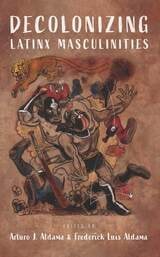
Decolonizing Latinx Masculinities
Edited by Arturo J. Aldama and Frederick Luis Aldama
University of Arizona Press, 2020
Together they explore how legacies of colonization and capitalist exploitation and oppression have created toxic forms of masculinity that continue to suffocate our existence as Latinxs. And while the authors seek to identify all cultural phenomena that collectively create reductive, destructive, and toxic constructions of masculinity that traffic in misogyny and homophobia, they also uncover the many spaces—such as Xicanx-Indígena languages, resistant food cultures, music performances, and queer Latinx rodeo practices—where Latinx communities can and do exhale healing masculinities.
With unity of heart and mind, the creative and the scholarly, Decolonizing Latinx Masculinities opens wide its arms to all non-binary, decolonial masculinities today to grow a stronger, resilient, and more compassionate new generation of Latinxs tomorrow.
Contributors
Arturo J. Aldama
Frederick Luis Aldama
T. Jackie Cuevas
Gabriel S. Estrada
Wayne Freeman
Jonathan D. Gomez
Ellie D. Hernández
Alberto Ledesma
Jennie Luna
Sergio A. Macías
Laura Malaver
Paloma Martinez-Cruz
L. Pancho McFarland
William Orchard
Alejandra Benita Portillos
John-Michael Rivera
Francisco E. Robles
Lisa Sánchez González
Kristie Soares
Nicholas Villanueva Jr.
Empowering Men of Color on Campus
Building Student Community in Higher EducationBrooms, Derrick R.
Rutgers University Press, 2018
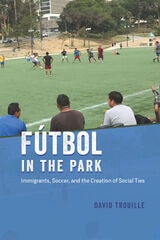
Fútbol in the Park
Immigrants, Soccer, and the Creation of Social TiesDavid Trouille
University of Chicago Press, 2021
Health Issues in Latino Males
A Social and Structural ApproachAguirre-Molina, Marilyn
Rutgers University Press, 2010

Homeboys Forever
The Lifetime Consequences of Gang MembershipAvelardo Valdez
University of Chicago Press, 2026
Violence, addiction, imprisonment . . . we don’t have to look hard to see the negative consequences of gang involvement. But what does it look like to spend a life—from adolescence to adulthood—in gangs? Sociologist Avelardo Valdez and his research team have been following the lives of Mexican American men in San Antonio, Texas, over a remarkable twenty years, watching and listening as they navigate adolescent delinquency and gang involvement, advance into a life of crime, and—sometimes—attempt to break from gang life and build lives in conventional society.
When gang affiliation exploded in the 1990s, adolescent street gang membership surged in the Mexican American community of Westside San Antonio. Valdez was quick to begin investigating how young men embedded in a system with little support for lasting change turned to gang violence, drug use, and other risky behaviors. The honesty of these men’s accounts draws our attention to the economic, political, and sociocultural context of impoverished communities in San Antonio. Being constantly written off as troublemakers and criminals eroded the self-respect that these young men once had. They were once lithe, active, and full of self-confidence, but after a lifetime of constant harassment and entanglements with the legal system, they now have a perpetual look of exhaustion and defeat.
Encouraging readers to question who is at fault when young men become involved in gangs and other delinquent behaviors, Homeboys Forever is a humanizing account of marginalized youth who struggle to overcome the systemic inequities that have led to a lifetime of heartbreaking consequences.
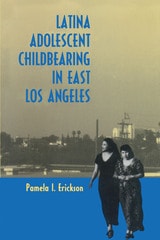
Latina Adolescent Childbearing in East Los Angeles
By Pamela I. Erickson
University of Texas Press, 1998
Preventing teen pregnancy has become a national goal, but a one-size-fits-all strategy for achieving it may never be found. Because varying social and cultural factors lead to pregnancy among different ethnic/class groups, understanding these factors is essential in designing pregnancy prevention programs that work. This book explores the factors that lead to childbearing among Latina adolescents.
Pamela Erickson draws on both quantitative data and case histories to trace the pathways to motherhood for Latina teens. After situating her study within current research on teen pregnancy, she looks specifically at teen mothers enrolled in programs at Women's Hospital in East L.A. She describes the teens' relationships to their babies' fathers and their own families and discusses how these relationships affect whether teen mothers want to become pregnant, their use of prenatal, postpartum, and family planning services, and their ability to prevent a repeat pregnancy. Erickson describes culturally appropriate intervention efforts and assesses the limitations of prevention programs in institutional settings such as schools and clinics.
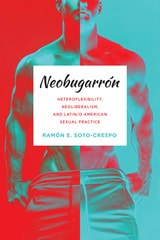
Neobugarrón
Heteroflexibility, Neoliberalism, and Latin/o American Sexual PracticeRamón E. Soto-Crespo
The Ohio State University Press, 2023
How should we understand the bugarrón, a man who has sex with other men while regarding himself as heterosexual? Reaching beyond queer and gay studies, Ramón E. Soto-Crespo’s research suggests that this paradoxical figure mutated into what he calls the “neobugarrón,” a neoliberal market-oriented actor who used the traditional sexual practice as an optimizing strategy for manipulating the forces of globalization during the 1990s. In Neobugarrón: Heteroflexibility, Neoliberalism, and Latin/o American Sexual Practice, Soto-Crespo chronicles the cultural modifications of bugarrón, a distinct male-male sexual practice in Latin/o America and the Caribbean, during the twentieth and twenty-first centuries. Working with and against Foucault and Kinsey to examine diverse works from anthropology, literature, cinema, and social media, he investigates a wide array of bugarrón sources, ranging from previously underexamined multimedia to ethnographies, fiction, films, and beyond. These works constitute a neobugarrón archive and attest to a sexual practice currently metamorphosing on the cusp of extinction. Soto-Crespo’s analysis challenges conventional understandings of “heteroflexible” sex between men and reveals a hitherto unnoticed transformation in neoliberal ecologies of bugarrón sexual practice.
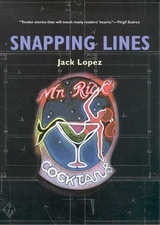
Snapping Lines
Jack Lopez
University of Arizona Press, 2001
A couple searches for a lost dog along the beach because the dog is more important than their relationship . . .
A drunken man picks up a girl hitchhiker and remembers what it once felt like to have feelings for someone else . . .
What does it mean to be male in a world in which old borders no longer exist? How can a man have a relationship if he doesn't even know who he is—and what better way to find out than by committing to a woman? Snapping Lines brings familiar and new stories together in a collection that explores the lives of loners searching for love. Jack Lopez writes about people who have adopted a stoical indifference to a world in which they always seem to find themselves on the losing end. These stories explore Latino male identity and the forces that shape it: friends, family, and lovers; culture, place, and relationships. They focus on men—often working men in the building trades—who construct their lives through their work and live in perpetual limbo because they don't know who they are. Men who stumble onto the relationships they need almost by accident. Men who try to control their relationships but fail.
Written in spare, electric language and energized by memorable scenes, these stories enlighten as much as they entertain. When you have read Snapping Lines, you will come to see the faces of strangers in new and familiar ways.
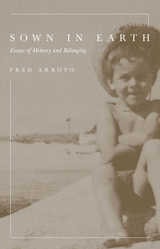
Sown in Earth
Essays of Memory and BelongingFred Arroyo
University of Arizona Press, 2020
In Sown in Earth, Arroyo often roots his thoughts and feelings in place, expressing a deep connection to the small homes he inhabited in his childhood, his warm and hazy memories of his grandmother’s kitchen in Puerto Rico, the rivers and creeks he fished, and the small cafés in Madrid that inspired writing and reflection in his adult years. Swirling in romantic moments and a refined love for literature, Arroyo creates a sense of belonging and appreciation for his life despite setbacks and complex anxieties along the way.
By crafting a written journey through childhood traumas, poverty, and the impact of alcoholism on families, Fred Arroyo clearly outlines how his lived experiences led him to become a writer. Sown in Earth is a shocking yet warm collage of memories that serves as more than a memoir or an autobiography. Rather, Arroyo recounts his youth through lyrical prose to humanize and immortalize the hushed lives of men like his father, honoring their struggle and claiming their impact on the writers and artists they raised.