Results by title
184 books match the query 'Hispanic Americans' and 11 start with a
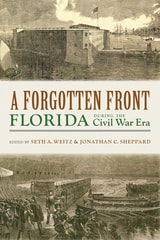
A Forgotten Front
Florida during the Civil War EraEdited by Seth A. Weitz and Jonathan C. Sheppard
University of Alabama Press, 2018
In many respects Florida remains the forgotten state of the Confederacy. Journalist Horace Greeley once referred to Florida in the Civil War as the “smallest tadpole in the dirty pool of secession.” Although it was the third state to secede, Florida’s small population and meager industrial resources made the state of little strategic importance. Because it was the site of only one major battle, it has, with a few exceptions, been overlooked within the field of Civil War studies.
During the Civil War, more than fifteen thousand Floridians served the Confederacy, a third of which were lost to combat and disease. The Union also drew the service of another twelve hundred white Floridians and more than a thousand free blacks and escaped slaves. Florida had more than eight thousand miles of coastline to defend, and eventually found itself with Confederates holding the interior and Federals occupying the coasts—a tenuous state of affairs for all. Florida’s substantial Hispanic and Catholic populations shaped wartime history in ways unique from many other states. Florida also served as a valuable supplier of cattle, salt, cotton, and other items to the blockaded South.
A Forgotten Front: Florida during the Civil War Era provides a much-needed overview of the Civil War in Florida. Editors Seth A. Weitz and Jonathan C. Sheppard provide insight into a commonly neglected area of Civil War historiography. The essays in this volume examine the most significant military engagements and the guerrilla warfare necessitated by the occupied coastline. Contributors look at the politics of war, beginning with the decade prior to the outbreak of the war through secession and wartime leadership and examine the period through the lenses of race, slavery, women, religion, ethnicity, and historical memory.
A History Of Hispanics In Southern Nevada
M. L. Miranda
University of Nevada Press, 1997
Hispanics were among the first people of European descent to venture into the territory that became Nevada, and they have participated in every stage of the state’s history and development since then--its mines, railroads, and ranches, the growth of its cities, and its modern industries. Until recently, however, their role in the development of the state and their lively cultural contributions have escaped the scrutiny of scholars. Now, in this important pioneering study, M. L. Miranda offers a thoughtful account of Nevada’s largest ethnic minority. Miranda analyzes their growing role in the state—especially in the booming urban South—and offers some projections for their future.
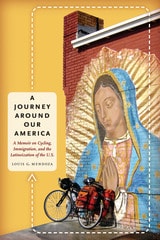
A Journey Around Our America
A Memoir on Cycling, Immigration, and the Latinoization of the U.S.By Louis G. Mendoza
University of Texas Press, 2012
Immigration and the growing Latino population of the United States have become such contentious issues that it can be hard to have a civil conversation about how Latinoization is changing the face of America. So in the summer of 2007, Louis Mendoza set out to do just that. Starting from Santa Cruz, California, he bicycled 8,500 miles around the entire perimeter of the country, talking to people in large cities and small towns about their experiences either as immigrants or as residents who have welcomed—or not—Latino immigrants into their communities. He presented their enlightening, sometimes surprising, firsthand accounts in Conversations Across Our America: Talking About Immigration and the Latinoization of the United States.
Now, in A Journey Around Our America, Mendoza offers his own account of the visceral, emotional, intellectual, and spiritual dimensions of traveling the country in search of a deeper, broader understanding of what it means to be Latino in the United States in the twenty-first century. With a blend of first- and second-person narratives, blog entries, poetry, and excerpts from conversations he had along the way, Mendoza presents his own aspirations for and critique of social relations, political ruminations, personal experiences, and emotional vulnerability alongside the stories of people from all walks of life, including students, activists, manual laborers, and intellectuals. His conversations and his experiences as a Latino on the road reveal the multilayered complexity of Latino life today as no academic study or newspaper report ever could.
A Land Apart
The Southwest and the Nation in the Twentieth CenturyFlannery Burke
University of Arizona Press, 2017
Winner, Spur Award for Best Contemporary Nonfiction (Western Writers of America)
A Land Apart is not just a cultural history of the modern Southwest—it is a complete rethinking and recentering of the key players and primary events marking the Southwest in the twentieth century. Historian Flannery Burke emphasizes how indigenous, Hispanic, and other non-white people negotiated their rightful place in the Southwest. Readers visit the region’s top tourist attractions and find out how they got there, listen to the debates of Native people as they sought to establish independence for themselves in the modern United States, and ponder the significance of the U.S.-Mexico border in a place that used to be Mexico. Burke emphasizes policy over politicians, communities over individuals, and stories over simple narratives.
Burke argues that the Southwest’s reputation as a region on the margins of the nation has caused many of its problems in the twentieth century. She proposes that, as they consider the future, Americans should view New Mexico and Arizona as close neighbors rather than distant siblings, pay attention to the region’s history as Mexican and indigenous space, bear witness to the area’s inequalities, and listen to the Southwest’s stories. Burke explains that two core parts of southwestern history are the development of the nuclear bomb and subsequent uranium mining, and she maintains that these are not merely a critical facet in the history of World War II and the militarization of the American West but central to an understanding of the region’s energy future, its environmental health, and southwesterners’ conception of home.
Burke masterfully crafts an engaging and accessible history that will interest historians and lay readers alike. It is for anyone interested in using the past to understand the present and the future of not only the region but the nation as a whole.
A Quiet Victory for Latino Rights
FDR and the Controversy Over "Whiteness"Patrick D. Lukens
University of Arizona Press, 2012
In 1935 a federal court judge handed down a ruling that could have been disastrous for Mexicans, Mexican Americans, and all Latinos in the United States. However, in an unprecedented move, the Roosevelt administration wielded the power of "administrative law" to neutralize the decision and thereby dealt a severe blow to the nativist movement. A Quiet Victory for Latino Rights recounts this important but little-known story.
To the dismay of some nativist groups, the Immigration Act of 1924, which limited the number of immigrants who could be admitted annually, did not apply to immigrants from Latin America. In response to nativist legal maneuverings, the 1935 decision said that the act could be applied to Mexican immigrants. That decision, which ruled that the Mexican petitioners were not "free white person[s]," might have paved the road to segregation for all Latinos.
The League of United Latin American Citizens (LULAC), founded in 1929, had worked to sensitize the Roosevelt administration to the tenuous position of Latinos in the United States. Advised by LULAC, the Mexican government, and the US State Department, the administration used its authority under administrative law to have all Mexican immigrants—and Mexican Americans—classified as "white." It implemented the policy when the federal judiciary "acquiesced" to the New Deal, which in effect prevented further rulings.
In recounting this story, complete with colorful characters and unlikely bedfellows, Patrick D. Lukens adds a significant chapter to the racial history of the United States.

A Tortilla Is Like Life
Food and Culture in the San Luis Valley of ColoradoBy Carole M. Counihan
University of Texas Press, 2009
Located in the southern San Luis Valley of Colorado, the remote and relatively unknown town of Antonito is home to an overwhelmingly Hispanic population struggling not only to exist in an economically depressed and politically marginalized area, but also to preserve their culture and their lifeways. Between 1996 and 2006, anthropologist Carole Counihan collected food-centered life histories from nineteen Mexicanas—Hispanic American women—who had long-standing roots in the Upper Rio Grande region. The interviews in this groundbreaking study focused on southern Colorado Hispanic foodways—beliefs and behaviors surrounding food production, distribution, preparation, and consumption.
In this book, Counihan features extensive excerpts from these interviews to give voice to the women of Antonito and highlight their perspectives. Three lines of inquiry are framed: feminist ethnography, Latino cultural citizenship, and Chicano environmentalism. Counihan documents how Antonito's Mexicanas establish a sense of place and belonging through their knowledge of land and water and use this knowledge to sustain their families and communities. Women play an important role by gardening, canning, and drying vegetables; earning money to buy food; cooking; and feeding family, friends, and neighbors on ordinary and festive occasions. They use food to solder or break relationships and to express contrasting feelings of harmony and generosity, or enmity and envy. The interviews in this book reveal that these Mexicanas are resourceful providers whose food work contributes to cultural survival.

Abstract Barrios
The Crises of Latinx Visibility in CitiesJohana Londoño
Duke University Press, 2020

Albert A. Peña Jr.
Dean of Chicano PoliticsJosé Angel Gutiérrez
Michigan State University Press, 2017

Aloha Compadre
Latinxs in Hawai'iRudy P. Guevarra
Rutgers University Press, 2023
Aloha Compadre: Latinxs in Hawaiʻi is the first book to examine the collective history and contemporary experiences of the Latinx population of Hawaiʻi. This study reveals that contrary to popular discourse, Latinx migration to Hawaiʻi is not a recent event. In the national memory of the United States, for example, the Latinx population of Hawaiʻi is often portrayed as recent arrivals and not as long-term historical communities with a presence that precedes the formation of statehood itself. Historically speaking, Latinxs have been voyaging to the Hawaiian Islands for over one hundred and ninety years. From the early 1830s to the present, they continue to help shape Hawaiʻi’s history, yet their contributions are often overlooked. Latinxs have been a part of the cultural landscape of Hawaiʻi prior to annexation, territorial status, and statehood in 1959. Aloha Compadre also explores the expanding boundaries of Latinx migration beyond the western hemisphere and into Oceania.
Apostles of Change
Latino Radical Politics, Church Occupations, and the Fight to Save the BarrioBy Felipe Hinojosa
University of Texas Press, 2021
2021 Finalist Raul Yzaguirre Best Political/Current Affairs Book, International Latino Book Awards
Winner of the Texas Association of Chicanos in Higher Education Inaugural Book Award
Unraveling the intertwined histories of Latino radicalism and religion in urban America, this book examines how Latino activists transformed churches into staging grounds for protest against urban renewal and displacement.
In the late 1960s, the American city found itself in steep decline. An urban crisis fueled by federal policy wreaked destruction and displacement on poor and working-class families. The urban drama included religious institutions, themselves undergoing fundamental change, that debated whether to stay in the city or move to the suburbs. Against the backdrop of the Black and Brown Power movements, which challenged economic inequality and white supremacy, young Latino radicals began occupying churches and disrupting services to compel church communities to join their protests against urban renewal, poverty, police brutality, and racism.
Apostles of Change tells the story of these occupations and establishes their context within the urban crisis; relates the tensions they created; and articulates the activists' bold, new vision for the church and the world. Through case studies from Chicago, Los Angeles, New York City, and Houston, Felipe Hinojosa reveals how Latino freedom movements frequently crossed boundaries between faith and politics and argues that understanding the history of these radical politics is essential to understanding the dynamic changes in Latino religious groups from the late 1960s to the early 1980s.
Apple Pie and Enchiladas
Latino Newcomers in the Rural MidwestBy Ann V. Millard and Jorge Chapa
University of Texas Press, 2004
The sudden influx of significant numbers of Latinos to the rural Midwest stems from the recruitment of workers by food processing plants and small factories springing up in rural areas. Mostly they work at back-breaking jobs that local residents are not willing to take because of the low wages and few benefits. The region has become the scene of dramatic change involving major issues facing our country—the intertwining of ethnic differences, prejudice, and poverty; the social impact of a low-wage workforce resulting from corporate transformations; and public policy questions dealing with economic development, taxation, and welfare payments.
In this thorough multidisciplinary study, the authors explore both sides of this ethnic divide and provide the first volume to focus comprehensively on Latinos in the region by linking demographic and qualitative analysis to describe what brings Latinos to the area and how they are being accommodated in their new communities. The fact is that many Midwestern communities would be losing population and facing a dearth of workers if not for Latino newcomers. This finding adds another layer of social and economic complexity to the region's changing place in the global economy. The authors look at how Latinos fit into an already fractured social landscape with tensions among townspeople, farmers, and others. The authors also reveal the optimism that lies in the opposition of many Anglos to ethnic prejudice and racism.