Results by title
4 books match the query 'Historiography and photography'
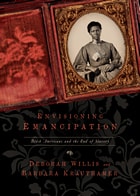
Envisioning Emancipation
Black Americans and the End of SlaveryDeborah Willis
Temple University Press, 2017
The Emancipation Proclamation is one of the most important documents in American history. As we commemorate its 150th anniversary, what do we really know about those who experienced slavery?
In their pioneering book, Envisioning Emancipation, renowned photographic historian Deborah Willis and historian of slavery Barbara Krauthamer have amassed 150 photographs—some never before published—from the antebellum days of the 1850s through the New Deal era of the 1930s. The authors vividly display the seismic impact of emancipation on African Americans born before and after the Proclamation, providing a perspective on freedom and slavery and a way to understand the photos as documents of engagement, action, struggle, and aspiration.
Envisioning Emancipation illustrates what freedom looked like for black Americans in the Civil War era. From photos of the enslaved on plantations and African American soldiers and camp workers in the Union Army to Juneteenth celebrations, slave reunions, and portraits of black families and workers in the American South, the images in this book challenge perceptions of slavery. They show not only what the subjects emphasized about themselves but also the ways Americans of all colors and genders opposed slavery and marked its end.
Filled with powerful images of lives too often ignored or erased from historical records, Envisioning Emancipation provides a new perspective on American culture.
Images in Spite of All
Four Photographs from AuschwitzGeorges Didi-Huberman
University of Chicago Press, 2008
Available today because they were smuggled out of the camp and into the hands of Polish resistance fighters, the photographs show a group of naked women being herded into the gas chambers and the cremation of corpses that have just been pulled out. Georges Didi-Huberman’s relentless consideration of these harrowing scenes demonstrates how Holocaust testimony can shift from texts and imaginations to irrefutable images that attempt to speak the unspeakable. Including a powerful response to those who have criticized his interest in these images as voyeuristic, Didi-Huberman’s eloquent reflections constitute an invaluable contribution to debates over the representability of the Holocaust and the status of archival photographs in an image-saturated world.
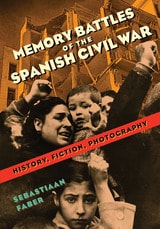
Memory Battles of the Spanish Civil War
History, Fiction, PhotographySebastiaan Faber
Vanderbilt University Press, 2017
Faber traces the curious trajectories of iconic Spanish Civil War photographs by Robert Capa, Gerda Taro, and David Seymour; critically reads a dozen recent Spanish novels and essays; interrogates basic scholarly assumptions about history, memory, and literature; and interviews nine scholars, activists, and documentarians who in the past decade and a half have helped redefine Spain's relationship to its past. In this book Faber argues that recent political developments in Spain--from the grassroots call for the recovery of historical memory to the indignados movement and the foundation of Podemos--provide an opportunity for scholars in the humanities to engage in a more activist, public, and democratic practice.
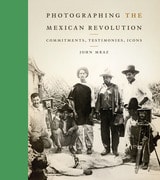
Photographing the Mexican Revolution
Commitments, Testimonies, IconsBy John Mraz
University of Texas Press, 2012
The Mexican Revolution of 1910–1920 is among the world’s most visually documented revolutions. Coinciding with the birth of filmmaking and the increased mobility offered by the reflex camera, it received extraordinary coverage by photographers and cineastes—commercial and amateur, national and international. Many images of the Revolution remain iconic to this day—Francisco Villa galloping toward the camera; Villa lolling in the presidential chair next to Emiliano Zapata; and Zapata standing stolidly in charro raiment with a carbine in one hand and the other hand on a sword, to mention only a few. But the identities of those who created the thousands of extant images of the Mexican Revolution, and what their purposes were, remain a huge puzzle because photographers constantly plagiarized each other’s images.
In this pathfinding book, acclaimed photography historian John Mraz carries out a monumental analysis of photographs produced during the Mexican Revolution, focusing primarily on those made by Mexicans, in order to discover who took the images and why, to what ends, with what intentions, and for whom. He explores how photographers expressed their commitments visually, what aesthetic strategies they employed, and which identifications and identities they forged. Mraz demonstrates that, contrary to the myth that Agustín Víctor Casasola was “the photographer of the Revolution,” there were many who covered the long civil war, including women. He shows that specific photographers can even be linked to the contending forces and reveals a pattern of commitment that has been little commented upon in previous studies (and completely unexplored in the photography of other revolutions).