Results by title
3 books match the query 'History, 19th Century'
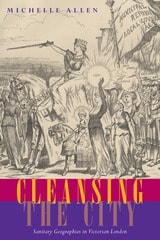
Cleansing the City
Sanitary Geographies in Victorian LondonMichelle Allen
Ohio University Press, 2008
Cleansing the City: Sanitary Geographies in Victorian London explores not only the challenges faced by reformers as they strove to clean up an increasingly filthy city but the resistance to their efforts. Beginning in the 1830s, reform-minded citizens, under the banner of sanitary improvement, plunged into London’s dark and dirty spaces and returned with the material they needed to promote public health legislation and magnificent projects of sanitary engineering. Sanitary reform, however, was not always met with unqualified enthusiasm. While some improvements, such as slum clearances, the development of sewerage, and the embankment of the Thames, may have made London a cleaner place to live, these projects also destroyed and reshaped the built environment, and in doing so, altered the meanings and experiences of the city.
From the novels of Charles Dickens and George Gissing to anonymous magazine articles and pamphlets, resistance to reform found expression in the nostalgic appreciation of a threatened urban landscape and anxiety about domestic autonomy in an era of networked sanitary services. Cleansing the City emphasizes the disruptions and disorientation occasioned by purification—a process we are generally inclined to see as positive. By recovering these sometimes oppositional, sometimes ambivalent responses, Michelle Allen elevates a significant undercurrent of Victorian thought into the mainstream and thus provides insight into the contested nature of sanitary modernization.
From the novels of Charles Dickens and George Gissing to anonymous magazine articles and pamphlets, resistance to reform found expression in the nostalgic appreciation of a threatened urban landscape and anxiety about domestic autonomy in an era of networked sanitary services. Cleansing the City emphasizes the disruptions and disorientation occasioned by purification—a process we are generally inclined to see as positive. By recovering these sometimes oppositional, sometimes ambivalent responses, Michelle Allen elevates a significant undercurrent of Victorian thought into the mainstream and thus provides insight into the contested nature of sanitary modernization.
[more]
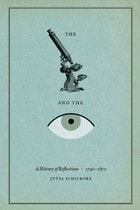
The Microscope and the Eye
A History of Reflections, 1740-1870Jutta Schickore
University of Chicago Press, 2007
The microscope’s technical capabilities and uses expanded dramatically in the early nineteenth century, when it emerged as an important tool for medical education and played a key role in the development of the cell theory, among other advancements. Focusing on the decades surrounding this crucial period, Jutta Schickore weaves a fascinating story of microscopy by tracing the entwined history of the eye and the optical instrument.
Concentrating on Great Britain and the German lands—home to the period’s most significant developments in microscopy—The Microscope and the Eye examines debates about such subjects as the legitimacy of human trespassing on the microcosm and the nature of light. Schickore also explores the microscope’s role in investigations of the finer structure of the eye and the workings of nerve fibers and the microscopists’ reflections on vision, illusion, artifacts, and the merits of instruments. Fully considering the epistemological, metaphysical, and methodological implications of this centuries-old relationship, The Microscope and the Eye will be an important contribution to the history of the life sciences, vision studies, and scientific methodology.
Concentrating on Great Britain and the German lands—home to the period’s most significant developments in microscopy—The Microscope and the Eye examines debates about such subjects as the legitimacy of human trespassing on the microcosm and the nature of light. Schickore also explores the microscope’s role in investigations of the finer structure of the eye and the workings of nerve fibers and the microscopists’ reflections on vision, illusion, artifacts, and the merits of instruments. Fully considering the epistemological, metaphysical, and methodological implications of this centuries-old relationship, The Microscope and the Eye will be an important contribution to the history of the life sciences, vision studies, and scientific methodology.
[more]
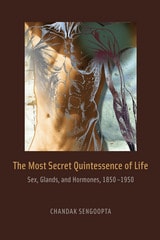
The Most Secret Quintessence of Life
Sex, Glands, and Hormones, 1850-1950Chandak Sengoopta
University of Chicago Press, 2006
Less than a century ago, physicians, scientists, and cultural commentators became fascinated by the endocrine glands and the effects of their secretions on our bodies and minds. Of all the characteristics supposed to be governed by them, the attributes of sex evoked the wildest interest. The gonads, it was revealed, secreted chemicals that not only influenced the biological expressions of sex, but seemed to generate the vitality and energy that made life worth living.
Through a series of case studies drawn from Central Europe, the United States, and Britain, The Most Secret Quintessence of Life explores how the notion of sex hormones enabled scientists to remap the human body, encouraging hopes that glandular interventions could cure ills, malfunctions, and even social deviance in ways inconceivable to previous generations. Many of these dreams failed, but their history, Chandak Sengoopta shows, takes us into the very heart of scientific medicine, revealing how even its most arcane concerns are shaped by cultural preoccupations and anxieties.
Through a series of case studies drawn from Central Europe, the United States, and Britain, The Most Secret Quintessence of Life explores how the notion of sex hormones enabled scientists to remap the human body, encouraging hopes that glandular interventions could cure ills, malfunctions, and even social deviance in ways inconceivable to previous generations. Many of these dreams failed, but their history, Chandak Sengoopta shows, takes us into the very heart of scientific medicine, revealing how even its most arcane concerns are shaped by cultural preoccupations and anxieties.
[more]