Results by title
13 books match the query 'History, Ancient'

Chronologies in Old World Archaeology
Third EditionEdited by Robert W. Ehrich
University of Chicago Press, 1992
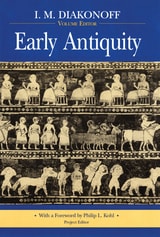
Early Antiquity
Edited by I. M. Diakonoff
University of Chicago Press, 1991
M. Diakonoff has gathered the work of Soviet historians in
this survey of the earliest history of the ancient Near East,
Central Asia, India, and China. Diakonoff and his
colleagues, nearly all working within the general Marxist
historiographic tradition, offer a comprehensive, accessible
synthesis of historical knowledge from the beginnings of
agriculture through the advent of the Iron Age and the Greek
colonization in the Mediterranean and the Black Sea areas.
Besides discussing features of Soviet historical
scholarship of the ancient world, the essays treat the
history of early Mesopotamia and the course of Pharaonic
Egyptian civilization and developments in ancient India and
China from the Bronze Age into the first millennium B.C.
Additional chapters are concerned with the early history of
Syria, Phoenicia, and Palestine, the Hittite civilization,
the Creto-Mycenaean world, Homeric Greece, and the Phoenician
and Greek colonization.
This volume offers a unified perspective on early
antiquity, focusing on the economic and social relations of
production. Of immense value to specialists, the book will
also appeal to general readers.
I. M. Diakonoff is a senior research scholar of ancient
history at the Institute of Oriental Studies, Leningrad
Academy of Sciences. Philip L. Kohl is professor of
anthropology at Wellesley College.
Essays in Ancient and Modern Historiography
Arnaldo Momigliano
University of Chicago Press, 2012
Herodotus and the Question Why
By Christopher Pelling
University of Texas Press, 2019
In the 5th century BCE, Herodotus wrote the first known Western history to build on the tradition of Homeric storytelling, basing his text on empirical observations and arranging them systematically. Herodotus and the Question Why offers a comprehensive examination of the methods behind the Histories and the challenge of documenting human experiences, from the Persian Wars to cultural traditions.
In lively, accessible prose, Christopher Pelling explores such elements as reconstructing the mentalities of storyteller and audience alike; distinctions between the human and the divine; and the evolving concepts of freedom, democracy, and individualism. Pelling traces the similarities between Herodotus's approach to physical phenomena (Why does the Nile flood?) and to landmark events (Why did Xerxes invade Greece? And why did the Greeks win?), delivering a fascinating look at the explanatory process itself. The cultural forces that shaped Herodotus's thinking left a lasting legacy for us, making Herodotus and the Question Why especially relevant as we try to record and narrate the stories of our time and to fully understand them.
Herodotus in the Anthropocene
Joel Alden Schlosser
University of Chicago Press, 2020
Schlosser shows that the Histories, which chronicle the interactions among the Greek city-states and their neighbors that culminated in the Persian Wars, illuminate a telling paradox: at those times when humans appear capable of exerting more influence than ever before, they must also assert collective agency to avoid their own downfall. Here, success depends on nomoi, or the culture, customs, and laws that organize human communities and make them adaptable through cooperation. Nomoi arise through sustained contact between humans and their surroundings and function best when practiced willingly and with the support of strong commitments to the equality of all participants. Thus, nomoi are the very substance of political agency and, ultimately, the key to freedom and ecological survival because they guide communities to work together to respond to challenges. An ingenious contribution to political theory, political philosophy, and ecology, Herodotus in the Anthropocene reminds us that the best perspective on the present can often be gained through the lens of the past.
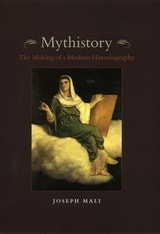
Mythistory
The Making of a Modern HistoriographyJoseph Mali
University of Chicago Press, 2003
In Mythistory, Joseph Mali revives this oldest controversy in historiography. Contesting the conventional opposition between myth and history, Mali advocates instead for a historiography that reconciles the two and recognizes the crucial role that myth plays in the construction of personal and communal identities. The task of historiography, he argues, is to illuminate, not eliminate, these fictions by showing how they have passed into and shaped historical reality. Drawing on the works of modern theorists and artists of myth such as Nietzsche and Wittgenstein, Joyce and Eliot, Mali redefines modern historiography and relates it to the older notion and tradition of "mythistory."
Tracing the origins and transformations of this historiographical tradition from the ancient world to the modern, Mali shows how Livy and Machiavelli sought to recover true history from uncertain myth-and how Vico and Michelet then reversed this pattern of inquiry, seeking instead to recover a deeper and truer myth from uncertain history. In the heart of Mythistory, Mali turns his attention to four thinkers who rediscovered myth in and for modern cultural history: Jacob Burckhardt, Aby Warburg, Ernst Kantorowicz, and Walter Benjamin. His elaboration of the different biographical and historiographical routes by which all four sought to account for the persistence and significance of myth in Western civilization opens up new perspectives for an alternative intellectual history of modernity-one that may better explain the proliferation of mythic imageries of redemption in our secular, all too secular, times.
Nomodeiktes
Greek Studies in Honor of Martin OstwaldRalph M. Rosen and Joseph Farrell, Editors
University of Michigan Press, 1994
Nomodeiktes: Greek Studies in Honor of Martin Ostwald offers fascinating discussions of many of these areas, and it helps illuminate ways in which modern perceptions of this complex period are right and are wrong. Important observations are made on Greek historians and historiography, on politics and society, and on Greek philosophy and literature. The analyses of these major areas of investigation will be very useful for all interested in this centrally important period and for those who know the lure of that vivid and compelling city, Athens.
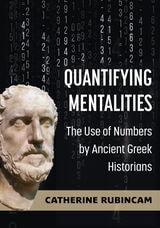
Quantifying Mentalities
The Use of Numbers by Ancient Greek HistoriansCatherine Rubincam
University of Michigan Press, 2021
As 21st-century citizens of developed countries, we are constantly bombarded by numbers in every aspect of our lives. Almost automatically, we learn to interpret how numbers are used in our language, what magnitude of numbers we expect to hear in particular contexts, how people in our community express degrees of confidence in the reliability of any particular number, etc. Context of this kind is lacking when we read a historical narrative composed in an ancient language, from a world vastly different from ours. In Quantifying Mentalities, Catherine Rubincam helps overcome this barrier to our accurate understanding of the numbers in the works of five major ancient Greek historians by providing a standard against which their credibility can be more accurately judged.
This systematic, quantified study is based on the compilation of statistics concerning a standard constellation of aspects of all the numbers in the historical works of the five earliest wholly or at least substantially surviving ancient Greek historians: Herodotus, Thucydides, Xenophon (Anabasis and Hellenica), Polybius, and Diodorus Siculus. Such a comprehensive study has not been attempted before. For scholars reading and writing about the history of ancient Greece the volume offers a tool for interpreting the numbers in these ancient texts with more sensitivity to the world in which they were written. Standard aspects of number use captured by the coding system are: the different types of number (cardinals, ordinals, compounds, and non-explicit but definite numbers); the subject category to which each number belongs (Time, Distance-Size, Military, Population, Money, and Miscellaneous); and the types of any qualifications attached to it (Approximating, Comparative, Alternative, and Emphatic). The statistics also facilitate comparisons of every aspect of number use between authors and texts, enabling the delineation of a numeric profile for each one. This allows us to read these texts with a greater sensitivity to how they might have sounded to the author and his original readers, thus providing a firmer foundation for reconstructing or interpreting ancient Greek history.
Telling Wonders
Ethnographic and Political Discourse in the Work of HerodotusRosaria Munson
University of Michigan Press, 2001
As he explores the causes of the East-West conflict from its most remote antecedents, Herodotus includes conflicting traditions about different historical periods as well as apparently tangential descriptions of the customs of faraway peoples. What was his aim in combining such diverse material? Rosaria Vignolo Munson argues that Herodotus' aim was two-fold: to use historical narrative to illuminate the present and to describe barbarian customs so that the Greeks might understand themselves.
Herodotus assumes the role of advisor to his audience, acting as a master of metaphor and oracular speech and as an intellectual fully aware of new philosophical and political trends. By comparing, interpreting, and evaluating facts through time and space or simply by pointing them out as objects of "wonder," he teaches that correct political action is linked to an appropriate approach to foreigners and additional "others." Munson relies on traditional scholarship and modern studies in narratology and related critical fields to distinguish between narrative and metanarrative, providing a framework for analyzing the construction of Herodotus' discourse and his presentation of himself through it.
Munson's work will be useful to classicists and ancient historians and will also engage anthropologists interested in cultural interaction and notions of ethnicity and literary critics interested in narrative constructions.
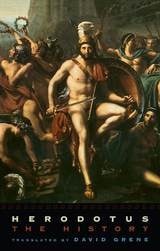
The History
Herodotus
University of Chicago Press, 1988
Here is the historian, investigating and judging what he has seen, heard, and read, and seeking out the true causes and consequences of the great deeds of the past. In his History, the war between the Greeks and Persians, the origins of their enmity, and all the more general features of the civilizations of the world of his day are seen as a unity and expressed as the vision of one man who as a child lived through the last of the great acts in this universal drama.
In Grene's remarkable translation and commentary, we see the historian as a storyteller, combining through his own narration the skeletal "historical" facts and the imaginative reality toward which his story reaches. Herodotus emerges in all his charm and complexity as a writer and the first historian in the Western tradition, perhaps unique in the way he has seen the interrelation of fact and fantasy.
The Limits of History
Constantin Fasolt
University of Chicago Press, 2003
So argues Constantin Fasolt in The Limits of History, an ambitious and pathbreaking study that conquers history's power by carrying the fight into the center of its domain. Fasolt considers the work of Hermann Conring (1606-81) and Bartolus of Sassoferrato (1313/14-57), two antipodes in early modern battles over the principles of European thought and action that ended with the triumph of historical consciousness. Proceeding according to the rules of normal historical analysis—gathering evidence, putting it in context, and analyzing its meaning—Fasolt uncovers limits that no kind of history can cross. He concludes that history is a ritual designed to maintain the modern faith in the autonomy of states and individuals. God wants it, the old crusaders would have said. The truth, Fasolt insists, only begins where that illusion ends.
With its probing look at the ideological underpinnings of historical practice, The Limits of History demonstrates that history presupposes highly political assumptions about free will, responsibility, and the relationship between the past and the present. A work of both intellectual history and historiography, it will prove invaluable to students of historical method, philosophy, political theory, and early modern European culture.
The SBL Handbook of Style
SBL Press, 2014
The definitive source for how to write and publish in the field of biblical studies
The long-awaited second edition of the essential style manual for writing and publishing in biblical studies and related fields includes key style changes, updated and expanded abbreviation and spelling-sample lists, a list of archaeological site names, material on qur’anic sources, detailed information on citing electronic sources, and expanded guidelines for the transliteration and transcription of seventeen ancient languages.
Features:
- Expanded lists of abbreviations for use in ancient Near Eastern, biblical, and early Christian studies
- Information for transliterating seventeen ancient languages
- Exhaustive examples for citing print and electronic sources
The Seven Books of History Against the Pagans
Roy J. Paulus Orosius
Catholic University of America Press, 1964