Results by title
18 books match the query 'History, Modern'
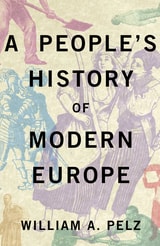
A People's History of Modern Europe
William A. Pelz
Pluto Press, 2016
Along the way, William A. Pelz examines the German peasant wars of Thomas Müntzer, the bourgeoisie revolutions of the eighteenth century, the rise of the industrial worker in England, the turbulent journey of the Russian Soviets, the role of the European working class throughout the Cold War, and the revolutionary students in 1968. He then brings his story to the present day, where we continue to fight to forge an alternative to a heartless and often barbaric economic system.
As Germany and Greece argue over who owes what, with the very idea of Europe crumbling around them, Pelz’s accessible, provocative history could not be timelier. Sure to resonate with fans of books like Howard Zinn’s A People’s History of the United States, this people’s history sweeps away the tired platitudes of the privileged and provides an opportunity to understand the story of Europe from the ground up.
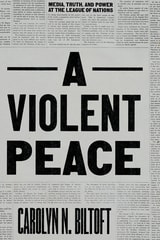
A Violent Peace
Media, Truth, and Power at the League of NationsCarolyn N. Biltoft
University of Chicago Press, 2021
An exploration of instability in information systems, the allure of fascism, and the contradictions at the heart of a global modernity, A Violent Peace paints a rich portrait of the emergence of the age of information—and all its attendant problems.
Anti-Crisis
Janet Roitman
Duke University Press, 2013
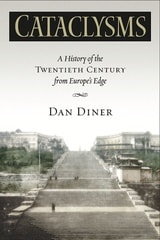
Cataclysms
A History of the Twentieth Century from Europe’s EdgeDan Diner, Translated by William Templer with Joel Golb
University of Wisconsin Press, 2007
Influenced by continental historical, legal, and social thought, Dan Diner views the totality of world history evolving from an Eastern and Southeastern European angle. A work of great synthesis, Cataclysms chronicles twentieth century history as a “universal civil war” between a succession of conflicting dualisms such as freedom and equality, race and class, capitalism and communism, liberalism and fascism, East and West.
Diner’s interpretation rotates around cataclysmic events in the transformation from multinational empires into nation states, accompanied by social revolution and “ethnic cleansing,” situating the Holocaust at the core of the century’s predicament. Unlike other Eurocentric interpretations of the last century, Diner also highlights the emerging pivotal importance of the United States and the impact of decolonization on the process of European integration.
Equestrian Cultures
Horses, Human Society, and the Discourse of ModernityEdited by Kristen Guest and Monica Mattfeld
University of Chicago Press, 2019
Kristen Guest and Monica Mattfeld place the modern period front and center in this collection, illuminating the largely untold story of how the horse has responded to the accelerated pace of modernity. The book’s contributors explore equine cultures across the globe, drawing from numerous interdisciplinary sources to show how horses have unexpectedly influenced such distinctively modern fields as photography, anthropology, and feminist theory. Equestrian Cultures boldly steps forward to redefine our view of the most recent developments in our long history of equine partnership and sets the course for future examinations of this still-strong bond.
Essays on Twentieth-Century History
Edited by Michael Adas for the American Historical Association
Temple University Press, 2010
In the sub-field of world history, there has been a surprising paucity of thinking and writing about how to approach and conceptualize the long twentieth century from the 1870s through the early 2000s. The historiographic essays collected in Essays on Twentieth Century History will go a long way to filling that lacuna.
Each contribution covers a key theme and one or more critical sub-fields in twentieth century global history. Chapters address migration patterns, the impact of world wars, transformations in gender and urbanization, as well as environmental transitions. All are written by leading historians in each of the sub-fields represented, and each is intended to provide an introduction to the literature, key themes, and debates that have proliferated around the more recent historical experience of humanity.

History And 9/11
Joanne Meyerowitz
Temple University Press, 2003

Isaiah Berlin
A CelebrationEdited by Edna Ullmann-Margalit and Avishai Margalit
University of Chicago Press, 1991
"Some [essays], like Joseph Brodsky's tribute, are touchingly personal. Others, like G. A. Cohen's 'Isaiah's Marx, and Mine,' mingle personal reminiscences with a more theoretical look at Berlin's ideas. . . . The volume is a fitting tribute to a thinker famed for his erudition, eclecticism, and clarity of style."—Merle Rubin, The Christian Science Monitor
"One of the many merits of this rich and rewarding collection is the sense-very imperfectly conveyed here-it transmits of the tone of Berlin's writings and conversation, of the multiplicity of his interests and the variety of his achievements. . . . The essays testify to the character of Berlin's mind as a luminous prism, in which the cultural traditions of Russia, England and Judaism are marvelously refracted."—John Gray, Times Literary Supplement
"[T]he collection testifies to the learning and profundity of Berlin's thought and, by way both of reminiscence and influence, to the charm and gaity of its expression."—Anthony Quinton, The Times of London
Mythistory
The Making of a Modern HistoriographyJoseph Mali
University of Chicago Press, 2003
In Mythistory, Joseph Mali revives this oldest controversy in historiography. Contesting the conventional opposition between myth and history, Mali advocates instead for a historiography that reconciles the two and recognizes the crucial role that myth plays in the construction of personal and communal identities. The task of historiography, he argues, is to illuminate, not eliminate, these fictions by showing how they have passed into and shaped historical reality. Drawing on the works of modern theorists and artists of myth such as Nietzsche and Wittgenstein, Joyce and Eliot, Mali redefines modern historiography and relates it to the older notion and tradition of "mythistory."
Tracing the origins and transformations of this historiographical tradition from the ancient world to the modern, Mali shows how Livy and Machiavelli sought to recover true history from uncertain myth-and how Vico and Michelet then reversed this pattern of inquiry, seeking instead to recover a deeper and truer myth from uncertain history. In the heart of Mythistory, Mali turns his attention to four thinkers who rediscovered myth in and for modern cultural history: Jacob Burckhardt, Aby Warburg, Ernst Kantorowicz, and Walter Benjamin. His elaboration of the different biographical and historiographical routes by which all four sought to account for the persistence and significance of myth in Western civilization opens up new perspectives for an alternative intellectual history of modernity-one that may better explain the proliferation of mythic imageries of redemption in our secular, all too secular, times.
Organizations, Civil Society, and the Roots of Development
Edited by Naomi R. Lamoreaux and John Joseph Wallis
University of Chicago Press, 2017
The contributions to Organizations, Civil Society, and the Roots of Development seek to answer this question through an exploration of how developing nations throughout the eighteenth and nineteenth centuries, including the United States, United Kingdom, France, and Germany, made the transition to allowing their citizens the right to form organizations. The transition, contributors show, was not an easy one. Neither political changes brought about by revolution nor subsequent economic growth led directly to open access. In fact, initial patterns of change were in the opposite direction, as political coalitions restricted access to specific organizations for the purpose of maintaining political control. Ultimately, however, it became clear that these restrictions threatened the foundation of social and political order. Tracing the path of these modern civil societies, Organizations, Civil Society, and the Roots of Development is an invaluable contribution to all interested in today’s developing countries and the challenges they face in developing this organizational capacity.

Paradoxes of Nostalgia
Cold War Triumphalism and Global Disorder since 1989Penny M. Von Eschen
Duke University Press, 2022
Power and Time
Temporalities in Conflict and the Making of HistoryEdited by Dan Edelstein, Stefanos Geroulanos, and Natasha Wheatley
University of Chicago Press, 2020
A collection of essays that challenges how we interpret history by focusing on the nexus of two concepts— “power” and “time”—as they manifest in a wide variety of case studies.
Time is the backdrop of historical inquiry, yet it is much more than a featureless setting for events. Different temporalities interact dynamically; sometimes they coexist tensely, sometimes they clash violently. In this innovative volume, editors Dan Edelstein, Stefanos Geroulanos, and Natasha Wheatley challenge how we interpret history by focusing on the nexus of two concepts—“power” and “time”—as they manifest in a wide variety of case studies. Analyzing history, culture, politics, technology, law, art, and science, this engaging book shows how power is constituted through the shaping of temporal regimes in historically specific ways. Power and Time includes seventeen essays on human rights; sovereignty; Islamic, European, Chinese, and Indian history; slavery; capitalism; revolution; the Supreme Court; the Anthropocene; and even the Manson Family. Power and Time will be an agenda-setting volume, highlighting the work of some of the world’s most respected and original contemporary historians and posing fundamental questions for the craft of history.
Race, Ethnicity, and the Cold War
A Global PerspectivePhilip E. Muehlenbeck
Vanderbilt University Press, 2012
Table of Contents
Preface
Introduction: The Borders of Race and Nation
Nico Slate
Part I: Race and the International System
Token Diplomacy: The United States, Race, and the Cold War
Michael L. Krenn
A Wind of Change? White Redoubt and the Postcolonial Moment in South Africa, 1960-1963
Ryan M. Irwin
Part II: Race, Ethnicity, and Decolonization
Race, Labor, and Security in the Panama Canal Zone: The 1946 Greaves Rape Case, Local 713, and the Isthmian Cold War Crackdown
Michael Donoghue
Race, Identity, and Diplomacy in the Papua Decolonization Struggle, 1949-1962
David Webster
"For a Better Guinea": Winning Hearts and Minds in Portuguese Guinea
Luís Nuno Rodrigues
Part III: Race and the Interplay of Domestic and International Politics
Testing the Limits of Soviet Internationalism: African Students in the Soviet Union
Maxim Matusevich
Crimes against Humanity in the Congo: Nazi Legacies and the German Cold War in Africa
Katrina M. Hagen
Race and the Cuban Revolution: The Impact of Cuba's Intervention in Angola
Henley Adams
Part IV: Ethnicity and the Interplay of Domestic and International Politics
Ethnic Nationalism in the Cold War Context: The Cyprus Issue in the Greek and Greek American Public Debate, 1954-1989
Zinovia Lialiouti and Philip E. Muehlenbeck
God Bless Reagan and God Help Canada: The Polish Canadian Action Group and Solidarność in Toronto
Eric L. Payseur
Ethnic Nationalism and the Collapse of Soviet Communism
Mark R. Beissinger
September 11 in History
A Watershed Moment?Mary L. Dudziak, ed.
Duke University Press, 2003
From a variety of perspectives, the contributors to this collection scrutinize claims about September 11, in terms of both their historical validity and their consequences. Essays range from an analysis of terms like “ground zero,” “homeland,” and “the axis of evil” to an argument that the U.S. naval base at Guantánamo Bay has become a site for acting out a repressed imperial history. Examining the effect of the attacks on Islamic self-identity, one contributor argues that Osama bin Laden enacted an interpretation of Islam on September 11 and asserts that progressive Muslims must respond to it. Other essays focus on the deployment of Orientalist tropes in categorizations of those who “look Middle Eastern,” the blurring of domestic and international law evident in a number of legal developments including the use of military tribunals to prosecute suspected terrorists, and the justifications for and consequences of American unilateralism. This collectionultimately reveals that everything did not change on September 11, 2001, but that some foundations of democratic legitimacy have been significantly eroded by claims that it did.
Contributors. Khaled Abou el Fadl, Mary L. Dudziak, Christopher L. Eisgruber, Laurence R. Helfer, Sherman A. Jackson, Amy B. Kaplan, Elaine Tyler May, Lawrence G. Sager, Ruti G. Teitel, Leti Volpp, Marilyn B. Young
The Latest Catastrophe
History, the Present, the ContemporaryHenry Rousso
University of Chicago Press, 2016
Henry Rousso addresses the rise of contemporary history and the relations of present-day societies to their past, especially their legacies of political violence. Focusing on France, Germany, the United Kingdom, and the United States, he shows that for contemporary historians, the recent past has become a problem to be solved. No longer unfolding as a series of traditions to be respected or a set of knowledge to be transmitted and built upon, history today is treated as a constant act of mourning or memory, an attempt to atone. Historians must also negotiate with strife within this field, as older scholars who may have lived through events clash with younger historians who also claim to understand the experiences. Ultimately, The Latest Catastrophe shows how historians, at times against their will, have themselves become actors in a history still being made.
The Practical Past
Hayden White
Northwestern University Press, 2014
Hayden White borrows the title for The Practical Past from philosopher Michael Oakeshott, who used the term to describe the accessible material and literary-artistic artifacts that individuals and institutions draw on for guidance in quotidian affairs. The Practical Past, then, forms both a summa of White’s work to be drawn upon and a new direction in his thinking about the writing of history.
White’s monumental Metahistory: The Historical Imagination in Nineteenth-Century Europe (1973) challenged many of the commonplaces of professional historical writing and wider assumptions about the ontology of history itself. It formed the basis of his argument that we can never recover “what actually happened”in the past and cannot really access even material culture in context. Forty years on, White sees “professional history" as falling prey to narrow specialization, and he calls upon historians to take seriously the practical past of explicitly “artistic” works, such as novels and dramas, and literary theorists likewise to engage historians.
Understanding and Teaching the Age of Revolutions
Edited by Ben Marsh and Mike Rapport
University of Wisconsin Press, 2017
The volume includes chapters on sources and methods for stimulating student debate and learning, including Tom Paine's Common Sense, the Haitian Declaration of Independence, and other key documents; role-playing games; visual arts and culture; and music, including opera and popular songs. Other chapters delve into specific themes, including revolution and riot, revolutionary terror, enlightenment, gender, slavery, nationalism, environment and climate, and the roles of politically excluded groups. Collectively, the contributions ensure a broad Atlantic scope, discussing the revolutions in Britain's North American colonies, Haiti, and Latin America, and European revolutions including France, Belgium, and the Netherlands.
Unearthed
Science and Environment Across Mineral FrontiersPatrick Anthony
University of Chicago Press, 2026
Unearthed depicts a pivotal moment during the nineteenth century: As European and settler schemes to govern ever larger territories intensified, the earth and atmospheric sciences were also becoming more global in scope, assembling models of the planet while making use of militarized or highly industrialized systems. These efforts were informed by the physique du monde, or global physics, of Alexander von Humboldt (1769–1859), a program of vast data collection that spanned four hemispheres that aimed to determine general, scientific laws about the planet and its environments.
Using Humboldt’s itineraries as a frame, Unearthed traces an information order that linked far-flung industrial sites and frontier stations, from Prussian provinces to the Spanish and Russian empires. Humboldt intersected with Saxon miners, Mexican cartographers, and Siberian surveyors, among other itinerant Germans who mobilized the labor and resources of widespread mining operations for global surveys of earth and air. Interweaving the histories of capital and climate, Patrick Anthony takes readers from mines to mountains to show how the sciences of Humboldt’s circuits both measured and made modern natures. These sciences of the mineral frontier, he argues, ultimately laid the groundwork for carbon-intensive economics and a logic of unending extraction. Wide-ranging and ambitious, Unearthed will interest scholars working in the history of science, global history, and the environmental humanities.