Results by title
3 books match the query 'History in art'
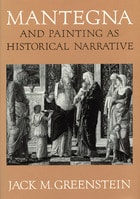
Mantegna and Painting as Historical Narrative
Jack M. Greenstein
University of Chicago Press, 1992
"Greenstein has raised the level of sophistication of the historical criticism of Renaissance painting by at least one whole notch; at the same time, he has written a book for everyone interested in problems of interpretation."—David Summers, University of Virginia
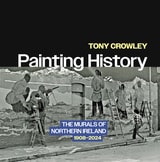
Painting History
The Murals of Northern Ireland, 1908–2024Tony Crowley
Amherst College Press, 2025
In Painting History, Tony Crowley provides a detailed analysis of the complex tradition of muralism in the context of the history that produced it, with particular attention given to the cultural politics of this remarkable form. The book also raises and discusses a series of theoretical questions about murals and muralism that transcend Northern Ireland: issues of propriety and legality, form and content, authority and censorship. The work ends with a consideration of the future of the murals in a still polarized but changing region.
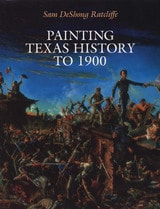
Painting Texas History to 1900
By Sam D. Ratcliffe
University of Texas Press, 1992
Certificate of Commendation, American Association for State and Local History, 1994
T. R. Fehrenbach Book Award, Texas Historical Commission, 1992
San Antonio Conservation Society Citation, 1993
Dramatic historical events have frequently provided subject matter for artists, particularly in pre-twentieth-century Texas, where works portraying historical, often legendary, events and individuals predominated. Until now, however, these paintings of Texas history have never received the kind of study given to historical, fictional, and film versions of the same events. Painting Texas History to 1900 fills this gap with an interdisciplinary approach that explores these paintings both as works of art and as historical documents.
The author examines the works of more than forty artists, including Henry McArdle, Theodore Gentilz, Robert Onderdonk, William Huddle, Frederic Remington, Friedrich Richard Petri, Arthur T. Lee, Seth Eastman, Sarah Hardinge, Frank Reaugh, W. G. M. Samuel, Carl G. von Iwonski, and Julius Stockfleth. He places each work within its historical and cultural context to show why such subject matter was chosen, why it was depicted in a particular way, and why such a depiction gained popular acceptance. For example, paintings of heroic events of the Texas Revolution were especially popular in the years following the Civil War, when, in Ratcliffe's view, Texans needed such images to assuage the loss of the war and the humiliation of Reconstruction.
Though the paintings cut across traditional art history categories—from the pictographs of early historic Indians to European-inspired oil paintings—they are bound together by their artists' intent for them to function as historically evocative documents. With their visual narratives of events that characterized all of America's westward expansion—Indian encounters, military battles, farming, ranching, surveying, and the closing of the frontier—these works add an important chapter to the story of the American West.