Results by title
3 books match the query 'History in popular culture'

Channeling the Past
Politicizing History in Postwar AmericaErik Christiansen
University of Wisconsin Press, 2013
After the turmoil of the Great Depression and World War II, Americans looked to the nation’s more distant past for lessons to inform its uncertain future. By applying recent and emerging techniques in mass communication—including radio and television programs and commercial book clubs—American elites working in media, commerce, and government used history to confer authority on their respective messages.
With insight and wit, Erik Christiansen uncovers in Channeling the Past the ways that powerful corporations rewrote history to strengthen the postwar corporate state, while progressives, communists, and other leftists vied to make their own versions of the past more popular. Christiansen looks closely at several notable initiatives—CBS’s flashback You Are There program; the Smithsonian Museum of American History, constructed in the late 1950s; the Cavalcade of America program sponsored by the Du Pont Company; the History Book Club; and the Freedom Train, a museum on rails that traveled the country from 1947 to 1949 exhibiting historic documents and flags, including original copies of the U.S. Constitution and the Magna Carta.
It is often said that history is written by the victors, but Christiansen offers a more nuanced perspective: history is constantly remade to suit the objectives of those with the resources to do it. He provides dramatic evidence of sophisticated calculations that influenced both public opinion and historical memory, and shows that Americans’ relationships with the past changed as a result.
[more]
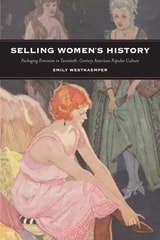
Selling Women's History
Packaging Feminism in Twentieth-Century American Popular CultureWestkaemper, Emily
Rutgers University Press, 2017
Only in recent decades has the American academic profession taken women’s history seriously. But the very concept of women’s history has a much longer past, one that’s intimately entwined with the development of American advertising and consumer culture.
Selling Women’s History reveals how, from the 1900s to the 1970s, popular culture helped teach Americans about the accomplishments of their foremothers, promoting an awareness of women’s wide-ranging capabilities. On one hand, Emily Westkaemper examines how this was a marketing ploy, as Madison Avenue co-opted women’s history to sell everything from Betsy Ross Red lipstick to Virginia Slims cigarettes. But she also shows how pioneering adwomen and female historians used consumer culture to publicize histories that were ignored elsewhere. Their feminist work challenged sexist assumptions about women’s subordinate roles.
Assessing a dazzling array of media, including soap operas, advertisements, films, magazines, calendars, and greeting cards, Selling Women’s History offers a new perspective on how early- and mid-twentieth-century women saw themselves. Rather than presuming a drought of female agency between the first and second waves of American feminism, it reveals the subtle messages about women’s empowerment that flooded the marketplace.
[more]
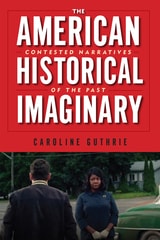
The American Historical Imaginary
Contested Narratives of the PastCaroline Guthrie
Rutgers University Press, 2023
In The American Historical Imaginary: Contested Narratives of the Past in Mass Culture Caroline Guthrie examines the American relationship to versions of the past that are known to be untrue and asks why do these myths persist, and why do so many people hold them so dear? To answer these questions, she examines popular sites where fictional versions of history are formed, played through, and solidified. From television’s reality show winners and time travelers, to the Magic Kingdom in Walt Disney World, to the movies of Quentin Tarantino, this book examines how mass culture imagines and reimagines the most controversial and painful parts of American history. In doing so, Guthrie explores how contemporary ideas of national identity are tied to particular versions of history that valorize white masculinity and ignores oppression and resistance. Through her explanation and analysis of what she calls the historical imaginary, Guthrie offers new ways of attempting to combat harmful myths of the past through the imaginative engagements they have dominated for so long.
[more]