Results by title
6 books match the query 'Holidays (non-religious)'
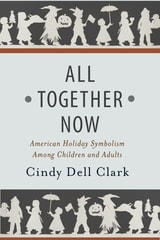
All Together Now
American Holiday Symbolism Among Children and AdultsCindy Dell Clark
Rutgers University Press, 2019
The decorations, songs, special ways of dressing, and rituals carry deep significance that is viscerally felt by even young tots. Ritual has the capacity to condense a plethora of meaning into a unified metaphor such as a Christmas tree, a menorah, or the American flag. These symbols allow children and adults to co-opt the meaning of symbols in flexible and age-relevant ways, all while the symbols are still treasured and shared in common.
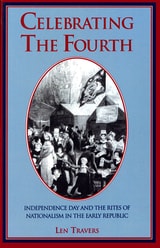
Celebrating the Fourth
Independence Day and the Rites of Nationalism in the Early RepublicLen Travers
University of Massachusetts Press, 1997
A CHOICE Outstanding Academic Book
Public rituals have always held a vital place in American culture. By far the noisiest and most popular of these to emerge in the nation's early years was Independence Day. After a decade of fitful starts, the Fourth of July eclipsed local and regional patriotic observances to become the premier “American Jubilee.” Celebrating the Fourth provides a history of this holiday and explores its role in shaping a national identity and consciousness in three cities—Boston, Charleston, and Philadelphia—during the first fifty years of the American republic. Independence Day celebrations justified, validated, and helped maintain nationalism among people unused to offering political allegiance beyond their own state borders. As the observances became increasingly popular and symbolically important, political partisans competed hotly for the right to control the meaning of the festivals.
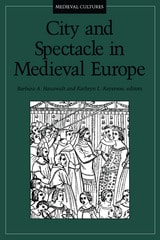
City and Spectacle in Medieval Europe
Barbara Hanawalt
University of Minnesota Press, 1994
Medieval Europe is known for its sense of ceremony and drama. Knightings, tournaments, coronations, religious processions, and even private celebrations such as baptisms, weddings, and funerals were occasions for ritual, feasting, and public display. This volume is the first to take a comprehensive look at the many types of city spectacles that entertained the masses and confirmed various messages of power in late medieval Europe. Bringing together leading scholars in history, art history, and literature, this interdisciplinary collection sets new standards for the study of medieval popular culture.
Drawing examples from Spain, England, France, Italy, and the Netherlands, most of them in the fifteenth century, the authors explore the uses of ceremony as statements of political power, as pleas for divine intercession, and as expressions of popular culture. Their essays show us spectacles meant to confirm events such as victories, the signing of a city charter, or the coronation of a king. In other circumstances, the spectacle acts as a battleground where a struggle for the control of the metaphors of power is played out between factions within cities or between cities and kings. Still other ceremonies called upon divine spiritual powers in the hope that their intervention might save the urban inhabitants. We see here a public cognizant of the power of symbols to express its goals and achievements, a society reaching the height of sophistication in its manipulation of popular and elite culture for grand shows.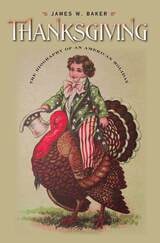
Thanksgiving
The Biography of an American HolidayJames W. Baker
University of New Hampshire Press, 2009
In this, the first in-depth study of the most American of holidays, James Baker sweeps away lingering myths and misconceptions to show how this celebration day was born and grew to be an essential part of our national spirit. Thanksgiving: The Biography of an American Holiday opens with an overview of the popular mythos of the holiday before discussing its possible religious and cultural precedents. This classic Yankee holiday is examined in historical and contemporary detail that embraces everything from proclamations, sermons, and local and regional traditions to family reunions, turkey dinners, and recipes. Thanksgiving's evolving face is illustrated with charming and often revealing period prints that chart our changing attitudes: the influence of Victorian sentiment in Thanksgiving's development, Progressive utilitarianism, intellectual “debunking,” patriotic wartime reclamation, and 1960s-era protest. Thanksgiving remains controversial up to the present day, as Mayflower descendants, Native Americans, and commercial exploiters compete for the American public's opinion of the holiday's contemporary significance and its future status. This is an intelligent and illuminating introduction to a beloved holiday and a fascinating cultural history of America and Americana.
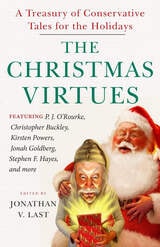
The Christmas Virtues
A Treasury of Conservative Tales for the HolidaysJonathan V. Last
Templeton Press, 2015
The Christmas season is a minefield of terrors: The family get-togethers with weird uncles, the sloppy office parties, the annoying 10-page Look-at-Us holiday letters—and we haven’t even mentioned the Black Friday mobs and that wretched Alvin and the Chipmunks song that plays every 90 minutes on Pandora, whether you like it or not. Rum-pah-pah-pum.
And don’t forget the PC police lurking around every corner looking to beat the last bits of joy and comradery out of our society. Merry Christmas? Really?
But it doesn’t have to be this way. 'Tis the season to recapture the wonder of Christmas, in our hearts and in our homes and even out in the public square. The Christmas Virtues is a humorous companion for, and guide to, navigating the trials and tribulations of the holiday season. It’s a reminder of how we can embrace the joy, hope, and love of Christmas—of the real Christmas.
And a call for us to stand up for Christmas because America needs it now, more than ever.
So sit back and enjoy the following tales by your favorite authors:
- Rob Long’s "The Christmas Spirit: In Defense of Ebenezer Scrooge.”
- P. J. O’Rourke’s “The Commercialization of Christmas: God Moves (The Merchandise) in a Mysterious Way.”
- Andrew Ferguson’s “Jingle Bell Rock: Taking the Christ Out of Christmas Songs”
- Matt Labash’s “Home for the Holidays: The Trials and Tribulations of Family.”
- Stephen F. Hayes’ "here Comes Santa Claus: The Wonder of Christmas Morning."
- Toby Young’s “The ghosts of Christmas: Holidays Past and Present”
- Jonah Goldberg’s “The War on Christmas: It’s Real, and It’s Spectacular.”
- Christopher Buckley’s “Saint Joseph: The Forgotten ‘Father Christmas.’”
- Kirsten Powers’ “The first Noel: Christmas with Jesus.”
- James Lileks' "Boxing Day and the Christmas Hangover."
- And More
The Victim and its Masks
An Essay on Sacrifice and Masquerade in the MaghrebAbdellah Hammoudi
University of Chicago Press, 1993