Results by title
6 books match the query 'Holistic medicine'
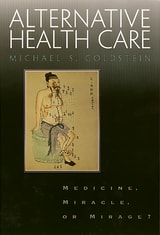
Alternative Health Care
Michael S. Goldstein
Temple University Press, 1999
Michael S. Goldstein's Alternative Health Care is the first comprehensive account of the growing presence of alternative medicine in American society. Beginning with the basic premises of alternative medicine, Goldstein's book examines the clinical, economic, and political realities of the broad range of alternative care options and practices in the United States and explains why alternative medicine has become a viable choice for so many people who are ill or who seek to remain healthy.
Bringing history, policy, practice, personal experience, and in-depth sociological analysis together into one comprehensive volume, Goldstein -- one of the first recipients of funding from the National Institute of Health for research on alternative medicine -- also studies the complexities of the relationship between spirituality and alternative medicine and the changing role of alternative medicine in the larger context of American health care. Probing such issues as the corporatization of medicine, the role of alternative medicine in health care, and the dynamic relationship between conventional and alternative treatments, Goldstein's Alternative Health Care is more than the long-awaited introduction to the many forms of alternative medicine. It is also the measure of the implications of such care for practitioners, businesses, policymakers, and patients alike.
Alternative Health Care is the definitive guide for the millions of Americans interested in alternative medicine and treatment, American health care, the sociology of medicine, and American social issues.
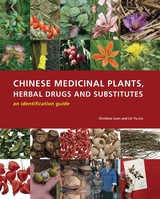
Chinese Medicinal Plants, Herbal Drugs and Substitutes
An Identification GuideChristine Leon and Lin Yu-Lin
Royal Botanic Gardens, Kew, 2017
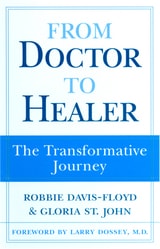
From Doctor to Healer
The Transformative JourneySt. John, Gloria
Rutgers University Press, 1998
Why would a successful physician who has undergone seven years of rigorous medical training take the trouble to seek out and learn to practice alternative methods of healing such as homeopathy and Chinese medicine? From Doctor to Healer answers this question as it traces the transformational journeys of physicians who move across the philosophical spectrum of American medicine from doctor to healer. Robbie Davis-Floyd and Gloria St. John conducted extensive interviews to discover how and why physicians make the move to alternative medicine, what sparks this shift, and what beliefs they abandon or embrace in the process.
After outlining the basic models of American health care-the technocratic, humanistic, and holistic-the authors follow the thoughts and experiences of forty physicians as they expand their horizons in order to offer effective patient care. The book focuses on the radical shift from one end of the spectrum to the other-from the technocratic approach to holism-made by most of the interviewees. Because many American physicians find such a drastic change too threatening, the authors also address the less radical transition to humanism-a movement toward compassionate care arising from within the medical system.
Learning to Love
Intimacy and the Discourse of Development in ChinaSonya E. Pritzker
University of Michigan Press, 2024
Learning to Love offers a range of perspectives on the embodied, relational, affective, and sociopolitical project of “learning to love” at the New Life Center for Holistic Growth, a popular “mind-body-spirit” bookstore and practice space in northeast China, in the early part of the 21st century. This intimate form of self-care exists alongside the fast-moving, growing capitalist society of contemporary China and has emerged as an understandable response to the pressures of Chinese industrialized life in the early 21st century. Opening with an investigation of the complex ways newcomers to the center suffered a sense of being “off,” both in and with the world at multiple scales, Learning to Love then examines how new horizons of possibility are opened as people interact with one another as well as with a range of aesthetic objects at New Life.
Author Sonya Pritzker draws upon the core concepts of scalar intimacy—a participatory, discursive process in which people position themselves in relation to others as well as dominant ideologies, concepts, and ideals—and scalar inquiry—the process through which speakers interrogate these forms, their relationship with them, and their participation in reproducing them. In demonstrating the collaborative interrogation of culture, history, and memory, she examines how these exercises in physical, mental, and spiritual self-care allow participants to grapple with past social harms and forms of injustice, how historical systems of power—including both patriarchal and governance structures—continue in the present, and how they might be transformed in the future. By examining the interactions and relational experiences from New Life, Learning to Love offers a range of novel theoretical interventions into political subjectivity, temporality, and intergenerational trauma/healing.
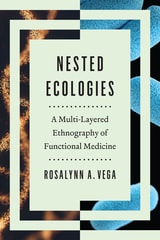
Nested Ecologies
A Multilayered Ethnography of Functional MedicineRosalynn A. Vega
University of Texas Press, 2023
How functional medicine leverages systems biology and epigenetic science to treat the microbiome and reverse chronic disease.
Each body is a system within a system—an ecology within the larger context of social, political, economic, cultural, and environmental factors. This is one of the lessons of epigenetics, whereby structural inequalities are literally encoded in our genes. But our ecological embeddedness extends beyond DNA, for each body also teems with trillions of bacteria, yeast, and fungi, all of them imprints of our individual milieus. Nested Ecologies asks what it would mean to take seriously our microbial being, given that our internal ecologies are shaped by inequalities embedded in our physical and social environments.
Further, Rosalynn Vega argues that health practices focused on patients’ unique biology inadvertently reiterate systemic inequities. In particular, functional medicine—which attempts to heal chronic disease by leveraging epigenetic science and treating individual microbiomes—reduces illness to problems of “lifestyle,” principally diet, while neglecting the inability of poor people to access nutrition. Functional medicine thus undermines its own critique of the economics of health care. Drawing on novel digital ethnographies and reflecting on her own experience of chronic illness, Vega challenges us to rethink not only the determinants of well-being but also what it is to be human.
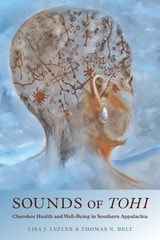
Sounds of Tohi
Cherokee Health and Well-Being in Southern AppalachiaLisa J. Lefler and Thomas N. Belt
University of Alabama Press, 2022
Dialogue between a medical anthropologist and a Cherokee linguist about health, well-being, and environmental issues
Sounds of Tohi: Cherokee Health and Well-Being in Southern Appalachia is the result of almost two decades of work by medical anthropologist Lisa J. Lefler and Cherokee elder and traditionalist Thomas N. Belt. The narrative consists of a dialogue between them that displays traditional Indigenous knowledge as well as the importance of place for two people from cultures and histories that intersect in the mountains of Southern Appalachia. Together, Lefler and Belt decolonize thinking about health, well-being, and environmental issues through the language and experiences of people whose identity is inextricably linked to the mountains and landscape of western North Carolina.
Lefler and Belt discuss several critical cultural concepts that explain the science of relationships with this world, with the spirit world, and with people. They explore tohi, the Cherokee concept of health, which offers a more pervasive understanding of relationships in life as balanced and moving forward in a good way. They converse about the importance of matrilineality, particularly in light of community healing, the epistemologies of Cherokee cosmography, and decolonizing counseling approaches.
The discussions here offer a different way of approaching the issues that face Americans in this difficult time of division. Lefler and Belt share their urgency to take action against the wholesale exploitation of public lands and the shared environment, to work to perpetuate tribal languages, to preserve the science that can make a difference in how people treat one another, and to create more forums that are inclusive of Native and marginalized voices and that promote respect and appreciation of one another and the protection of sacred places. Throughout, they rely on the preservation of traditional knowledge, or Native science, via Native language to provide insight as to why people should recognize a connection to the land.