Results by title

6 books match the query 'Hollywood Cinema'

cover of A Divided World: Hollywood Cinema and Emigré Directors in the Era of Roosevelt and Hitler, 1933-1948

A Divided World

Hollywood Cinema and Emigré Directors in the Era of Roosevelt and Hitler, 1933-1948

Nick Smedley

Intellect Books, 2011

The New Deal introduced sweeping social, political, and cultural change across the United States, which Hollywood embraced enthusiastically. Then, when the heady idealism of the 1930s was replaced by the paranoia of the postwar years, Hollywood became an easy target for the anticommunists. A Divided World examines some of the important programs of the New Deal and the subsequent response of the film community—especially in relation to social welfare, women’s rights, and international affairs. The book also provides an analysis of the major works of three European directors—Billy Wilder, Ernst Lubitsch, and Fritz Lang—compared and contrasted with the products of mainstream Hollywood. This is a new interpretation of an influential period in American film history and it is sure to generate further debate and scholarship.

[more]
cover of Alternative Worlds in Hollywood Cinema

Alternative Worlds in Hollywood Cinema

James Walters

Intellect Books, 2008
The use of alternate realities in cinema has been brought to new heights by such recent films as Eternal Sunshine of the Spotless Mind and Donnie Darko. Alternative Worlds in Hollywood Cinema is the first book to analyze these imaginary realms, tracing their construction and development across periods, genres, and history.
Through an analysis of such landmark films as The Wizard of Oz, Vanilla Sky, and Back to the Future, James Walters reveals how unconventional worlds are crucial to each film’s dramatic agenda and narrative structure. This groundbreaking volume unifies decades of divergent work by film scholars and points the way towards a new theoretical framework for understanding fantasy in the context of popular film. Alternative Worlds in Hollywood Cinema will be an essential resource for film studies scholars and movie buffs alike.
 
“The book is very readable . . . an important area of film study. The most original aspects of the book are the close readings of the films discussed and how these readings cohere across a single thesis.”—Pat Brereton, Dublin City University, author of Hollywood Utopia
 
[more]
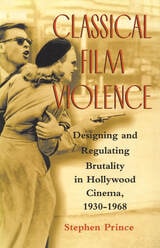
cover of Classical Film Violence: Designing and Regulating Brutality in Hollywood Cinema, 1930-1968

Classical Film Violence

Designing and Regulating Brutality in Hollywood Cinema, 1930-1968

Prince, Stephen

Rutgers University Press, 2003

Stephen Prince has written the first book to examine the interplay between the aesthetics and the censorship of violence in classic Hollywood films from 1930 to 1968, the era of the Production Code, when filmmakers were required to have their scripts approved before they could start production. He explains how Hollywood's filmmakers designed violence in response to the regulations of the Production Code and regional censors. Graphic violence in today's movies actually has its roots in these early films. Hollywood's filmmakers were drawn to violent scenes and "pushed the envelope" of what they could depict by manipulating the Production Code Administration (PCA).

Prince shows that many choices about camera position, editing, and blocking of the action and sound were functional responses by filmmakers to regulatory constraints, necessary for approval from the PCA and then in surviving scrutiny by state and municipal censor boards.

This book is the first stylistic history of American screen violence that is grounded in industry documentation. Using PCA files, Prince traces the negotiations over violence carried out by filmmakers and officials and shows how the outcome left its traces on picture and sound in the films.

Almost everything revealed by this research is contrary to what most have believed about Hollywood and film violence. With chapters such as "Throwing the Extra Punch" and "Cruelty, Sadism, and the Horror Film," this book will become the defining work on classical film violence and its connection to the graphic mayhem of today's movies.
[more]
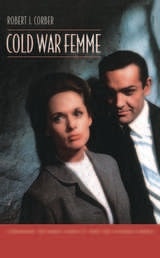
cover of Cold War Femme: Lesbianism, National Identity, and Hollywood Cinema

Cold War Femme

Lesbianism, National Identity, and Hollywood Cinema

Robert J. Corber

Duke University Press, 2011

In his bestselling book The Grapevine: A Report on the Secret World of the Lesbian (1965), Jess Stearn announced that, contrary to the assumptions of many Americans, most lesbians appeared indistinguishable from other women. They could mingle “congenially in conventional society.” Some were popular sex symbols; some were married to unsuspecting husbands. Robert J. Corber contends that The Grapevine exemplified a homophobic Cold War discourse that portrayed the femme as an invisible threat to the nation. Underlying this panic was the widespread fear that college-educated women would reject marriage and motherhood as aspirations, weakening the American family and compromising the nation’s ability to defeat totalitarianism. Corber argues that Cold War homophobia transformed ideas about lesbianism in the United States. In the early twentieth century, homophobic discourse had focused on gender identity: the lesbian was a masculine woman. During the Cold War, the lesbian was reconceived as a woman attracted to other women. Corber develops his argument by analyzing representations of lesbianism in Hollywood movies of the 1950s and 1960s, and in the careers of some of the era’s biggest female stars. He examines treatments of the femme in All About Eve, The Children’s Hour, and Marnie, and he explores the impact of Cold War homophobia on the careers of Joan Crawford, Bette Davis, and Doris Day.
[more]
cover of Reel Power: Hollywood Cinema and American Supremacy

Reel Power

Hollywood Cinema and American Supremacy

Matthew Alford

Pluto Press, 2010

Hollywood is often characterised as a stronghold of left-liberal ideals. In Reel Power, Matthew Alford shows that it is in fact deeply complicit in serving the interests of the most regressive US corporate and political forces.

Films like Transformers, Terminator: Salvation and Black Hawk Down are constructed with Defence Department assistance as explicit cheerleaders for the US military, but Matthew Alford also emphasises how so-called 'radical' films like Three Kings, Hotel Rwanda and Avatar present watered-down alternative visions of American politics that serve a similar function.

Reel Power is the first book to examine the internal workings of contemporary Hollywood as a politicised industry as well as scores of films across all genres. No matter what the progressive impulses of some celebrities and artists, Alford shows how they are part of a system that is hard-wired to encourage American global supremacy and frequently the use of state violence.

[more]
cover of Yellow Future: Oriental Style in Hollywood Cinema

Yellow Future

Oriental Style in Hollywood Cinema

Jane Chi Hyun Park

University of Minnesota Press, 2010

Yellow Future examines the emergence and popularity of techno-oriental representations in Hollywood cinema since the 1980s, focusing on the ways East Asian peoples and places have become linked with technology to produce a collective fantasy of East Asia as the future. Jane Chi Hyun Park demonstrates how this fantasy is sustained through imagery, iconography, and performance that conflate East Asia with technology, constituting what Park calls oriental style.

Park provides a genealogy of oriental style through contextualized readings of popular films-from the multicultural city in Blade Runner and the Japanese American mentor in The Karate Kid to the Afro-Asian reworking of the buddy genre in Rush Hour and the mixed-race hero in The Matrix. Throughout these analyses Park shows how references to the Orient have marked important changes in American popular attitudes toward East Asia in the past thirty years, from abjection to celebration, invisibility to hypervisibility.
 
Unlike other investigations of racial imagery in Hollywood, Yellow Future centers on how the Asiatic is transformed into and performed as style in the backdrop of these movies and discusses the significance of this conditional visibility for representations of racial difference.
[more]