Results by title

9 books match the query 'Holy Spirit'
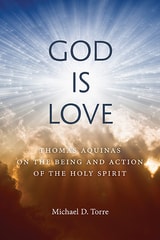
cover of God Is Love: Thomas Aquinas on the Being and Action of the Holy Spirit

God Is Love

Thomas Aquinas on the Being and Action of the Holy Spirit

Michael D. Torre

Catholic University of America Press, 2026
This book dedicates three essays each to three different theological problems regarding the Holy Spirit: In God and for Us (The "Filioque" and "Uncreated Grace"); Thomas's Understanding (Not His Commentators) of the Relation between nature and sanctifying grace; and our ability (and that of the angels at their creation) in fact to resist God' grace and thus be the first cause of sin. This later problem is developed in an "excursus" on the way God moves the free will, one that takes into consideration much recent work on this issue and situates the essays' position in relation to it. The book ends with a brief epilogue on the credibility of God, again giving Thomas's account of this. The principal aim throughout is to understand the doctrine of Thomas Aquinas. It places his views in relation to three audiences: chiefly to the orthodox regarding the first issue; to Catholics in relation to the second; and to Protestants in relation to the third. Thus, its second aim is to join "ecumenical debate" about these matters. The essays were mostly written to be delivered orally, to an informed audience of philosophers and theologians., but one that consisted of "generalists" and serious students of Thomas, as well as of "professional" philosophers and theologians. All three of the debated issues discussed have generated an enormous amount of disagreement and debate, not a little of it being quite "technical." Thus, each issue would easily require a long and significant book to be addressed as it deserves. The essays do not do this, but they do indicate what Torre holds is the "directive line" of Thomas's thought that deserves to be defended and developed in each case, and, in each case, this line is held to be markedly different than many have thought it to be.
[more]
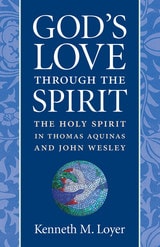
cover of God's Love through the Spirit

God's Love through the Spirit

Kenneth M. Loyer

Catholic University of America Press, 2014
Although the doctrine of the Holy Spirit has often been a neglected subject in theology, it remains vital for understanding both the Christian confession of God as Trinity and the nature of the Christian life. In view of those two topics, God's Love through the Spirit examines the relationship between love and the person and work of the Holy Spirit in Thomas Aquinas and John Wesley - two very different figures whose teachings on the Spirit and the Christian life are found to be, on the whole, surprisingly compatible. An investigation into Aquinas's amor-based pneumatology, including a groundbreaking analysis of his recently discovered Pentecost sermon, and a fresh assessment of the doctrine of sanctification in Wesley show that in distinctive yet largely complementary ways, Aquinas and Wesley provide resources that can be used to reclaim a richer pneumatology, specifically in relation to the theological virtue of love.
[more]
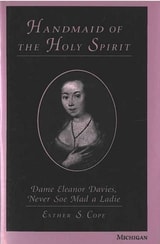
cover of Handmaid of the Holy Spirit: Dame Eleanor Davies, Never Soe Mad a Ladie

Handmaid of the Holy Spirit

Dame Eleanor Davies, Never Soe Mad a Ladie

Esther S. Cope

University of Michigan Press, 1993
On the morning of July 28, 1625, Dame Eleanor Davis (1590-1652) heard "a great voice from heaven" tell her "There is Nintene years and a halfe to the day of Judgement and you as the meek Virgin." She believed the message came from the prophet Daniel and began immediately to explain how the books of Daniel and Revelation applied to England's history. In the next twenty-seven years, she wrote more than sixty religious and political tracts addressed to the king, the Parliament, and the public. Filled with anagrams, puns, and carefully contrived literary imagery, these tracts offered a devastating critique of the patriarchal society in which Eleanor Davies lived.  Handmaid of the Holy Spirit draws upon a rich array of primary documents and provides scholars of history, literature, and religion a basis for reevaluating their conclusions about seventeenth-century England. Nonspecialists will also find the dramatic story of the fascinating and eccentric Lady Eleanor Davies compelling reading.
[more]
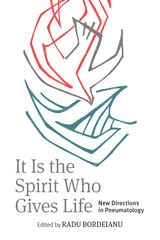
cover of It is the Spirit Who Gives Life: New Directions in Pneumatology

It is the Spirit Who Gives Life

New Directions in Pneumatology

Radu Bordeianu

Catholic University of America Press, 2022
Who is the Holy Spirit? What is the Holy Spirit? The answers to these questions were so obvious in the first centuries of Christian history, that the New Testament and the earliest Christian writers did not feel the need to deliberately address the identity of the Spirit. The more stringent question was this: what does the Spirit do in the Hebrew Scriptures, in the life of Jesus, in the community of disciples, in the Church, and in the world? These same questions, however, did not have the same obvious answers to subsequent generations. Writing in the fourth century, Gregory of Nazianzus observed a slow progress of better understanding the identity and mission of the Holy Spirit throughout the centuries; his opponents still referred to the Spirit as a “strange,” “unscriptural,” and “interpolated” God (Or. 31). One would expect that today, centuries later, pneumatology would be exponentially further developed than in the patristic era. And yet, contemporary theology only rarely asks who the Spirit is and what the Spirit does. That is where the present volume attempts to bring a contribution, by addressing early Pneumatologies reflected in the Scriptures and the age of the martyrs, historical developments in patristic literature and spiritual writings, and contemporary pneumatological themes, as they relate to ecumenism, ecology, science, ecclesiology, and missions. The present volume gathers essays authored by eleven world-renowned theologians. Each contribution originated as a public lecture addressed to theologians and an educated general audience, followed by a private colloquium in which the lecturers conferred with scholars who are experts in the field. Thus, the present volume offers a multifaceted approach to Pneumatology, in an ecumenical spirit.
[more]
cover of Metaphor, Morality, and the Spirit in Romans 8:1-17

Metaphor, Morality, and the Spirit in Romans 8

1-17

William E. W. Robinson

SBL Press, 2016

Engage compelling arguments that challenge prominent positions in Pauline studies

In this innovative book, William E. W. Robinson takes the reader on a journey through Romans 8:1–17 using Conceptual Metaphor Theory and Conceptual Integration Theory. Robinson delineates the underlying cognitive metaphors, their structure, their function, what they mean, and how Paul’s audiences then and now are able to comprehend their meaning. He examines each metaphor in the light of relevant aspects of the Greco-Roman world and Paul’s Jewish background. Robinson contends that Paul portrays the Spirit as the principal agent in the religious-ethical life of believers. At the same time, his analysis demonstrates that the conceptual metaphors in Romans 8:1–17 convey the integral role of believers in ethical conduct. In the process, he addresses thorny theological issues such as whether Spirit and flesh signal an internal battle within believers or two conflicting ways of life. Finally, Robinson shows how this study is relevant to related Pauline passages and challenges scholars to incorporate these methods into their own investigation of biblical texts.

Features:

  • Sustained argument that sheds new light on how Paul communicates with his audiences
  • Substantial contribution to current debates about central theological concepts
  • Conceptual Metaphor Theory and Conceptual Integration Theory applied to the metaphors in Romans 8:1-17
[more]
cover of The Holy Spirit in Luke-Acts: The Role of the Reader

The Holy Spirit in Luke-Acts

The Role of the Reader

Marco Wittenberg

Central European University Press, 2026
What is the role of the reader in the interpretation of the biblical text. Can he create meaning, or is it the text itself that has the last word and determines the right meaning? This study investigates the role of the reader in the exegesis of passages on the Holy Spirit in Luke and Acts. Using a model of Umberto Eco, the author examines how three writers from different denominational backgrounds – Max M.B. Turner, Robert P. Menzies and William S. Kurz – are personally involved in the interpretation of these passages.
[more]
cover of The Holy Spirit in Puritan Faith and Experience

The Holy Spirit in Puritan Faith and Experience

Geoffrey F. Nuttall

University of Chicago Press, 1992

Geoffrey F. Nuttall establishes the primacy of the doctrines of the Holy Spirit in seventeenth-century English Puritanism and demonstrates the continuity of the Reformation tradition from the more conservative views of Luther to the more radical interpretations of the Quakers. Nuttall illuminates prominent spokesmen, including Richard Sibbes, Richard Baxter, John Owen, Walter Cradock, Morgan Llwyd, and George Fox.

In a new Introduction, Peter Lake discusses the relevance of Nuttall's book to, and its influence on, major works in seventeenth-century English history written since 1946.
[more]
cover of The Making of the Christian Mind: The Adventure of the Paraclete: Volume I: The Waiting World

The Making of the Christian Mind

The Adventure of the Paraclete: Volume I: The Waiting World

James Patrick

St. Augustine's Press, 2020

Dr. James Patrick has spent his life teaching, and in this book he seeks to tell on a larger scale the story of the Christian mind as it developed according to what he refers to as the “adventure” of the Holy Spirit. Indeed, the Christian mind moved from faithful intuition to writing and composing original ideas of concrete truths, and this in turn led to inspired foundations upon which a new kind of world became possible. Patrick does not wish the reader to think the Christian mind has ever intended to create utopia on earth or to proselytize, rather that the dynamic Christian intellect indicates a human heart made new and from this newness still spring horizons of hope and culture. 

This is not a history of dogma or systematic account of the building of doctrine. It is a narrative that follows the major moments wherein the Christian heart so in tune with the Paraclete has rendered the seminal texts and literature of this new culture, from the Didache to the Rule of Saint Benedict and The Consolation of Philosophy. Patrick succeeds in presenting a narrative that reads more like the experience lived by those directly involved in its realization, and although he cannot include every individual accomplishment of the major Christian writers, he illuminates the context in which Christianity was born and how faith grew and allowed itself to be shaped by its participation in the “adventure” and its grasp of objective truth. The Christian mind is, says Patrick, not only inspired and moved by the restless Paraclete, but revolves around the event of Jesus Christ. Christian history is therefore best understood not simply as chronology of events but as the vision of “the new heart in time,” one that strives to be like that of the one who sent the Spirit into history.

Patrick writes with a voice of a teacher, and although this work is very well referenced and accurate he does not intend this work to be a scholarly presentation of data and careful arguments, nor does he include every aspect of this intellectual faith journey of Christianity found in writing. As a comprehensive review, Patrick acknowledges the limitations of his own project to tell a complete story. Nevertheless, The Making of the Christian Mind accomplishes the no less formidable feat of illustrating the vivacious quality of the authentic Christian intellectual life. “Christianity is a survivor, not because it possessed the instruments of power but because, as Jesus of Nazareth said before Pilate, the foundation of the Kingdom is truth, its instruments of conquest are its renewing gifts, its consequences are the substitution of truth for error and ignorance, of faith for skepticism, humility for pride, and of charity and friendship for emulation, all this realized never perfectly but always as possibilities having the power to make all things new.”

This work is divided into three volumes, of which the present work is the first. Highlights of this first volume, The Waiting World, include following revelation as it first moved uncertain hearts to write and then to offer explicit witness. In this first installment, Patrick sets the groundwork for following the faith and history of Israel to Justin Martyr’s great claim that what is true belongs to Christians. 
[more]
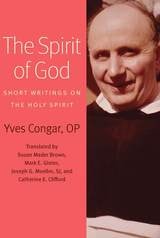
cover of The Spirit of God: Short Writings on the Holy Spirit

The Spirit of God

Short Writings on the Holy Spirit

Yves Congar

Catholic University of America Press, 2017

Yves Congar was the most significant voice in Catholic pneumatology in the twentieth century. This new collection of short pieces makes his thought accessible to a broad range of readers – scholars, teachers, ecumenists and laity – and thus helps to ensure that an important theological voice, one that influenced many of the documents of the Second Vatican Council, continues to be heard.

The Spirit of God brings together for the first time eight of Yves Congar’s previously untranslated writings on the Holy Spirit composed after Vatican II (from 1969 to 1985). Two of these selections offer general overviews of Congar’s pneumatology, a pneumatology based upon Scripture and the Tradition of the Church, but articulated in conversation with philosophers, ecumenical partners and non-believers. Other articles make clear the historical context of Vatican II’s pneumatology and the Holy Spirit’s crucial influence upon the unfolding of history and upon the moral life, the efficacy of the sacraments and, especially, upon ecclesial life.

The writings in The Spirit of God have been translated and edited by a team of scholars familiar with the work of the French Dominican theologian. An introduction situates each of the writings historically and highlights its theological significance. A bibliography lists Congar’s publications on the Holy Spirit, the major articles and books written about his pneumatology, and the major scholarly resources to which Congar made reference in the notes that accompanied these writings. An index of biblical references and of personal names is also included.
[more]