Results by title
8 books match the query 'Home schooling'
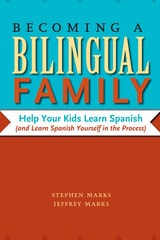
Becoming a Bilingual Family
Help Your Kids Learn Spanish (and Learn Spanish Yourself in the Process)By Stephen Marks and Jeffrey Marks
University of Texas Press, 2013
Would you like your children to grow up bilingual, even if you aren’t yet? Then speak to your kids in Spanish as you learn the language along with them. Becoming a Bilingual Family gives English-speaking parents the tools to start speaking Spanish with their kids in their earliest years, when children are most receptive to learning languages. It teaches the vocabulary and idioms for speaking to children in Spanish and offers practical, proven ways to create a language-learning environment at home.
The first part of the book introduces parents to many resources—books, audio books, music, television, computer programs, childcare workers, school, and friends—that can help you establish a home environment conducive to the acquisition of Spanish. The second part is a Spanish phrasebook that takes you through all the typical activities that parents and children share, from getting up in the morning to going to bed at night. Few, if any, other Spanish study aids provide this much vocabulary and guidance for talking to small children about common daily activities. The authors also include a quick course in Spanish pronunciation and enough grammar to get a parent started. Spanish-language resources, kids’ names in Spanish, and an easy-to-use index and glossary complete the book.
Take the Markses’ advice and start talking to your kids in Spanish, even if it’s not perfect. You’ll learn the language together and share the excitement of discovering the peoples and cultures that make up the Spanish-speaking world.
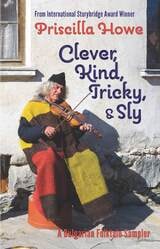
Clever, Kind, Tricky, and Sly
A Bulgarian Folktale SamplerPriscilla Howe
Parkhurst Brothers, Inc., 2020
Each folktale expresses an aspect of Bulgarian folk culture, presents characters who are clever enough to avoid ill-conceived courtship, kind enough to esteem even the poorest of neighbors, tricky enough to evade shysters, or sly enough to remain independent in the face of great power. Each of these traits has helped the Bulgarian people survive and thrive in a relatively poor, mountainous environment for more than fourteen centuries. In celebrating these traits and others, the folktales collected here honor the character of a people.
Cross Purposes
Pierce v. Society of Sisters and the Struggle over Compulsory Public EducationPaula Abrams
University of Michigan Press, 2009
"A definitive study of an extremely important, though curiously neglected, Supreme Court decision, Pierce v. Society of Sisters."
---Robert O'Neil, Professor of Law Emeritus, University of Virginia School of Law
---Richard W. Garnett, Professor of Law and Associate Dean, Notre Dame Law School
"A well-written, well-researched blend of law, politics, and history."
---Joan DelFattore, Professor of English and Legal Studies, University of Delaware
In 1922, the people of Oregon passed legislation requiring all children to attend public schools. For the nativists and progressives who had campaigned for the Oregon School Bill, it marked the first victory in a national campaign to homogenize education---and ultimately the populace. Private schools, both secular and religious, vowed to challenge the law. The Catholic Church, the largest provider of private education in the country and the primary target of the Ku Klux Klan campaign, stepped forward to lead the fight all the way to the U.S. Supreme Court.
In Pierce v. Society of Sisters (1925), the court declared the Oregon School Bill unconstitutional and ruled that parents have the right to determine how their children should be educated. Since then, Pierce has provided a precedent in many cases pitting parents against the state.
Paula Abrams is Professor of Constitutional Law at Lewis & Clark Law School.

Helping Homeschoolers in the Library
Adrienne Pettinelli
American Library Association, 2008
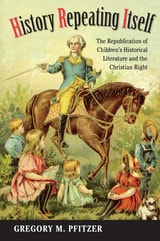
History Repeating Itself
The Republication of Children's Historical Literature and the Christian RightGregory M. Pfitzer
University of Massachusetts Press, 2014
Recently publishers on the Christian Right have been reprinting nineteenth-century children's history books and marketing them to parents as “anchor texts” for homeschool instruction. Why, Gregory M. Pfitzer asks, would books written more than 150 years ago be presumed suitable for educating twenty-first-century children? The answer, he proposes, is that promoters of these recycled works believe that history as a discipline took a wrong turn in the early twentieth century, when progressive educators introduced social studies methodologies into public school history classrooms, foisting upon unsuspecting and vulnerable children ideologically distorted history books.
In History Repeating Itself, Pfitzer tests these assertions by scrutinizing and contextualizing the original nineteenth-century texts on which these republications are based. He focuses on how the writers borrowed from one another to produce works that were similar in many ways yet differed markedly in terms of pedagogical strategy and philosophy of history. Pfitzer demonstrates that far from being non-ideological, these works were rooted in intense contemporary debates over changing conceptions of childhood.
Pfitzer argues that the repurposing of antiquated texts reveals a misplaced resistance to the idea of a contested past. He also raises essential philosophical questions about how and why curricular decisions are shaped by the “past we choose to remember” on behalf of our children.
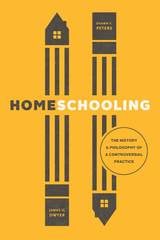
Homeschooling
The History and Philosophy of a Controversial PracticeJames G. Dwyer and Shawn F. Peters
University of Chicago Press, 2019
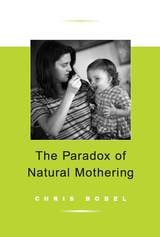
Paradox Of Natural Mothering
Chris Bobel
Temple University Press, 2001
Author Chris Bobel profiles some thirty natural mothers, probing into their choices and asking whether they are reforming or conforming to women's traditional role. Bobel's subjects say that they have chosen to follow their nature rather than social imperatives. Embracing such lifestyle alternatives as voluntary simplicity and attachment parenting, they place family above status and personal achievement. Bobel illuminates the paradoxes of natural mothering, the ways in which these women resist the trappings of upward mobility but acquiesce to a kind of biological determinism and conventional gender scripts.
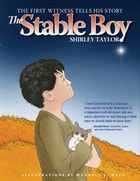
The Stable Boy
The First Witness Tells His StoryShirley A. Taylor
Parkhurst Brothers, Inc., 2012
"Shirley Taylor's story gives readers and hearers insight into the town of Bethlehem at the time of the birth of Christ. Wendell Hall's illustrations help us imagine that scene wonderfully. The young homeless boy touches our hearts and imaginations. Not just for children, this is a read aloud book for all ages." - Lauretta Phillips, Storyteller, Author, Radio & TV Host