Results by title

6 books match the query 'Homeless'
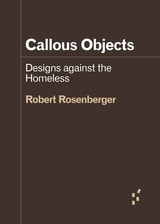
cover of Callous Objects: Designs against the Homeless

Callous Objects

Designs against the Homeless

Robert Rosenberger

University of Minnesota Press, 2017

Uncovering injustices built into our everyday surroundings

Callous Objects unearths cases in which cities push homeless people out of public spaces through a combination of policy and strategic design. Robert Rosenberger examines such commonplace devices as garbage cans, fences, signage, and benches—all of which reveal political agendas beneath the surface. Such objects have evolved, through a confluence of design and law, to be open to some uses and closed to others, but always capable of participating in collective ends on a large scale. Rosenberger brings together ideas from the philosophy of technology, social theory, and feminist epistemology to spotlight the widespread anti-homeless ideology built into our communities and enacted in law.

Forerunners: Ideas First is a thought-in-process series of breakthrough digital publications. Written between fresh ideas and finished books, Forerunners draws on scholarly work initiated in notable blogs, social media, conference plenaries, journal articles, and the synergy of academic exchange. This is gray literature publishing: where intense thinking, change, and speculation take place in scholarship.
[more]
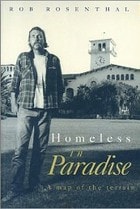
cover of Homeless In Paradise: A Map of the Terrain

Homeless In Paradise

A Map of the Terrain

Robert Rosenthal

Temple University Press, 1993

[more]
cover of Homeless and at Home in America: Evidence for the Dignity of the Human Soul in Our Time and Place

Homeless and at Home in America

Evidence for the Dignity of the Human Soul in Our Time and Place

Peter Augustine Lawler

St. Augustine's Press, 2007
[more]
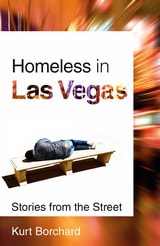
cover of Homeless in Las Vegas: Stories from the Street

Homeless in Las Vegas

Stories from the Street

Kurt Borchard

University of Nevada Press, 2011
The homeless men and women represented in this book speak candidly about their plight, its origins, and the many obstacles to escaping it. They discuss the unique challenges and opportunities that Las Vegas’s focus on tourism, indulgence, and diversion offers its homeless residents. This compelling and emotionally charged ethnography counters many of the stereotypes of homeless men and women, revealing the remarkable diversity of their circumstances. It also offers their perspectives on social services and civic attitudes toward homelessness.
[more]
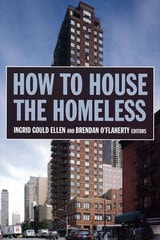
cover of How to House the Homeless

How to House the Homeless

Ingrid Gould Ellen

Russell Sage Foundation, 2010

How to House the Homeless, editors Ingrid Gould Ellen and Brendan O'Flaherty propose that the answers entail rethinking how housing markets operate and developing more efficient interventions in existing service programs. The book critically reassesses where we are now, analyzes the most promising policies and programs going forward, and offers a new agenda for future research. How to House the Homeless makes clear the inextricable link between homelessness and housing policy. Contributor Jill Khadduri reviews the current residential services system and housing subsidy programs. For the chronically homeless, she argues, a combination of assisted housing approaches can reach the greatest number of people and, specifically, an expanded Housing Choice Voucher system structured by location, income, and housing type can more efficiently reach people at-risk of becoming homeless and reduce time spent homeless. Robert Rosenheck examines the options available to homeless people with mental health problems and reviews the cost-effectiveness of five service models: system integration, supported housing, clinical case management, benefits outreach, and supported employment. He finds that only programs that subsidize housing make a noticeable dent in homelessness, and that no one program shows significant benefits in multiple domains of life. Contributor Sam Tsemberis assesses the development and cost-effectiveness of the Housing First program, which serves mentally ill homeless people in more than four hundred cities. He asserts that the program's high housing retention rate and general effectiveness make it a viable candidate for replication across the country. Steven Raphael makes the case for a strong link between homelessness and local housing market regulations—which affect housing affordability—and shows that the problem is more prevalent in markets with stricter zoning laws. Finally, Brendan O'Flaherty bridges the theoretical gap between the worlds of public health and housing research, evaluating the pros and cons of subsidized housing programs and the economics at work in the rental housing market and home ownership. Ultimately, he suggests, the most viable strategies will serve as safety nets—"social insurance"—to reach people who are homeless now and to prevent homelessness in the future. It is crucial that the links between effective policy and the whole cycle of homelessness—life conditions, service systems, and housing markets—be made clear now. With a keen eye on the big picture of housing policy, How to House the Homeless shows what works and what doesn't in reducing the numbers of homeless and reaching those most at risk.
[more]
cover of The Homeless Of Ironweed: Blossoms On The Crag

The Homeless Of Ironweed

Blossoms On The Crag

Benedict Giamo

University of Iowa Press, 1997

[more]