Results by title
4 books match the query 'Horizon'
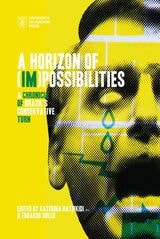
A Horizon of (Im)possibilities
A Chronicle of Brazil’s Conservative TurnEdited by Katerina Hatzikidi and Eduardo Dullo
University of London Press, 2021
Since the shocking 2018 presidential election in Brazil, a growing body of scholarship has attempted to understand the country’s so-called “conservative turn.” A gripping in-depth account of politics and society in Brazil today, this new volume brings together a myriad of different perspectives to help us better understand the political events that have shaken the country in recent years.
Combining ethnographic insights with political science, history, sociology, and anthropology, the interdisciplinary analyses included in A Horizon of (Im)possibilities offer a panoramic view on social and political change in Brazil, spanning temporal and spatial dimensions. Starting with the 2018 presidential election, the contributors discuss the country’s recent—and more distant—past in relation to the present. Pointing to the continuities and disruptions during those years, this volume is an invaluable guide to understanding the limits of political democracy.
Horizon, Sea, Sound
Caribbean and African Women's Cultural Critiques of NationAndrea A. Davis
Northwestern University Press, 2022
In Horizon, Sea, Sound: Caribbean and African Women’s Cultural Critiques of Nation, Andrea Davis imagines new reciprocal relationships beyond the competitive forms of belonging suggested by the nation-state. The book employs the tropes of horizon, sea, and sound as a critique of nation-state discourses and formations, including multicultural citizenship, racial capitalism, settler colonialism, and the hierarchical nuclear family.
Drawing on Tina Campt’s discussion of Black feminist futurity, Davis offers the concept future now, which is both central to Black freedom and a joint social justice project that rejects existing structures of white supremacy. Calling for new affiliations of community among Black, Indigenous, and other racialized women, and offering new reflections on the relationship between the Caribbean and Canada, she articulates a diaspora poetics that privileges our shared humanity. In advancing these claims, Davis turns to the expressive cultures (novels, poetry, theater, and music) of Caribbean and African women artists in Canada, including work by Dionne Brand, M. NourbeSe Philip, Esi Edugyan, Ramabai Espinet, Nalo Hopkinson, Amai Kuda, and Djanet Sears. Davis considers the ways in which the diasporic characters these artists create redraw the boundaries of their horizons, invoke the fluid histories of the Caribbean Sea to overcome the brutalization of plantation histories, use sound to enter and reenter archives, and shapeshift to survive in the face of conquest. The book will interest readers of literary and cultural studies, critical race theories, and Black diasporic studies.
Walking Through the Horizon
PoemsMargaret Holley
University of Arkansas Press, 2006
When Death Is on the Horizon
Temporality, Finitude, and Care Toward Life’s EndAnnemarie Samuels
Rutgers University Press, 2026
The urge to engage with finitude is increasingly central in our present apocalyptic time of political and ecological turmoil. Aging populations and the rapid development of advanced, but expensive, technologies to ever further postpone death pose significant healthcare challenges for societies around the world. In these times, how do people care when the end of life is near? How do they orient toward death? Do they see death as an absolute end, and if not, what sort of horizon does death present? Questioning taken for granted assumptions about end-of-life care, When Death Is on the Horizon analyzes how people approach death in a wide variety of geographical locations and social contexts. Through in-depth ethnographic case studies, it shows how people orient toward, beyond, and away from death, and how they do so within a world marked by historic and ongoing socio-political and structural inequalities.
This book is also freely available online as an open access digital edition.