Results by title

5 books match the query 'Horowitz, Helen Lefkowitz'
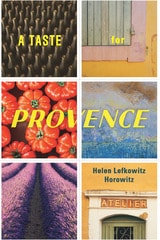
cover of A Taste for Provence

A Taste for Provence

Helen Lefkowitz Horowitz

University of Chicago Press, 2016

Provence today is a state of mind as much as a region of France, promising clear skies and bright sun, gentle breezes scented with lavender and wild herbs, scenery alternately bold and intricate, and delicious foods served alongside heady wines. Yet in the mid-twentieth century, a travel guide called the region a “mostly dry, scrubby, rocky, arid land.” How, then, did Provence become a land of desire—an alluring landscape for the American holiday?

In A Taste for Provence, historian Helen Lefkowitz Horowitz digs into this question and spins a wonderfully appealing tale of how Provence became Provence. The region had previously been regarded as a backwater and known only for its Roman ruins, but in the postwar era authors, chefs, food writers, visual artists, purveyors of goods, and travel magazines crafted a new, alluring image for Provence. Soon, the travel industry learned that there were many ways to roam—and some even involved sitting still. The promise of longer stays where one cooked fresh food from storied outdoor markets became desirable as American travelers sought new tastes and unadulterated ingredients.

Even as she revels in its atmospheric, cultural, and culinary attractions, Horowitz demystifies Provence and the perpetuation of its image today. Guiding readers through books, magazines, and cookbooks, she takes us on a tour of Provence pitched as a new Eden, and she dives into the records of a wide range of visual media—paintings, photographs, television, and film—demonstrating what fueled American enthusiasm for the region. Beginning in the 1970s, Provence—for a summer, a month, or even just a week or two—became a dream for many Americans. Even today as a road well traveled, Provence continues to enchant travelers, armchair and actual alike.

[more]
cover of Alma Mater: Design and Experience in the Women's Colleges from Their Nineteenth-Century Beginnings to the 1930s

Alma Mater

Design and Experience in the Women's Colleges from Their Nineteenth-Century Beginnings to the 1930s

Helen Lefkowitz Horowitz

University of Massachusetts Press, 1993

An examination of the founding and development of the Seven Sisters colleges—Mount Holyoke, Vassar, Wellesley, Smith, Radcliffe, Bryn Mawr, and Barnard—Alma Mater focuses on the ideas behind their establishment and the colleges' architectural, academic, and social histories, as well as those of their twentieth-century successors—Sarah Lawrence, Bennington, and Scripps.
[more]
cover of Campus Life: Undergraduate Cultures from the End of the Eighteenth Century to the Present

Campus Life

Undergraduate Cultures from the End of the Eighteenth Century to the Present

Helen Lefkowitz Horowitz

University of Chicago Press, 1988
"Based on subtle, imaginative readings of autobiographies, memoirs, fiction and secondary sources, [Campus Life] tells the story of the changing mentalities of American undergraduates over two centuries."—Michael Moffatt, New York Times Book Review
[more]
cover of Love Across the Color Line

Love Across the Color Line

Helen Lefkowitz Horowitz

University of Massachusetts Press, 1996
This book examines a remarkable collection of twenty-seven letters written by a white working-class woman to her African American lover in 1907 and 1908. Stuffed inside a black lace stocking, the letters were hidden under the floorboards of a house in Northampton, Massachusetts, until their recent discovery. Reflecting the passions and anxieties of the moment, the letters were written by Alice Hanley, the daughter of Irish Catholic immigrants, to Channing Lewis, a cook in Springfield. Since the thoughts and feelings of women like Hanley have usually been filtered through middle-class reformers, her words provide a rare window into a realm of American social life seldom explored by historians. The letters are accompanied by essays that skillfully probe their larger meanings. Helen Lefkowitz Horowitz introduces the letters, placing them in the context of their time, while journalist Phoebe Rolin Mitchell recounts the story of their discovery. Kathy Peiss explores Hanley's life, her negotiation of illicit love, and her desire for respectability, re-creating a dense and textured world of home, church, and town. Historian Louis Wilson unearths the trail left by Lewis and members of his extended family in Springfield. Reviewing the experiences of African Americans in that city, Wilson clarifies the economic, social, and political position of a black, middle-aged breadwinner during the difficult years of the early twentieth century.
[more]
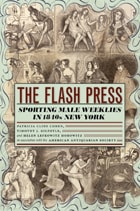
cover of The Flash Press: Sporting Male Weeklies in 1840s New York

The Flash Press

Sporting Male Weeklies in 1840s New York

Patricia Cline Cohen, Timothy J. Gilfoyle, Helen Lefkowitz Horowitz, in association with the American Antiquarian Society

University of Chicago Press, 2008

Obscene, libidinous, loathsome, lascivious. Those were just some of the ways critics described the nineteenth-century weeklies that covered and publicized New York City’s extensive sexual underworld. Publications like the Flash and the Whip—distinguished by a captivating brew of lowbrow humor and titillating gossip about prostitutes, theater denizens, and sporting events—were not the sort generally bound in leather for future reference, and despite their popularity with an enthusiastic readership, they quickly receded into almost complete obscurity. Recently, though, two sizable collections of these papers have resurfaced, and in The Flash Press three renowned scholars provide a landmark study of their significance as well as a wide selection of their ribald articles and illustrations.
 
Including short tales of urban life, editorials on prostitution, and moralizing rants against homosexuality, these selections epitomize a distinct form of urban journalism. Here, in addition to providing a thorough overview of this colorful reportage, its editors, and its audience, the authors examine nineteenth-century ideas of sexuality and freedom that mixed Tom Paine’s republicanism with elements of the Marquis de Sade’s sexual ideology. They also trace the evolution of censorship and obscenity law, showing how a string of legal battles ultimately led to the demise of the flash papers: editors were hauled into court, sentenced to jail for criminal obscenity and libel, and eventually pushed out of business. But not before they forever changed the debate over public sexuality and freedom of expression in America’s most important city.
[more]