Results by title
6 books match the query 'Horse'
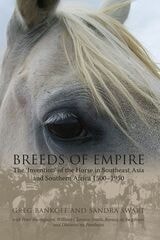
Breeds of Empire
The Invention of the Horse in Southeast Asia and Southern Africa 1500-1950Edited by Greg Bankoff and Sandra Swart
National University of Singapore Press, 2007
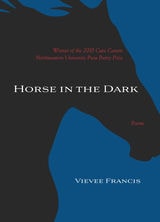
Horse in the Dark
PoemsVievee Francis
Northwestern University Press, 2012
In the next chapter of the Cave Canem/Northwestern University Poetry Prize, we enter the poetic world of Vievee Francis. Bold and skilled, Francis takes us into the still landscapes of Texas and the fluid details of the African American South. Her poems become panhandle folktales revealing the weight of memories so clear and on the cusp. Her creative tangle of metaphors, people and geography will keep the reader rooted in a good earth of extraordinary verse.
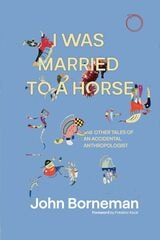
I Was Married to a Horse, and Other Tales of an Accidental Anthropologist
John Borneman
HAU, 2026
How does the youngest of eight children, raised on a family farm in northern Wisconsin by parents with only half a grammar school education, become an Ivy League professor and a witness to some of the most transformative events of the late twentieth and early twenty-first centuries? In this remarkable memoir, John Borneman tells the story of his life as an “accidental anthropologist” with searing honesty, humor, and emotional depth.
Tracing a path from his upbringing as a queer farm boy to a career in anthropology, Borneman’s memoir reflects on social mobility, the decline of the American family farm, and shifting understandings of queerness and masculinity. Meanwhile, as a fourth-generation German American, his journey carried him to divided Berlin, where he captures the moods of East and West, and back again during the arrival of Syrian refugees—culminating in a long-standing friendship and a poignant reunion with a refugee he had first met years earlier.
Through these encounters, Borneman shows how empathy and attention can reveal the hidden textures of history, identity, and belonging. Rich in insight and humanity, this is a story of personal discovery, intercultural encounter, and the search for meaning in a rapidly changing world—one that speaks to scholars and general readers alike.
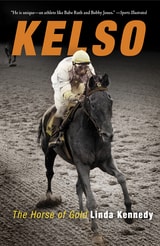
Kelso
The Horse of GoldLinda Kennedy
Westholme Publishing, 2007
Praise for Kelso: The Horse of Gold:
“Ms. Kennedy has captured the grandeur of the horse in a simple, straightforward way that will charm and excite those who saw Kelso run and remember his stirring deeds. . . . Kelso's racing record through eight seasons is simply breathtaking.”—Wall Street Journal
“In this concise, entertaining account, Kennedy tells the story of Kelso, a scrawny ungainly gelding who just happened to be one of the greatest Thoroughbreds that ever lived.”—Publishers Weekly
“An excellent portrayal... so intense that one has the sensation of being right there with the crowd and cheering Kelso on.”—Tom Trotter, Former New York Racing Secretary
“He was the greatest horse I ever rode.”—Eddie Arcaro, rider of Triple Crown champions Whirlaway, Assault, and Citation
At his three-year debut in June 1960, no one could know that Mrs. Allaire DuPont’s small, deerlike gelding named Kelso would come to dominate American racing like no other horse before or since. For five unprecedented years, he would reign as Horse of the Year, setting records and endearing himself to millions of fans. Always considered among the top four horses of all time—with Man O' War, Secretariat, and Citation—for many, Kelso is the greatest racehorse, since he won at sprints and endurance races, won on turf and dirt, carried unprecedented handicap weights, and raced both foreign and national thoroughbreds. Kelso was crowned champion of the Jockey Gold Cup, one of the most prestigious racing events, an astounding five straight times. Like Seabiscuit, Kelso was not earmarked as a contender and missed the Triple Crown races. But Kelso's greatness was decisive: he regularly defeated Triple Crown race winners. In Kelso: The Horse of Gold, Linda Kennedy tells the remarkable story of one of the greatest athletes of the ages, recreating the excitement of "Kelly's" unique and brilliant career while placing his unparalleled achievements in the context of racing history.
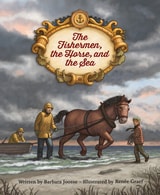
The Fishermen, the Horse, and the Sea
Barbara Joosse
Wisconsin Historical Society Press, 2021
This beautifully illustrated children’s book based on a true story recounts a dramatic rescue on Lake Michigan and introduces young readers to Lester Smith and his family, who founded Port Washington’s long-running and beloved Smith Bros. Fish Shanty. Educational materials including definitions, an illustrated map of Lake Michigan, and short biographies of the story’s featured characters supplement this engaging story for elementary-age readers.
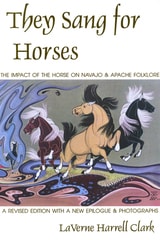
They Sang for Horses
The Impact of the Horse on Navajo and Apache FolkloreLaVerne Harrell Clark
University Press of Colorado, 2001
No Native American groups placed more emphasis on the horse in their lives than did the Navajo and Apache of the Southwest. They Sang for Horses, first published in 1966 and now considered a classic, remains the only comprehensive treatment of the profound mystical influence that the horse has exerted for more than 300 years.
In this completely redesigned and expanded edition, LaVerne Harrell Clark examines how storytellers, singers, medicine men, and painters created the animal's evolving symbolic significance by adapting existing folklore and cultural symbols. Exploring the horse's importance in ceremonies, songs, prayers, customs, and beliefs, she investigates the period of the horse's most pronounced cultural impact on the Navajo and the Apache, starting from the time of its acquisition from the Spanish in the seventeenth century and continuing to the mid-1960s, when the pickup truck began to replace it as the favored means of transportation. In addition, she presents a look at how Navajos and Apaches today continue to redefine the horse's important role in their spiritual as well as material lives.
This classic work is a must for historians, readers interested in Native American folklore and mythology, and anyone who has ever been captivated by the magic and romance of the horse.