Results by title
19 books match the query 'Horticulture'
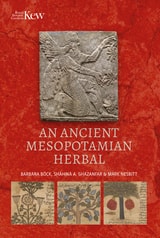
An Ancient Mesopotamian Herbal
Barbara Boeck, Shahina Ghazanfar, and Mark Nesbitt
Royal Botanic Gardens, Kew, 2024
Traditional medical systems continue to impact the lives of people around the globe. These systems vary greatly in their underlying beliefs, but all commonly rely on the consumption of plant matter as a central practice. An Ancient Mesopotamian Herbal is a new, fully illustrated book that explores the uses of plants in traditional medicine and how these botanical roots extend to modern, “conventional” medicinal treatments.
Divided into two parts, An Ancient Mesopotamian Herbal introduces the lands and ancient cultures of Mesopotamia before surveying the different forms of evidence and research methods informing this academic book. The book then looks to the modern day, focusing on thirty case studies of plant-based drugs. Bridging the divide between the humanities and sciences and using new research and data from modern-day Iraq and surrounding areas, An Ancient Mesopotamian Herbal draws on the expertise of archeo-botanists, scientists, and Assyriologists specializing in historic Mesopotamian medicine to provide new identifications of Assyrian and Babylonian herbal medicines while giving a concise overview of ancient Mesopotamian herbal lore.
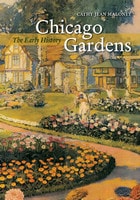
Chicago Gardens
The Early HistoryCathy Jean Maloney
University of Chicago Press, 2008
Cathy Jean Maloney has spent decades researching the city’s horticultural heritage, and here she reveals the unusual history of Chicago’s first gardens. Challenged by the region’s clay soil, harsh winters, and fierce winds, Chicago’s pioneering horticulturalists, Maloney demonstrates, found imaginative uses for hardy prairie plants. This same creative spirit thrived in the city’s local fruit and vegetable markets, encouraging the growth of what would become the nation’s produce hub. The vast plains that surrounded Chicago, meanwhile, inspired early landscape architects, such as Frederick Law Olmsted, Jens Jensen, and O.C. Simonds, to new heights of grandeur.
Maloney does not forget the backyard gardeners: immigrants who cultivated treasured seeds and pioneers who planted native wildflowers. Maloney’s vibrant depictions of Chicagoans like “Bouquet Mary,” a flower peddler who built a greenhouse empire, add charming anecdotal evidence to her argument–that Chicago’s garden history rivals that of New York or London and ensures its status as a world-class capital of horticultural innovation.
With exquisite archival photographs, prints, and postcards, as well as field guide descriptions of living legacy gardens for today’s visitors, Chicago Gardens will delight green-thumbs from all parts of the world.
Chicago and Its Botanic Garden
The Chicago Horticultural Society at 125Cathy Jean Maloney
Northwestern University Press, 2015
Formed in 1890, during the heady days before the 1893 World’s Columbian Exposition, the Chicago Horticultural Society boasted members with names deeply rooted in Chicago history: Buckingham, McCormick, and Palmer, among others. Today, as it leads the Garden in a model public-private partnership with the Forest Preserves of Cook County, the Society’s horticultural practices have exceeded the vision of its founders.
Chicago and Its Botanic Garden: The Chicago Horticultural Society at 125 is a lushly illustrated and thoughtful history of the Society and its evolution from a producer of monumental flower and botanical shows, through a fallow period, to the opening in 1972 of the Chicago Botanic Garden, a living museum and world leader in horticulture, plant science and conservation, education, and urban agriculture. Author Cathy Jean Maloney combines meticulous scholarship with a flair for storytelling in a narrative that will delight everyone from casual strollers of the grounds to the volunteers, professionals, and scientists who compose the influential society.
Christmas Trees for Pleasure and Profit
Wray, Robert D
Rutgers University Press, 2008
A perennial bestseller, this illustrated guide covers selecting land, choosing species, planting, harvesting, and managing a plantation. Wray provides guidance for choosing species suitable for the grower's situation, where and how to get planting stock, and how to care for it. The planting process is described in detail, including both hand and machine methods. The book presents useful techniques for protecting the growing trees from weeds, animals, fire, insects, and disease, and offers a full description of shearing or shaping trees to improve their form and densityùkeys to a successful crop.
As the grower's job is not done until the trees are sold, issues of grading, harvesting, advertising, and marketing are examined. A chapter on finances deals with costs, profits, and taxes. From novice to experienced grower, there is something in this book for everyone.
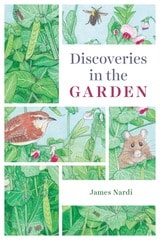
Discoveries in the Garden
James B. Nardi
University of Chicago Press, 2018
Leading us through the garden gate, Nardi reveals the extraordinary daily lives and life cycles of a quick-growing, widely available, and very accommodating group of study subjects: garden plants. Through close observations and simple experiments we all can replicate at home, we learn the hidden stories behind how these plants grow, flower, set seeds, and produce fruits, as well as the vital role dead and decomposing plants play in nourishing the soil. From pollinators to parasites, plant calisthenics to the wisdom of weeds, Nardi’s tale also introduces us to our fellow animal and microbial gardeners, the community of creatures both macro- and microscopic with whom we share our raised beds. Featuring a copse of original, informative illustrations that are as lush as the garden plants themselves, Discoveries in the Garden is an enlightening romp through the natural history, science, beauty, and wonder of these essential green places.
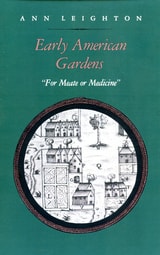
Early American Gardens
"For Meate or Medicine"Ann Leighton
University of Massachusetts Press, 1970
Early American Gardens, published in 1970, was the first of three authoritative volumes of garden history by Ann Leighton. The 464-page masterwork of garden history was reissued in this paperback edition by University of Massachusetts Press in 1986. Concentrating on the gardens of the early settlers of New England, this volume deals with gardeners as well as the plants they depended upon for household aids, flavorings, drinks, and medicines. The well-illustrated, thorough, and scholarly volume is a book for history buffs as well as avid and inquisitive gardeners.
Companion volumes by Ann Leighton
American Gardens in the Eighteenth Century “For Use or for Delight”
American Gardens of the Nineteenth Century “For Comfort and Affluence”
Environmental Safety of Genetically Engineered Crops
Rebecca Grumet
Michigan State University Press, 2010
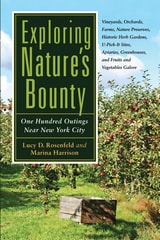
Exploring Nature's Bounty
One Hundred Outings Near New York CityRosenfeld, Lucy D
Rutgers University Press, 2012
When lifelong friends Lucy D. Rosenfeld and Marina Harrison set off on their outings in the region, they are always on the lookout for the gifts that nature offers. Exploring Nature’s Bounty, their ninth collaboration, invites us to share the rich array of agricultural delights they’ve discovered within a two-hour radius of New York City—from beautiful vineyards to the latest in hydroponic greenhouses to peach-filled orchards to community farms and historic sites.
The places chosen all welcome visitors who will see first hand the art of agriculture, pick their own produce, help out on the farm, or simply enjoy being outdoors so close to the city. Many of them are off-the-beaten-track locations where readers and their families can walk among rows of grapes, cornstalks, apple trees, and so much more. The sites range from traditional fruit orchards to greenhouses filled with water-grown tomatoes and basil to neatly ordered herb gardens in historic settings. Local vineyards make wineries fun and glamorous places to visit, whether on the North Fork of Long Island or in the Hudson Valley. Some venues focus on crop preservation—the American chestnut, for example—while others introduce readers to honey making and maple sugaring. Those interested in taking classes or seeing demonstrations will find places to do just that, and many activities are geared toward children, from corn mazes to hayrides to pumpkin picking.
Rosenfeld and Harrison provide a list of festivals featuring local produce and, at the end of the book, a guide to choosing an outing that will best fit readers, their families, and their taste buds. Directions are provided in each write-up as well as information on schedules, guided tours, and walks within many of the sites.
Exploring Nature’s Bounty focuses on the natural, the organic, the sustainable, and the close-at-hand. By avoiding places overrun with commercialism, it helps readers create their own adventures, enjoy time with family and friends, and connect to the farms that nourish us all.
High Plains Horticulture
A HistoryJohn F. Freeman
University Press of Colorado, 2008
How Trees Die
The Past, Present, and Future of our ForestsJeff Gillman
Westholme Publishing, 2009
Trees have been essential to the success of human beings, providing food, shelter, warmth, transportation, and products (consider the paper you are holding). Trees are also necessary for a healthy atmosphere, literally connecting the earth with the sky. Once in wild abundance— the entire eastern North America was a gigantic forest—they have receded as we have clearcut the landscape in favor of building cities and farms, using up and abusing our forests in the process. Over the centuries, we have trained food trees, such as peach and apple trees, to produce more and better fruit at the expense of their lives. As Jeff Gillman, a specialist in the production and care of trees, explains in his acclaimed work, How Trees Die: The Past, Present, and Future of Our Forests, the death of a tree is as important to understanding our environment as how it lives. While not as readily apparent as other forms of domestication, our ancient and intimate relationship with trees has caused their lives to be inseparably entwined with ours. The environment we have created—what we put into the air and into the water, and how we change the land through farming, construction, irrigation, and highways—affects the world’s entire population of trees, while the lives of the trees under our direct care in farms, orchards, or along a city boulevard depend almost entirely on our actions. Taking the reader on a fascinating journey through time and place, the author explains how we kill trees, often for profit, but also unintentionally with kindness through overwatering or overmulching, and sometimes simply by our movements around the globe, carrying foreign insects or disease. No matter how a tree’s life ends, though, understanding the reason is essential to understanding the future of our environment.
Organic Management for the Professional
The Natural Way for Landscape Architects and Contractors, Commercial Growers, Golf Course Managers, Park Administrators, Turf Managers, and Other Stewards of the LandBy Howard Garrett, John Ferguson, and Mike Amaranthus
University of Texas Press, 2012
Can you manage the landscape of a golf course, city park, or corporate campus without synthetic fertilizers and toxic pesticides? Absolutely! Organic landscaping is not only possible on a large scale, but it also makes sense both economically and environmentally. It promotes healthy soils and plants, which require less water and sequester more carbon—a winning combination for both your bottom line and the planet’s fight against resource depletion and global warming. Organic programs on a commercial scale have enormous potential to make a difference in the quality of our environment, our use of fuels, and our climate. And as those who have already converted to organics have discovered, they also cost a lot less over the long term.
Organic Management for the Professional is the first comprehensive guide to “going green” in large-scale landscaping. Nationally recognized organic gardening expert Howard Garrett, with associates John Ferguson and Mike Amaranthus, not only explains in detail how to manage projects with natural organic techniques, but also presents the material in clear, simple terms so that commercial and institutional property owners can understand what to ask of their landscape architects, contractors, growers, and maintenance people. They give detailed, proven instructions for the key components of organic landscaping—soil building, correct planting techniques, fertilizing, pest control, compost, and mulch. Then they show how to apply these organic methods in large-scale landscaping, commercial growing (orchards, tree farms, nurseries, and greenhouse operations), and recreational properties (golf courses, parks, and sports fields).
Plant Foods of Greece
A Culinary Journey to the Neolithic and Bronze AgesSoultana Maria Valamoti
University of Alabama Press, 2023
2024 INAUGURAL MARY BEAUDRY BOOK AWARD FOR THE ARCHAEOLOGY OF FOOD
A synthesis of culinary practices of prehistoric Greece based on plant food ingredients
In Plant Foods of Greece, Greek archaeologist Soultana Maria Valamoti takes readers on a culinary journey, reconstructing the plant foods and culinary practices of Neolithic and Bronze Age Greece. For more than thirty years, she has been analyzing a large body of archaeobotanical data that was retrieved from nearly twenty sites in mainland Greece and the Greek islands, with an additional analysis of other sites as referenced by published colleagues. Plant foods were the main ingredients of daily meals in prehistoric Greece and most likely of special dishes prepared for feasts and rituals.
Valamoti’s approach allows an exploration of culinary variability through time. The thousands of charred seeds identified from occupation debris correspond to minuscule time capsules. She is able to document changes from the cooking of the first farmers to the sophisticated cuisines of the elites who inhabited palaces in the first cities of Europe in the south of Greece during the Late Bronze Age. Along the way, she explains the complex processes for the addition of new ingredients (such as millet and olives), condiments, sweet tastes, and complex recipes. Valamoti also addresses regional variability and diversity as well as detailing experimentation and research using occasional input from ancient written sources.
Comprehensive and synthetic coverage encompasses bread/cereals, pulses, oils, fruit and nuts, fermented brews, healing foods, cooking, and identity. In addition, Valamoti offers insight into engaging in public archaeology and provides recipes that incorporate ancient plant ingredients and connect prehistory to the present in a critical way. A definitive source for a range of food scientists and scholars, it will also appeal to foodies.
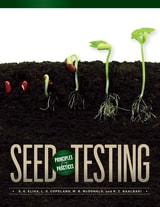
Seed Testing
Principles and PracticesSabry G. Elias
Michigan State University Press, 2012
An essential reference for students, seed technologists, researchers, and seed industry personnel, this comprehensive guide outlines the most widely performed modern seed quality tests, explores the principles behind them, the history of seed testing, why seeds are tested and when, and sampling, sub-sampling, seed laboratory management, accreditation, and seed quality assurance programs. The authors describe statistical applications to seed testing and tolerances, and they provide a detailed morphological and structural description of seed formation and development. The book examines the testing of genetic traits and transgenic seeds, including DNA and protein genetic purity tests, and cultivar purity identification for conventional seeds. In addition to the most common seed purity and viability tests, tests for seed and seedling vigor, seed-borne diseases and seed moisture determination are also discussed.
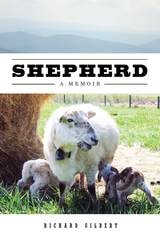
Shepherd
A MemoirRichard Gilbert
Michigan State University Press, 2014
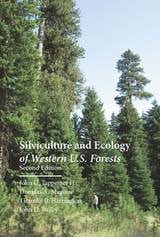
Silviculture and Ecology of Western U.S. Forests
John D. Bailey
Oregon State University Press, 2015
Silviculture and Ecology of Western U.S. Forests, Second Edition, is a text for students, professional forest managers, and scientists that summarizes both early and contemporary research and principles relevant to the silviculture, ecology, and multi-purpose management of western U. S. forests. Based on its authors’ significant experiences and contributions in the field, as well as nearly 1000 additional references, Silviculture and Ecology remains the only text that focuses on silviculture in western U.S. forests—providing background and basis for current biological, ecological, and managerial practices.
Detailed chapters on fire, tree growth, and management of complex stand structures, as well as shrub ecology and an ecosystem framework, are bolstered in the second edition. A new series of case studies illustrates how silvicultural practices are developed and modified as forests grow and new challenges and opportunities occur. Contemporary silvicultural practices, particularly pertaining to fire use, vegetation management, soil fertility, and fertilization have been updated, and modifications that enhance standard practices are demonstrated throughout the text.
In this comprehensive reference, readers entering the field will come to understand the significance of carefully managing forests by conscious design, and experienced silviculturists will benefit from the edition’s up-to-date information, providing forest users with a greater range of ecosystem services and consumable products alike.

Soybeans and Their Products
Markets, Models, and PolicyJames P. Houck, Mary E. Ryan, and Abraham Subotnik
University of Minnesota Press, 1972
Soybeans and Their Products was first published in 1972. Minnesota Archive Editions uses digital technology to make long-unavailable books once again accessible, and are published unaltered from the original University of Minnesota Press editions.
This is the report of a comprehensive study designated to identify and measure empirically the forces, interrelationships, and processes which shape the behavior of the total soybean market. The research focused on the years from 1946 to 1967, a period when the soybean economy developed from its small beginnings to its present magnitude. Soybeans are now the leading oilseed in world trade; soybean oil is the most prominent among the many edible oils available in the world; and soybean meal stands first in importance in world markets for high-protein livestock feeds. As a top cash crop in U.S. agriculture soybeans are rivaled only by corn.
Much of the remarkable surge in soybean and related markets in recent years can be explained and analyzed by using the concepts of demand growth and commodity substitution developed in this book. In addition to serving the specific interests of commodity experts, the study will be useful to econometricians and price analysts as an example of empirical investigation of a major agricultural and industrial raw material.
The research was carried out through close cooperation between the University of Minnesota's Department of Agricultura and Applied Economics and the Economic and Statistical Analysis Division of the Economic Research Service, U.S. Department of Agriculture.
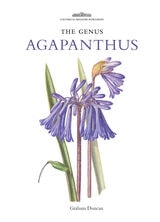
The Genus Agapanthus
Graham Duncan
Royal Botanic Gardens, Kew, 2021
Renowned for its stunning blue flowers, agapanthus—sometimes known as the blue lily or lily of the Nile—is a group of rhizomatous plants native to southern Africa. First cultivated in the Netherlands in the late seventeenth century, it rose to prominence as a conservatory plant in England during the eighteenth and nineteenth centuries after certain varieties were found to be hardy enough to withstand the colder climate of the British Isles. Graham Duncan’s The Genus Agapanthus provides both a revised classification of this plant group and a superbly illustrated celebration of their unique beauty. Featuring new watercolors from South African artist Elbe Joubert and color photographs showing the species in their spectacular and varied natural habitats, the book also highlights a selection of more than 150 of the most notable agapanthus cultivars from growers across Europe, Africa, and Oceania. The agapanthus’s natural history is spotlighted as well, with comprehensive descriptions of each species, maps of their global distribution, and information on how to successfully cultivate, propagate, and care for them. This book’s blend of science, horticulture, and art makes it essential for all varieties of plant lovers.
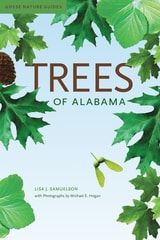
Trees of Alabama
Lisa J. Samuelson, with Photographs by Michael E. Hogan
University of Alabama Press, 2020
From acorns to canopy: Alabama’s trees revealed in vivid detail.
From the understory flowering dogwood presenting its showy array of white bracts in spring, to the stately, towering baldcypress anchoring swampland with their reddish buttresses; from aromatic groves of Atlantic white-cedar that grow in coastal bogs to the upland rarity of the fire-dependent montane longleaf pine, Alabama is blessed with a staggering diversity of tree species. Trees of Alabama offers an accessible guide to the most notable species occurring widely in the state, forming its renewable forest resources and underpinning its rich green blanket of natural beauty.
Lisa J. Samuelson provides a user-friendly identification guide featuring straightforward descriptions and vivid photographs of more than 140 common species of trees. The text explains the habitat and ecology of each species, including its forest associates, human and wildlife uses, common names, and the derivation of its botanical name. With more than 800 full-color photographs illustrating the general form and habitat of each, plus the distinguishing characteristics of its buds, leaves, flowers, fruit, and bark, readers will be able to identify trees quickly. Colored distribution maps detail the range and occurrence of each species grouped by county, and a quick guide highlights key features at a glance.
This book also features a map of forest types, chapters on basic tree biology and terminology (with illustrative line drawings), a spotlight on the plethora of oak species in the state, and a comprehensive index. This is an invaluable resource for biologists, foresters, and educators and a great reference for outdoorspeople and nature enthusiasts in Alabama and throughout the southeastern United States.
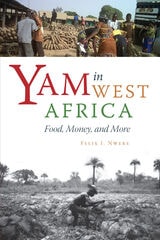
Yam in West Africa
Food, Money, and MoreFelix I. Nweke
Michigan State University Press, 2015
Yam production is concentrated in West Africa, which is responsible for more than 90 percent of the 50 million tons produced annually around the globe. Though the crop can attract high prices, too often its producers live in penury. Regional issues drive up labor costs of food crops because of dependence on obsolete technology. In addition, certain agronomic practices that are peculiar to yam production remain unchanged, and pests and diseases still ravage the crop. Yam in West Africa investigates solutions to these problems with the aim of expanding yam production, increasing sales, helping farmers, and bringing more of this staple food to those who need it. The future of the yam is bright; this book aims to make it more so.