Results by title
3 books match the query 'Hospice'
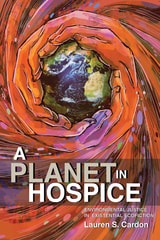
A Planet in Hospice
Environmental Justice in Existential EcofictionLauren S. Cardon
The Ohio State University Press, 2026
Advances new theories of “existential ecofiction” and how its authors both confront death and foster hope in their visions of a path forward through the global climate crisis.
How do we continue to love and care for a planet it’s too late to save? In A Planet in Hospice, Lauren S. Cardon analyzes works of “existential ecofiction” that invite us to reflect on our mortality and the many ways that people are already affected by disaster, while also encouraging hope and connection. These texts from authors such as N. K. Jemisin, Paolo Bacigalupi, Darcie Little Badger, Rivers Solomon, Richard Powers, and Margaret Atwood are characterized by themes of ecological crisis, planetary demise, and human extinction, and they center environmental justice and human oppression. Cardon argues that, by invoking the end of the world, these writers directly engage with death anxiety and consequently intervene in current theories of existential psychology and intersectional ecocriticism. They highlight the inextricability of environmental care and social justice and offer visions of a path forward through the global climate crisis humans now face.
How do we continue to love and care for a planet it’s too late to save? In A Planet in Hospice, Lauren S. Cardon analyzes works of “existential ecofiction” that invite us to reflect on our mortality and the many ways that people are already affected by disaster, while also encouraging hope and connection. These texts from authors such as N. K. Jemisin, Paolo Bacigalupi, Darcie Little Badger, Rivers Solomon, Richard Powers, and Margaret Atwood are characterized by themes of ecological crisis, planetary demise, and human extinction, and they center environmental justice and human oppression. Cardon argues that, by invoking the end of the world, these writers directly engage with death anxiety and consequently intervene in current theories of existential psychology and intersectional ecocriticism. They highlight the inextricability of environmental care and social justice and offer visions of a path forward through the global climate crisis humans now face.
[more]
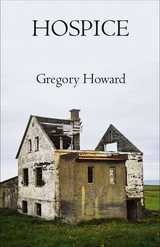
Hospice
Gregory Howard
University of Alabama Press, 2015
When Lucy is little something happens to her brother. He disappears for months and when he returns he’s not the same. He’s not her brother. At least this is what Lucy believes. But what actually happened?
Comic, melancholy, haunted, and endlessly inventive, Gregory Howard’s debut novel Hospice follows Lucy later in life as she drifts from job to job caring for dogs, children, and older women—all the while trying to escape the questions of her past only to find herself confronting them again and again.
In the odd and lovely but also frightening life of Lucy, everyday neighborhoods become wonderlands where ordinary houses reveal strange inmates living together in monastic seclusion, wayward children resort to blackmail to get what they want, and hospitals seem to appear and disappear to avoid being found.
Replete with the sense that something strange is about to happen at any moment, Hospice blurs the borders between the mundane and miraculous, evoking the intensity of the secret world of childhood and distressing and absurd search for a place to call home.
[more]
Prelude to Hospice
Florence Wald, Dying People, and their FamiliesAbel, Emily K.
Rutgers University Press, 2018
Hospices have played a critical role in transforming ideas about death and dying. Viewing death as a natural event, hospices seek to enable people approaching mortality to live as fully and painlessly as possible. Award-winning medical historian Emily K. Abel provides insight into several important issues surrounding the growth of hospice care. Using a unique set of records, Prelude to Hospice expands our understanding of the history of U.S. hospices. Compiled largely by Florence Wald, the founder of the first U.S. hospice, the records provide a detailed account of her experiences studying and caring for dying people and their families in the late 1960s and early 1970s. Although Wald never published a report of her findings, she often presented her material informally. Like many others seeking to found new institutions, she believed she could garner support only by demonstrating that her facility would be superior in every respect to what currently existed. As a result, she generated inflated expectations about what a hospice could accomplish. Wald’s records enable us to glimpse the complexities of the work of tending to dying people.
[more]