Results by title
15 books match the query 'House & Home'
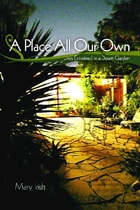
A Place All Our Own
Lives Entwined in a Desert GardenMary Irish
University of Arizona Press, 2012

Build With Adobe
Marcia Southwick
Ohio University Press, 1974
“What can you spend?”
“Where will you put it?”
“Who is going to build it?”
This new updated and enlarged edition includes hundreds of photographs, drawings and house plans as well as new information about passive solar heating and cooling, and specific details on construction.
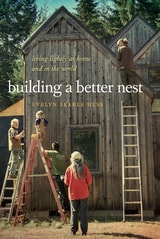
Building a Better Nest
Living Lightly at Home and in the WorldEvelyn Searle Hess
Oregon State University Press, 2015
What does it mean to build a better nest? Better for whom? Is it better for the individual or family? The planet? Green building and sustainable design are popular buzzwords, but to Hess, sustainable building is not a simple matter of buying and installing the latest recycled flooring products. It is also about cooperative work: working together in employment, in research, in activism, and in life. Hess is concerned with her local watershed, but also with the widening income gap, disappearing species, and peak resources. She actively works to reduce overconsumption and waste. For Hess, these problems are both philosophical and practical.
As Hess and her husband age, the questions of how to live responsibly arise with greater frequency and urgency. With unfailing wit and humor, she looks for answers in such places as neuroscience, Buddhism, and her ancestral legacy. Building a Better Nest will appeal to anyone with an interest in sustainable building, off-grid living, or alternative communities. The questions it asks about the way we live are earnest and important, from an author whose voice is steeped in wisdom and gratitude.
Chainsaw Love
Field Notes on the World's Most Dynamic Power ToolJames Card
Wisconsin Historical Society Press, 2025
Behold the mighty chainsaw and discover its history, its influence, and its people
Considered the most powerful of all hand tools, the chainsaw has been vital to contemporary life in ways large, small, and sometimes surprising since it first came on the market in the 1940s. In Chainsaw Love, author James Card celebrates this formidable implement in unflinching style, sharing stories and reflections about the world of chainsaws and the people who use and appreciate them.
Card describes the personal freedom that comes from harvesting your own trees for firewood and introduces readers to lumberjack competitors, hot-saw builders, and the sculpture carvers who take sawing to new heights. Chainsaw Love asserts the key role chainsaws play in clearing the right-of-way for powerlines to keep the electrical grid humming; in forestry and conservation efforts to maintain desirable ecosystems; and in the sciences, where ecologists and astronomers use chainsaws to age trees for scientific research. Card also considers the chainsaw’s place in pop culture, from movies to rock songs to presidential photo ops.
Readers of Chainsaw Love will discover the lore and terminology of forests and wood cutting— widow makers and windthrows, witness trees and barber chairs, pumpkin pine, devil’s forks, cat faces, and schoolmarms. Additionally, the book offers insights into chainsaw variations and parts, guidelines for saw care and maintenance, safety recommendations, and other hard-won tips and tricks. Dozens of photos from the field, as well as helpful diagrams, add to readers’ understanding of the saw’s evolution and modern use.
Part homage, part social history, and part field guide, Chainsaw Love is the perfect book for chainsaw users of all stripes—from loggers to conservationists, woodworkers to weekend cabin-dwellers—and anyone curious about this magnificent and underappreciated machine.
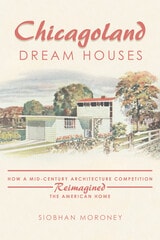
Chicagoland Dream Houses
How a Mid-Century Architecture Competition Reimagined the American HomeSiobhan Moroney
University of Illinois Press, 2024
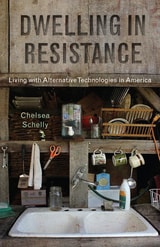
Dwelling in Resistance
Living with Alternative Technologies in AmericaSchelly, Chelsea
Rutgers University Press, 2017
Schelly portrays a wide range of residential living alternatives utilizing renewable, small-scale, de-centralized technologies. These technologies considerably change how individuals and communities interact with the material world, their natural environment, and one another. Using in depth interviews and compelling ethnographic observations, the book offers an insightful look at different communities’ practices and principles and their successful endeavors in sustainability and self-sufficiency.
Foodloose in Washtenaw
A Foodie's Guide to Washtenaw CountyTaylor Landeryou and Raymond De Young
Michigan Publishing Services, 2018
Inspired by a classic walking guidebook of the area, Foodloose in Washtenaw County takes readers on tours to discover food-related treasures throughout the county. What better way to get to know this place—or experience something new—than to bike, bus, carpool, walk, even kayak your way through food-filled Washtenaw County?
From centennial farms to trendy upscale restaurants, the self-guided tours of Foodloose offer an opportunity to explore where our food is grown, produced, distributed, and enjoyed in Washtenaw County. Within these pages lies a chance to celebrate the local food community, learn more about our unique food system, and maybe even find a new favorite place to dine.
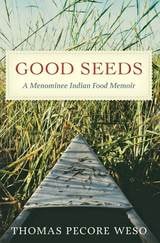
Good Seeds
A Menominee Indian Food MemoirThomas Pecore Weso
Wisconsin Historical Society Press, 2027
To the Menominee people, the "good seeds” of life are the manomin, or wild rice, that also gives the tribe its name. In this unique food memoir, Tribal member Thomas Pecore Weso takes readers on a cook’s journey through Wisconsin’s North Woods tribal lands, connecting Menominee food—beaver, trout, blackberry, wild rice, maple sugar, partridge—to the colorful individuals who taught him Indigenous values and traditions. Featuring more than forty recipes, Good Seeds keeps those traditions alive for future generations.
With a rare perspective as a Native American anthropologist and artist, Weso mixes a poignant personal story with the seeds of Menominee cooking traditions. He tells of the foods and the people who helped shape the person he became. His grandfather Moon was a medicine man, whose morning prayers formed the foundation for all the day’s meals. His grandmother Jennie “made fire” each morning in a wood-burning stove and oversaw huge breakfasts of wild game, fish, and fruit pies. His uncles taught him to hunt bear, deer, squirrels, raccoons, and skunks for the daily larder. Along with authentic family recipes, Weso recalls favorite foods served at the Menominee fair and at local diners.
In Good Seeds, adventurous cooks will gain insight and inspiration from Weso’s recipes, and readers of all stripes will appreciate the often-humorous stories about reservation life during the mid-twentieth century.
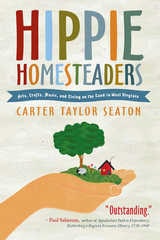
Hippie Homesteaders
Arts, Crafts, Music and Living on the Land in West VirginiaCarter Taylor Seaton
West Virginia University Press, 2014
It’s the 1960s. The Vietnam War is raging and protests are erupting across the United States. In many quarters, young people are dropping out of society, leaving their urban homes behind in an attempt to find a safe place to live on their own terms, to grow their own food, and to avoid a war they passionately decry. During this time, West Virginia becomes a haven for thousands of these homesteaders—or back-to-the-landers, as they are termed by some. Others call them hippies.
When the going got rough, many left. But a significant number remain to this day. Some were artisans when they arrived, while others adopted a craft that provided them with the cash necessary to survive. Hippie Homesteaders tells the story of this movement from the viewpoint of forty artisans and musicians who came to the state, lived on the land, and created successful careers with their craft. There’s the couple that made baskets coveted by the Smithsonian Institution’s Renwick Gallery. There’s the draft-dodger that fled to Canada and then became a premier furniture maker. There’s the Boston-born VISTA worker who started a quilting cooperative. And, there’s the immigrant Chinese potter who lived on a commune.
Along with these stories, Hippie Homesteaders examines the serendipitous timing of this influx and the community and economic support these crafters received from residents and state agencies in West Virginia. Without these young transplants, it’s possible there would be no Tamarack: The Best of West Virginia, the first statewide collection of fine arts and handcrafts in the nation, and no Mountain Stage, the weekly live musical program broadcast worldwide on National Public Radio since 1983. Forget what you know about West Virginia.
Hippie Homesteaders isn’t about coal or hillbillies or moonshine or poverty. It is the story of why West Virginia was—and still is—a kind of heaven to so many.
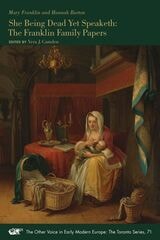
She Being Dead Yet Speaketh
The Franklin Family PapersMary Franklin and Hannah Burton
Iter Press, 2020
Collected for the first time, this volume of the Franklin Family Papers offers rare insight into the personal lives of three generations of dissenting women.
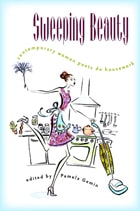
Sweeping Beauty
Contemporary Women Poets Do HouseworkPamela Gemin
University of Iowa Press, 2005
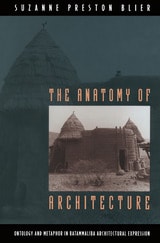
The Anatomy of Architecture
Ontology and Metaphor in Batammaliba Architectural ExpressionSuzanne Preston Blier
University of Chicago Press, 1994
"A splendid analysis of the centrality of architecture in the daily lives of the Batammaliba and its integral role in articulating social values....The story is beautifully told in the best of anthropological traditions."—Judith R. Blau, Contemporary Society
"A remarkable study....Blier's volume carries the study of African architecture to a qualitatively new level of scholarship. It introduces a new dimension whereby the architectural medium can be used to illuminate much of the entire belief system of any culture."—Labelle Prussin, African Arts
"In this excellent book Blier provides a richly detailed and searching account of what architecture means to the Batammaliba of northern Togo and Benin....The finest account I have yet read of the relations between systems of beliefs, ritual practices, and African aesthetics and plastic arts....The ethnography and basic insight should be the envy of any social anthropologist."—T.O. Beidelman, Man
Winnowing
Suzanne Matson
Duke University Press, 2026
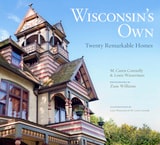
Wisconsin’s Own
Twenty Remarkable HomesM. Caren Connolly
Wisconsin Historical Society Press, 2010
Take an intimate journey through the family, history, and architecture of 20 residential treasures in Wisconsin’s Own by M. Caren Connolly and Louis Wasserman. Richly illustrated with the photography of Zane Williams and complemented by historical images and watercolors and line drawings, Wisconsin’s Own profiles the architectural history of state’s most remarkable residences built between 1854 and 1939. The houses are a mix of public and private homes that are representative of varied architectural styles, from an Italianate along the Mississippi River and an interpretation of a sixteenth-century northern Italian villa overlooking Lake Michigan to an Adirondack-style camp in the North Woods and a fourteen-bedroom Georgian Revival mansion on Lake Geneva. Frank Lloyd Wright’s Prairie School is, of course, represented as well with examples by Wright and his mentor Louis Sullivan.
Wisconsin’s Own tells the story of the considerable contribution that each of these historic homes have made to American residential architecture. It also answers the questions who built the house, what brought them to Wisconsin, why they selected that particular style, and how it is that this historic home still stands—and shines—today.
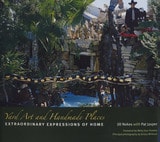
Yard Art and Handmade Places
Extraordinary Expressions of HomeBy Jill Nokes, with Pat Jasper
University of Texas Press, 2007
Relatively few people in America build their own homes, but many yearn to make the places they live in more truly their own. Yard Art and Handmade Places profiles twenty homemakers who have used their yards and gardens to express their sense of individuality, to maintain connections to family and heritage, or even to create sacred spaces for personal and community refreshment and healing. Jill Nokes, an authority on native plants and ecological restoration, traveled across the state of Texas, seeking out residents who had transformed their yards and gardens into oases of art and exuberant personal expression. In this book, she presents their stories, told in their own words, about why they created these handmade places and what their yard art has come to mean to them and to their communities.
Rather than viewing yard art as a curiosity or oddity, Nokes treats it as an integral part of home-making, revealing how these places become invested with deep personal or social meaning. Yard Art and Handmade Places celebrates the fact that, despite the proliferation of look-alike suburbs, places still exist where people with ordinary means and skills are shaping space with their own hands to create a personal expression that can be enjoyed by all.