Results by title
395 books match the query 'How' and 12 start with a
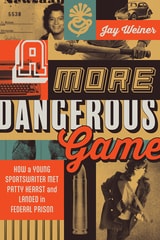
A More Dangerous Game
How a Young Sportswriter Met Patty Hearst and Landed in Federal PrisonJay Weiner
University of Minnesota Press, 2027
From precocious sportswriter to Federal Prisoner #01150-134: The intersection of sports and the revolutionary 1970s, with one ambitious young man caught in the middle
Jay Weiner was an aspiring teenage sportswriter when he met Jack Scott, the charismatic, activist journalist who would become his mentor, immersing him in the political and social issues roiling sports—and so much else—in the late 1960s and 1970s. Weiner became a zealous student of Scott, joining a new tradition of sports journalism that interrogated questions of race, power, and politics alongside the games themselves. But his blind devotion took a treacherous turn when Scott took Weiner, as a surprise for his twentieth birthday, to a secluded Pennsylvania farmhouse where heiress-turned-FBI-most-wanted Patty Hearst was hiding out with her Symbionese Liberation Army kidnappers-turned-comrades.
A More Dangerous Game is Weiner’s story of coming of age in a shocking fashion. A wild mosaic of sports, journalism, betrayal, justice, courage, and redemption, his memoir charts the meeting of sports and the radical left in the 1970s, with Weiner unwittingly caught in the middle and left behind by his mentor. In the engaged, edgy style of a seasoned sportswriter, Weiner describes the fallout after that fateful encounter with the country’s most wanted fugitives: three years of federal subpoenas, impossible decisions, and, ultimately, four months in prison for refusing to testify before a grand jury.
With exhaustive background reporting, Weiner fits together the seemingly disparate pieces of his unlikely journey from young sportswriter to frightened FBI target to emboldened Federal Prisoner #01150-134. From its examination of the life and work of Jack Scott to its surprising angle on the well-chronicled saga of Patty Hearst, A More Dangerous Game is the engrossing story of a time when examining sports as a mirror of society put a writer on the cutting edge of one of the most notorious stories of a generation.
Retail e-book files for this title are screen-reader friendly with images accompanied by short alt text and/or extended descriptions.
A Problem of Fit
How the Complexity of College Pricing Hurts Students—and UniversitiesPhillip B. Levine
University of Chicago Press, 2022
How much does it cost to attend college in the United States today? The answer is more complex than many realize. College websites advertise a sticker price, but uncovering the actual price—the one after incorporating financial aid—can be difficult for students and families. This inherent uncertainty leads some students to forgo applying to colleges that would be the best fit for them, or even not attend college at all. The result is that millions of promising young people may lose out on one of society’s greatest opportunities for social mobility. Colleges suffer too, losing prospective students and seeing lower enrollments and less socioeconomic diversity. If markets require prices to function well, then the American higher-education system—rife as it is with ambiguity in its pricing—amounts to a market failure.
In A Problem of Fit, economist Phillip B. Levine explains why institutions charge the prices they do and discusses the role of financial aid systems in facilitating—and discouraging—access to college. Affordability issues are real, but price transparency is also part of the problem. As Levine makes clear, our conversations around affordability and free tuition miss a larger truth: that the opacity of our current college-financing systems is a primary driver of inequities in education and society. In a clear-eyed assessment of educational access and aid in a post-COVID-19 economy, A Problem of Fit offers a trenchant new argument for educational reforms that are well within reach.
A Sense of Urgency
How the Climate Crisis Is Changing RhetoricDebra Hawhee
University of Chicago Press, 2023
Why is it difficult to talk about climate change? Debra Hawhee argues that contemporary rhetoric relies on classical assumptions about humanity and history that cannot conceive of the present crisis. How do we talk about an unprecedented future or represent planetary interests without privileging our own species? A Sense of Urgency explores four emerging answers, their sheer novelty a record of both the devastation and possible futures of climate change. In developing the arts of magnitude, presence, witness, and feeling, A Sense of Urgency invites us to imagine new ways of thinking with our imperiled planet.
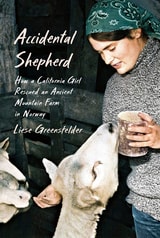
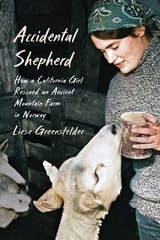
Accidental Shepherd
How a California Girl Rescued an Ancient Mountain Farm in NorwayLiese Greensfelder
University of Minnesota Press, 2024
A summer job turns serious when a young woman takes the reins on a remote farm—and learns far more than how to herd sheep
In May 1972, Liese Greensfelder arrived in the small Norwegian town of Øystese to startling news: Johannes, the farmer who hired her for the summer, had just been hospitalized after a stroke. Could she please watch over his place for a month or so, until he got back on his feet? Twenty years old and with no farming experience, Liese was dropped off the next day at a centuries-old mountain farm at the end of a dirt road high above the magnificent Hardanger Fjord—with 115 sheep, two cows, one calf, a draft horse, and a Norwegian herding dog to care for.
Armed with a command of Danish that enabled rudimentary communication, Liese began learning from neighbors who spoke an ancient Norwegian dialect—how to feed the animals, milk by hand, and supervise her first lambing. The farm was run in the old way: horses and wagons instead of tractors, haymaking in the rain, and hikes into the mountains to check on the sheep that ranged free over those wild peaks all summer. And, she was quick to discover, the farm was on the brink of ruin, for Johannes was a heartless man who had abused his animals and neglected his buildings and equipment for decades.
Although her employer had alienated his neighbors, they immediately welcomed the American newcomer and offered her help. As “a month or so” stretched to a year and Liese struggled for the survival of the farm, she joined this tight-knit enclave of farmers, learning their stories and history, adopting their dialect, and growing intimately familiar with the grass-based farming practices that had sustained them for generations.
From moments of levity, such as sampling a neighbor’s fruit wines, Christmas parties, and skiing; to soul-battering challenges, including the directive to kill a fox, sending sheep to slaughter, rotten silage, and vicious weather; to the yearnings of a young woman awash in a sea of masculinity, Accidental Shepherd is a candid account of Liese’s year in a remote farmhouse. Confronted with dangers and obstacles for which she was utterly unprepared, she tells a story of remarkable resilience and records the fascinating but rapidly vanishing traditions of the community that took her in.
Accidental Shepherd
How a California Girl Rescued an Ancient Mountain Farm in NorwayLiese Greensfelder
University of Minnesota Press, 2024
A summer job turns serious when a young woman takes the reins on a remote farm—and learns far more than how to herd sheep
In May 1972, Liese Greensfelder arrived in the small Norwegian town of Øystese to startling news: Johannes, the farmer who hired her for the summer, had just been hospitalized after a stroke. Could she please watch over his place for a month or so, until he got back on his feet? Twenty years old and with no farming experience, Liese was dropped off the next day at a centuries-old mountain farm at the end of a dirt road high above the magnificent Hardanger Fjord—with 115 sheep, two cows, one calf, a draft horse, and a Norwegian herding dog to care for.
Armed with a command of Danish that enabled rudimentary communication, Liese began learning from neighbors who spoke an ancient Norwegian dialect—how to feed the animals, milk by hand, and supervise her first lambing. The farm was run in the old way: horses and wagons instead of tractors, haymaking in the rain, and hikes into the mountains to check on the sheep that ranged free over those wild peaks all summer. And, she was quick to discover, the farm was on the brink of ruin, for Johannes was a heartless man who had abused his animals and neglected his buildings and equipment for decades.
Although her employer had alienated his neighbors, they immediately welcomed the American newcomer and offered her help. As “a month or so” stretched to a year and Liese struggled for the survival of the farm, she joined this tight-knit enclave of farmers, learning their stories and history, adopting their dialect, and growing intimately familiar with the grass-based farming practices that had sustained them for generations.
From moments of levity, such as sampling a neighbor’s fruit wines, Christmas parties, and skiing; to soul-battering challenges, including the directive to kill a fox, sending sheep to slaughter, rotten silage, and vicious weather; to the yearnings of a young woman awash in a sea of masculinity, Accidental Shepherd is a candid account of Liese’s year in a remote farmhouse. Confronted with dangers and obstacles for which she was utterly unprepared, she tells a story of remarkable resilience and records the fascinating but rapidly vanishing traditions of the community that took her in.

Aesthetic Journalism
How to Inform Without InformingAlfredo Cramerotti
Intellect Books, 2009
Addressing a growing area of focus in contemporary art, Aesthetic Journalism investigates why contemporary art exhibitions often consist of interviews, documentaries, and reportage. Art theorist and critic Alfredo Cramerotti traces the shift in the production of truth from the domain of the news media to that of art and aestheticism—a change that questions the very foundations of journalism and the nature of art. This volume challenges the way we understand art and journalism in contemporary culture and suggests future developments of this new relationship.

Affording Justice
How the Legal Profession Is Failing America's Middle Class and What to Do About ItSheldon Krantz
Duke University Press, 2027

African Soccerscapes
How a Continent Changed the World’s GamePeter Alegi
Ohio University Press, 2010
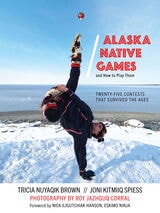
Alaska Native Games and How to Play Them
Tricia Nuyaqik Brown and Joni Kitmiiq Spiess
University of Alaska Press, 2020
As Tricia Nuyaqik Brown shows, even though today’s competitions are a big media event in Alaska, the games themselves are really no different from those of long ago. Ancestral communities once pitted their strongest, their most agile, their fastest men and women against those from neighboring villages or tribal groups. Those games never died, but rather than gathering in a sod meeting place, competitions are now held in gyms and arenas. Each game today can be linked to some aspect of surviving in a harsh environment, of drawing sustenance from the land and sea. From the Seal Hop to the Bench Reach to the Four-Man Carry, these ancient games still require athletes to be in top physical condition and possess sharp mental focus. They hold dear the traditional Native values of honoring the elders, responsibility to tribe, sportsmanship, humor, patience, and hunter success. This book offers an engaging introduction to these games and their history, inviting people to jump in and try them for themselves!
Alt-Finance
How the City of London Bought DemocracyMarlène Benquet
Pluto Press, 2022
Powerful financial forces have supported the neoliberal project since the 1980s to advance their interests, but there are now signs that these forces have a new face and a new strategy.
The majority of the British finance sector threw its support behind Britain leaving the European Union, a flagship institution of neoliberalism. Beyond this counterintuitive move, what was really happening and why? Alt-Finance examines a new authoritarian turn in financialised democracies, focusing on the City of London, revealing a dangerous alternative political project in the making.
In a clash with traditional finance, the new behemoths of financial capital - hedge funds, private equity firms, and real estate funds - have started to cohere around a set of political beliefs, promoting libertarian, authoritarian, climate-denying, and Eurosceptic views. Protecting investments, suppressing social dissent, and reducing state interference is at the core of their mission for a new world order.
By following the money, the authors provide indisputable evidence of these worrying developments. Through a clear analysis of the international dealings of this new authoritarian-libertarian regime, not just in Britain but in the US and Brazil, we can understand how our world is being shaped against our will by struggles between dominant groups.
American Dream, American Burnout
How to cope when it all gets to be too muchGerald Loren Fishkin, Ph.D.
Parkhurst Brothers, Inc., 0
This book was written for anyone who wants to be free from the tyranny of stress and burnout. Burnout can affect anyone, especially in today’s world, where “The American Dream” has been replaced by the realities of a faltering economy, breakdown of the family and societal distintegration. Burnout is not a natural state, and no one should have to live with its emotional pain. Dr. Fishkin explains how to readjust couterproductive thought processes and behaviors and learn new, healthy methods for coping. He details both self-help techniques and suggested resources to reach out to the community or the workplace for assistance.
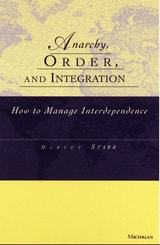
Anarchy, Order and Integration
How to Manage InterdependenceHarvey Starr
University of Michigan Press, 2000