Results by title
4 books match the query 'Human Being'
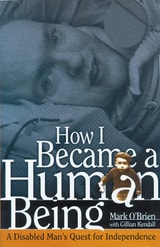
How I Became a Human Being
A Disabled Man’s Quest for IndependenceMark O’Brien, with Gillian Kendall
University of Wisconsin Press, 2003
For the first time in paperback, How I Became a Human Being is O’Brien’s account of his struggles to lead an independent life despite a lifelong disability. In 1955 he contracted polio and became permanently paralyzed from the neck down. O’Brien describes growing up without the use of his limbs, his adolescence struggling with physical rehabilitation and suffering the bureaucracy of hospitals and institutions, and his adult life as an independent student and writer. Despite his physical limitations, O’Brien crafts a narrative that is as rich and vivid as the life he led.
Human Being
A Philosophical AnthropologyThomas Langan, Edited by Antonio Calcagno
University of Missouri Press, 2009
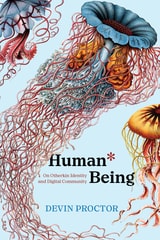
Human* Being
On Otherkin Identity and Digital CommunityDevin Proctor
Lever Press, 2026
Human* Being: On Otherkin Identity and Digital Community is an ethnographic exploration of the Otherkin—a technologically-mediated community of practice whose members identify as other-than-human—breaking down barriers of identity and calling into question assumptions about what it means to be a human. Based on a decade of ethnographic research, Human* Being examines Otherkin engagement with the techno-virtuality afforded by the internet—through chat forums, personal blogs, 3D virtual worlds, Facebook, YouTube, Tumblr, Discord, TikTok, and Reddit—troubling conventional notions about our relationships with the virtual and our understandings of the Self. The Otherkin represent a larger shift in body identity, shown by increasing numbers of people identifying as trans, nonbinary, fluid, and neurodiverse; bodies open to nuance, complication, and multiplicity. Devin Proctor closely examines internal community debates about the limits of non-human identity, avatar creation practices in virtual worlds to approximate inner realities, and the policing of identity constructs toward a stable definition of the phenomenon. However anomalistic, even fantastical they may seem, the Otherkin offer a window into our own complex notions of bodies, Selves, and technologies.
Monad and Thou
Phenomenological Ontology Of Human BeingHiroshi Kojima
Ohio University Press, 2000
The genesis for this volume was in the bombing of Japan during World War II, where the author, as a young boy, watched the bombers overhead, speculating about the lives of the pilots and their relationship with those huddled on the ground.
From this disturbing diorama, Professor Hiroshi Kojima, the translator of Martin Buber into Japanese, unfolds a new approach to Buber’s “I-Thou” relation, drawing upon insights from Husserl, Heidegger, and others in the tradition of continental philosophy to extend and deepen Buber’s thought.
In chapters that reflect upon a wide range of phenomena—from religion, science, and technology, to imagination, embodiment, and power—Professor Kojima articulates a conception of what it means to be a human being that stands as an alternative to atomism and alienation of the modern world. Analyses of haiku and other aspects of Japanese culture demonstrate how Kojima’s theory can illuminate the spiritual traditions of both East and West.
Original in its thought and revealing in its insight into Japanese thought and culture, Monad and Thou represents the life’s work of one of Japan’s great thinkers.