Results by title
3 books match the query 'Human Experience'
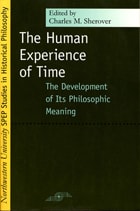
Human Experience of Time
The Development of Its Philosophic MeaningCharles Sherover
Northwestern University Press, 2001
First published in 1975 and still without equal, The Human Experience of Time provides a thorough review of the concept of time in the Western philosophic tradition. Encompassing a wide range of writings, from the Book of Genesis and the classical thinkers to the work of such twentieth-century philosophers as Collingwood and McKeon, all with introductory essays by the editor, this classic anthology offers a synoptic view of the changing philosophic notions of time.
[more]
Syntax and Human Experience
Nicolas Ruwet
University of Chicago Press, 1991
"[Ruwet] raises fundamental questions about the place of grammar in the study of language and provides several studies which suggest the possibility that some core data are outside the realm of grammatical explanation. A very remarkable book, in which the breadth of Ruwet's reflection is both challenging and deeply rewarding."—Denis Bouchard, University of Quebec, Montreal
[more]
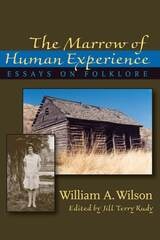
The Marrow of Human Experience
Essays on Folklore by William A. Wilsonedited by William A. Wilson and Jill Terry Rudy
Utah State University Press, 2006
Composed over several decades, the essays here are remarkably fresh and relevant. They offer instruction for the student just beginning the study of folklore as well as repeated value for the many established scholars who continue to wrestle with issues that Wilson has addressed. As his work has long offered insight on critical mattersn--nationalism, genre, belief, the relationship of folklore to other disciplines in the humanities and arts, the currency of legend, the significance of humor as a cultural expression, and so forth--so his recent writing, in its reflexive approach to narrative and storytelling, illuminates today's paradigms. Its notable autobiographical dimension, long an element of Wilson's work, employs family and local lore to draw conclusions of more universal significance. Another way to think of it is that newer folklorists are catching up with Wilson and what he has been about for some time. As a body, Wilson's essays develop related topics and connected themes. This collection organizes them in three coherent parts. The first examines the importance of folklore. What it is and its value in various contexts. Part two, drawing especially on the experience of Finland, considers the role of folklore in national identity, including both how it helps define and sustain identity and the less savory ways it may be used for the sake of nationalistic ideology. Part three, based in large part on Wilson's extensive work in Mormon folklore, which is the most important in that area since that of Austin and Alta Fife, looks at religious cultural expressions and outsider perceptions of them and, again, at how identity is shaped, by religious belief, experience, and participation; by the stories about them; and by the many other expressive parts of life encountered daily in a culture. Each essay is introduced by a well-known folklorist who discusses the influence of Wilson's scholarship. These include Richard Bauman, Margaret Brady, Simon Bronner, Elliott Oring, Henry Glassie, David Hufford, Michael Owen Jones, and Beverly Stoeltje.
[more]