102 books match the query 'Human body' and 7 start with a
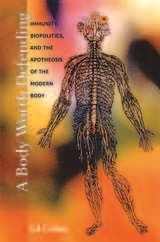
cover of A Body Worth Defending: Immunity, Biopolitics, and the Apotheosis of the Modern Body

A Body Worth Defending

Immunity, Biopolitics, and the Apotheosis of the Modern Body

Ed Cohen

Duke University Press, 2009

Biological immunity as we know it does not exist until the late nineteenth century. Nor does the premise that organisms defend themselves at the cellular or molecular levels. For nearly two thousand years “immunity,” a legal concept invented in ancient Rome, serves almost exclusively political and juridical ends. “Self-defense” also originates in a juridico-political context; it emerges in the mid-seventeenth century, during the English Civil War, when Thomas Hobbes defines it as the first “natural right.” In the 1880s and 1890s, biomedicine fuses these two political precepts into one, creating a new vital function, “immunity-as-defense.” In A Body Worth Defending, Ed Cohen reveals the unacknowledged political, economic, and philosophical assumptions about the human body that biomedicine incorporates when it recruits immunity to safeguard the vulnerable living organism.

Inspired by Michel Foucault’s writings about biopolitics and biopower, Cohen traces the migration of immunity from politics and law into the domains of medicine and science. Offering a genealogy of the concept, he illuminates a complex of thinking about modern bodies that percolates through European political, legal, philosophical, economic, governmental, scientific, and medical discourses from the mid-seventeenth century through the twentieth. He shows that by the late nineteenth century, “the body” literally incarnates modern notions of personhood. In this lively cultural rumination, Cohen argues that by embracing the idea of immunity-as-defense so exclusively, biomedicine naturalizes the individual as the privileged focus for identifying and treating illness, thereby devaluing or obscuring approaches to healing situated within communities or collectives.
[more]
cover of Aesop's Human Zoo: Roman Stories about Our Bodies

Aesop's Human Zoo

Roman Stories about Our Bodies

Phaedrus

University of Chicago Press, 2004

Most of us grew up with Aesop's Fables—tales of talking animals, with morals attached. In fact, the familiar versions of the stories attributed to this enigmatic and astute storyteller are based on adaptations of Aesop by the liberated Roman slave Phaedrus. In turn, Phaedrus's renderings have been rewritten so extensively over the centuries that they do not do justice to the originals. In Aesop's Human Zoo, legendary Cambridge classicist John Henderson puts together a surprising set of up-front translations—fifty sharp, raw, and sometimes bawdy, fables by Phaedrus into the tersest colloquial English verse.

Providing unusual insights into the heart of Roman culture, these clever poems open up odd avenues of ancient lore and life as they explore social types and physical aspects of the body, regularly mocking the limitations of human nature and offering vulgar or promiscuous interpretations of the stuff of social life.

Featuring folksy proverbs and satirical anecdotes, filled with saucy naughtiness and awful puns, Aesop's Human Zoo will amuse you with its eccentricities and hit home with its shrewdly candid and red raw messages. The entertainment offered in this volume of impeccably accurate translations is truly a novelty—a good-hearted and knowing laugh courtesy of classical poetry. Beginning to advanced classicists and Latin scholars will appreciate the original Latin text provided in this bilingual edition. The splash of classic Thomas Bewick wood engravings to accompany the fables renders the collection complete.
[more]
cover of Am I Still A Woman: Hysterectomy And Gender Identity

Am I Still A Woman

Hysterectomy And Gender Identity

Jean Elson

Temple University Press, 2003
Recent scientific findings regarding the potential dangers associated with hormone replacement therapies bring renewed attention to the relationship between women's bodies and gender identity. In Am I Still A Woman? Jean Elson offers the testimony of women who have thought deeply about this issue as a result of gynecological surgery. For the women in this book, gynecological surgery for benign conditions proved to be a crisis that prompted questions about the meanings of sexual and reproductive organs in relation to being female and feminine. Is a woman who no longer menstruates still a woman? What about a woman who can no longer bear children? Elson looks closely at the differences in responses to understand the impact of surgery and lost fertility on sexuality and partnerships as well as the steps some women take to deal with a sense of a stigmatized identity. Whether they reconceptualized their old notions of what it means to be a woman or put a new focus on making themselves attractive, they made conscious efforts to reclaim their female identity and femininity. This book provides a wealth of insight into the choices women make regarding gynecological surgery and maintaining their sense of themselves as women.
[more]
cover of An American Body | Politic: A Deleuzian Approach

An American Body | Politic

A Deleuzian Approach

Bernd Herzogenrath

Dartmouth College Press, 2010
Bernd Herzogenrath’s An American Body|Politic is a study of the intersection between the material, biological body and body as political and cultural metaphor in American politics, religion, literature, and popular culture. Deeply influenced by the thought of Gilles Deleuze, Herzogenrath’s approach to American culture encompasses endless possibilities and potentials, eschewing the mechanic and structural. He traipses through American history and culture, pausing to examine such varied facets as the Puritans’ “two bodies,” Anne Hutchinson and the Antinomian Controversy, Cotton Mather and smallpox, the poetics|politics of Whitman, Henry Adams’s stroll along the shores of complexity, and the Detroit-based techno music of today.
[more]
cover of Appetites: Food and Sex in Post-Socialist China

Appetites

Food and Sex in Post-Socialist China

Judith Farquhar

Duke University Press, 2002

Judith Farquhar’s innovative study of medicine and popular culture in modern China reveals the thoroughly political and historical character of pleasure. Ranging over a variety of cultural terrains--fiction, medical texts, film and television, journalism, and observations of clinics and urban daily life in Beijing—Appetites challenges the assumption that the mundane enjoyments of bodily life are natural and unvarying. Farquhar analyzes modern Chinese reflections on embodied existence to show how contemporary appetites are grounded in history.

From eating well in improving economic times to memories of the late 1950s famine, from the flavors of traditional Chinese medicine to modernity’s private sexual passions, this book argues that embodiment in all its forms must be invented and sustained in public reflections about personal and national life. As much at home in science studies and social theory as in the details of life in Beijing, this account uses anthropology, cultural studies, and literary criticism to read contemporary Chinese life in a materialist and reflexive mode. For both Maoist and market reform periods, this is a story of high culture in appetites, desire in collective life, and politics in the body and its dispositions.
[more]
cover of Aquinas and the Theology of the Body

Aquinas and the Theology of the Body

Thomas Petri

Catholic University of America Press, 2016
Pope John Paul's Theology of the Body catecheses has garnered tremendous popularity in theological and catechetical circles. Students of the Theology of the Body have generally interpreted it as innovative not only in its presentation of the Church's teaching on marriage and sexuality, but also as radically advancing that teaching. Aquinas and the Theology of the Body offers a somewhat different interpretation. Fr. Thomas Petri argues that the philosophy and theology of Thomas Aquinas substantially contributed to John Paul's intellectual formation, which he never abandoned. A correct interpretation of the Theology of the Body requires, therefore, a thorough understanding of Thomistic anthropology and theology, which has been mostly lacking in commentaries on the pope's important contributions on the subject of marriage and sexuality.
[more]
cover of Articulations: The Body and Illness in Poetry

Articulations

The Body and Illness in Poetry

Jon Mukand

University of Iowa Press, 1994

In 1987 poet and physician Jon Mukand published Sutured Words, a volume of contemporary poems to help patients, their families and friends, and all health care professionals embrace the complexity of healing, illness, and death. Robert Coles called the collection “a wonderful source of inspiration and instruction for any of us who are trying to figure out what our work means”; Norman Cousins was impressed by the “discernment and high quality of the selections.” Now, in Articulations, Mukand adds more than a hundred new poems to the strongest poems from Sutured Words to give us a lyrical, enlightened understanding of the human dimensions of suffering and illness

[more]