Results by title

32 books match the query 'Human capital'

cover of African Successes, Volume II: Human Capital

African Successes, Volume II

Human Capital

Edited by Sebastian Edwards, Simon Johnson, and David N. Weil

University of Chicago Press, 2016

Studies of African economic development frequently focus on the daunting challenges the continent faces. From recurrent crises to ethnic conflicts and long-standing corruption, a raft of deep-rooted problems has led many to regard the continent as facing many hurdles to raise living standards. Yet Africa has made considerable progress in the past decade, with a GDP growth rate exceeding five percent in some regions. The African Successes series looks at recent improvements in living standards and other measures of development in many African countries with an eye toward identifying what shaped them and the extent to which lessons learned are transferable and can guide policy in other nations and at the international level.
           
The second volume in the series, African Successes: Human Capital turns the focus toward Africa’s human capital deficit, measured in terms of health and schooling. It offers a close look at the continent’s biggest challenges, including tropical disease and the spread of HIV.
         
[more]
cover of Capitol Investments: The Marketability of Political Skills

Capitol Investments

The Marketability of Political Skills

Glenn R. Parker

University of Michigan Press, 2011

What would you do if, the very day you were hired, you knew you could be unemployed in as little as two years? You'd seek opportunities in your current job to develop a portfolio of skills and contacts in order to make yourself more attractive to future employers. Representatives and senators think about their jobs in Congress in this way, according to Glenn R. Parker.

While in office, members of Congress plan not merely for the next election but for the next stage of their careers. By networking, serving on committees, and championing particular legislation, they deliberately accumulate human capital---expertise, networks, and reputation---which later will give them bargaining power in the job market. Parker's study of the postelective careers of more than 200 former members of Congress, both U.S. representatives and senators, who have left office during the last half century shows that such strategic planning generally succeeds. In most cases, the human capital these politicians amassed while in office increased their occupational mobility and earning power.

Capitol Investments offers a sophisticated yet accessible analysis of the acquisition and marketability of political skills. It suggests that an awareness of the trade in human capital shapes an officeholder's actions as much as the desire to win another election.

Glenn R. Parker is Distinguished Professor in the Department of Political Science at Purdue University.

[more]
cover of Economics of the Family: Marriage, Children, and Human Capital

Economics of the Family

Marriage, Children, and Human Capital

Edited by Theodore W. Schultz

University of Chicago Press, 1975
[more]
cover of Education, Skills, and Technical Change: Implications for Future US GDP Growth

Education, Skills, and Technical Change

Implications for Future US GDP Growth

Edited by Charles R. Hulten and Valerie A. Ramey

University of Chicago Press, 2018

Over the past few decades, US business and industry have been transformed by the advances and redundancies produced by the knowledge economy. The workplace has changed, and much of the work differs from that performed by previous generations. Can human capital accumulation in the United States keep pace with the evolving demands placed on it, and how can the workforce of tomorrow acquire the skills and competencies that are most in demand?

Education, Skills, and Technical Change explores various facets of these questions and provides an overview of educational attainment in the United States and the channels through which labor force skills and education affect GDP growth. Contributors to this volume focus on a range of educational and training institutions and bring new data to bear on how we understand the role of college and vocational education and the size and nature of the skills gap. This work links a range of research areas—such as growth accounting, skill development, higher education, and immigration—and also examines how well students are being prepared for the current and future world of work.
[more]
cover of Human Capital for Humans: An Accessible Introduction to the Economic Science of People

Human Capital for Humans

An Accessible Introduction to the Economic Science of People

Pablo A. Peña

University of Chicago Press, 2025

An accessible introduction to the most consequential science of modern life.

University of Chicago economist Gary Becker won the Nobel Prize largely for his advancement of human capital theory—the idea that investing in a person’s knowledge and skills has a wide range of economic effects. Becker’s writing on the subject was technical, but his teaching, especially in his famous doctoral course at Chicago, remains legendary for its accessibility, brilliance, and applications to everyday life.

In Human Capital for Humans, economist and former Becker student Pablo A. Peña channels this classroom approach to produce an accessible, essential guide to understanding the science that has become synonymous with modern life and the economy. With an illustrative and immersive style, Peña unpacks the human capital approach to domains such as parenting, aging, marriage, health, and household labor. The result is not only intellectually elevated, but an essential introduction for learners and teachers of this subject across business, management, economics, policy, and beyond.

 
[more]
cover of Human Capital in History: The American Record

Human Capital in History

The American Record

Edited by Leah Platt Boustan, Carola Frydman, and Robert A. Margo

University of Chicago Press, 2014

America’s expansion to one of the richest nations in the world was partly due to a steady increase in labor productivity, which in turn depends upon the invention and deployment of new technologies and on investments in both human and physical capital. The accumulation of human capital—the knowledge and skill of workers—has featured prominently in American economic leadership over the past two centuries.
           
Human Capital in History brings together contributions from leading researchers in economic history, labor economics, the economics of education, and related fields. Building on Claudia Goldin’s landmark research on the labor history of the United States, the authors consider the roles of education and technology in contributing to American economic growth and well-being, the experience of women in the workforce, and how trends in marriage and family affected broader economic outcomes. The volume provides important new insights on the forces that affect the accumulation of human capital.
[more]
cover of Human Capital: A Theoretical and Empirical Analysis, with Special Reference to Education, 3rd Edition

Human Capital

A Theoretical and Empirical Analysis, with Special Reference to Education, 3rd Edition

Gary S. Becker

University of Chicago Press, 1993

WINNER OF THE NOBEL PRIZE!
 
Human Capital is Gary ecker's classic study of how investment in an individual's education and training is similar to business investments in equipment. Recipient of the 1992 Nobel Prize in Economic Science, Gary S. Becker is a pioneer of applying economic analysis to human behavior in such areas as discrimination, marriage, family relations, and education. Becker's research on human capital was considered by the Nobel committee to be his most noteworthy contribution to economics.

This expanded edition includes four new chapters, covering recent ideas about human capital, fertility and economic growth, the division of labor, economic considerations within the family, and inequality in earnings.
[more]
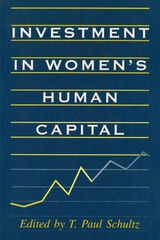
cover of Investment in Women's Human Capital

Investment in Women's Human Capital

Edited by T. Paul Schultz

University of Chicago Press, 1995

How are human capital investments allocated between women and men? What are the returns to investments in women's nutrition, health care, education, mobility, and training? In thirteen wide-ranging and innovative empirical analyses, Investment in Women's Human Capital explores the nature of human capital distributions to women and their effect on outcomes within the family.

Section I considers the experiences of high-income countries, examining the limitations of industrialization for the advancement of women; returns to secondary education for women; and state control of women's education and labor market productivity through the design of tax systems and the public subsidy of children.

The remaining four sections investigate health, education, household structure and labor markets, and measurement issues in low-income countries, including the effect of technological change on transfers of wealth to and from children in India; women's and men's responses to the costs of medical care in Kenya; the effects of birth order and sex on educational attainment in Taiwan; wage returns to schooling in Indonesia and in Cote d'Ivoire; and the increasing prevalence of female-headed households and the correlates of gender differences in wages in Brazil.
[more]
cover of Journal of Human Capital, volume 15 number 1 (Spring 2021)

Journal of Human Capital, volume 15 number 1 (Spring 2021)

The University of Chicago Press

University of Chicago Press Journals, 2021

[more]
cover of Journal of Human Capital, volume 15 number 2 (Summer 2021)

Journal of Human Capital, volume 15 number 2 (Summer 2021)

The University of Chicago Press

University of Chicago Press Journals, 2021

[more]
cover of Journal of Human Capital, volume 15 number 3 (Fall 2021)

Journal of Human Capital, volume 15 number 3 (Fall 2021)

The University of Chicago Press

University of Chicago Press Journals, 2021

[more]
cover of Journal of Human Capital, volume 15 number 4 (Winter 2021)

Journal of Human Capital, volume 15 number 4 (Winter 2021)

The University of Chicago Press

University of Chicago Press Journals, 2021

[more]
cover of Journal of Human Capital, volume 16 number 1 (Spring 2022)

Journal of Human Capital, volume 16 number 1 (Spring 2022)

The University of Chicago Press

University of Chicago Press Journals, 2022

[more]
cover of Journal of Human Capital, volume 16 number 2 (Summer 2022)

Journal of Human Capital, volume 16 number 2 (Summer 2022)

The University of Chicago Press

University of Chicago Press Journals, 2022

[more]
cover of Journal of Human Capital, volume 16 number 3 (Fall 2022)

Journal of Human Capital, volume 16 number 3 (Fall 2022)

The University of Chicago Press

University of Chicago Press Journals, 2022
[more]
cover of Journal of Human Capital, volume 16 number 4 (Winter 2022)

Journal of Human Capital, volume 16 number 4 (Winter 2022)

The University of Chicago Press

University of Chicago Press Journals, 2022
This is volume 16 issue 4 of Journal of Human Capital. The Journal of Human Capital (JHC) is dedicated to human capital and its expanding economic and social roles in the contemporary knowledge economy. It explores the role human capital plays in the production, allocation, and distribution of economic resources and in supporting long-term economic growth and development. JHC is designed to bring together theoretical and empirical work on human capital—broadly defined to include education, skill, health, entrepreneurship, and intellectual and social capital—and related public policy issues.
[more]
cover of Journal of Human Capital, volume 17 number 1 (Spring 2023)

Journal of Human Capital, volume 17 number 1 (Spring 2023)

The University of Chicago Press

University of Chicago Press Journals, 2023
This is volume 17 issue 1 of Journal of Human Capital. The Journal of Human Capital (JHC) is dedicated to human capital and its expanding economic and social roles in the contemporary knowledge economy. It explores the role human capital plays in the production, allocation, and distribution of economic resources and in supporting long-term economic growth and development. JHC is designed to bring together theoretical and empirical work on human capital—broadly defined to include education, skill, health, entrepreneurship, and intellectual and social capital—and related public policy issues.
[more]
cover of Journal of Human Capital, volume 17 number 2 (Summer 2023)

Journal of Human Capital, volume 17 number 2 (Summer 2023)

The University of Chicago Press

University of Chicago Press Journals, 2023
This is volume 17 issue 2 of Journal of Human Capital. The Journal of Human Capital (JHC) is dedicated to human capital and its expanding economic and social roles in the contemporary knowledge economy. It explores the role human capital plays in the production, allocation, and distribution of economic resources and in supporting long-term economic growth and development. JHC is designed to bring together theoretical and empirical work on human capital—broadly defined to include education, skill, health, entrepreneurship, and intellectual and social capital—and related public policy issues.
[more]
cover of Journal of Human Capital, volume 17 number 3 (Fall 2023)

Journal of Human Capital, volume 17 number 3 (Fall 2023)

The University of Chicago Press

University of Chicago Press Journals, 2023
This is volume 17 issue 3 of Journal of Human Capital. The Journal of Human Capital (JHC) is dedicated to human capital and its expanding economic and social roles in the contemporary knowledge economy. It explores the role human capital plays in the production, allocation, and distribution of economic resources and in supporting long-term economic growth and development. JHC is designed to bring together theoretical and empirical work on human capital—broadly defined to include education, skill, health, entrepreneurship, and intellectual and social capital—and related public policy issues.
[more]
cover of Journal of Human Capital, volume 17 number 4 (Winter 2023)

Journal of Human Capital, volume 17 number 4 (Winter 2023)

The University of Chicago Press

University of Chicago Press Journals, 2023
This is volume 17 issue 4 of Journal of Human Capital. The Journal of Human Capital (JHC) is dedicated to human capital and its expanding economic and social roles in the contemporary knowledge economy. It explores the role human capital plays in the production, allocation, and distribution of economic resources and in supporting long-term economic growth and development. JHC is designed to bring together theoretical and empirical work on human capital—broadly defined to include education, skill, health, entrepreneurship, and intellectual and social capital—and related public policy issues.
[more]
cover of Journal of Human Capital, volume 18 number 1 (Spring 2024)

Journal of Human Capital, volume 18 number 1 (Spring 2024)

The University of Chicago Press

University of Chicago Press Journals, 2024
This is volume 18 issue 1 of Journal of Human Capital. The Journal of Human Capital (JHC) is dedicated to human capital and its expanding economic and social roles in the contemporary knowledge economy. It explores the role human capital plays in the production, allocation, and distribution of economic resources and in supporting long-term economic growth and development. JHC is designed to bring together theoretical and empirical work on human capital—broadly defined to include education, skill, health, entrepreneurship, and intellectual and social capital—and related public policy issues.
[more]
cover of Journal of Human Capital, volume 18 number 2 (Summer 2024)

Journal of Human Capital, volume 18 number 2 (Summer 2024)

The University of Chicago Press

University of Chicago Press Journals, 2024
This is volume 18 issue 2 of Journal of Human Capital. The Journal of Human Capital (JHC) is dedicated to human capital and its expanding economic and social roles in the contemporary knowledge economy. It explores the role human capital plays in the production, allocation, and distribution of economic resources and in supporting long-term economic growth and development. JHC is designed to bring together theoretical and empirical work on human capital—broadly defined to include education, skill, health, entrepreneurship, and intellectual and social capital—and related public policy issues.
[more]
cover of Journal of Human Capital, volume 18 number 3 (Fall 2024)

Journal of Human Capital, volume 18 number 3 (Fall 2024)

The University of Chicago Press

University of Chicago Press Journals, 2024
This is volume 18 issue 3 of Journal of Human Capital. The Journal of Human Capital (JHC) is dedicated to human capital and its expanding economic and social roles in the contemporary knowledge economy. It explores the role human capital plays in the production, allocation, and distribution of economic resources and in supporting long-term economic growth and development. JHC is designed to bring together theoretical and empirical work on human capital—broadly defined to include education, skill, health, entrepreneurship, and intellectual and social capital—and related public policy issues.
[more]
cover of Journal of Human Capital, volume 18 number 4 (Winter 2024)

Journal of Human Capital, volume 18 number 4 (Winter 2024)

The University of Chicago Press

University of Chicago Press Journals, 2024
This is volume 18 issue 4 of Journal of Human Capital. The Journal of Human Capital (JHC) is dedicated to human capital and its expanding economic and social roles in the contemporary knowledge economy. It explores the role human capital plays in the production, allocation, and distribution of economic resources and in supporting long-term economic growth and development. JHC is designed to bring together theoretical and empirical work on human capital—broadly defined to include education, skill, health, entrepreneurship, and intellectual and social capital—and related public policy issues.
[more]
cover of Journal of Human Capital, volume 19 number 1 (Spring 2025)

Journal of Human Capital, volume 19 number 1 (Spring 2025)

The University of Chicago Press

University of Chicago Press Journals, 2025
This is volume 19 issue 1 of Journal of Human Capital. The Journal of Human Capital (JHC) is dedicated to human capital and its expanding economic and social roles in the contemporary knowledge economy. It explores the role human capital plays in the production, allocation, and distribution of economic resources and in supporting long-term economic growth and development. JHC is designed to bring together theoretical and empirical work on human capital—broadly defined to include education, skill, health, entrepreneurship, and intellectual and social capital—and related public policy issues.
[more]
cover of Journal of Human Capital, volume 19 number 2 (Summer 2025)

Journal of Human Capital, volume 19 number 2 (Summer 2025)

The University of Chicago Press

University of Chicago Press Journals, 2025
This is volume 19 issue 2 of Journal of Human Capital. The Journal of Human Capital (JHC) is dedicated to human capital and its expanding economic and social roles in the contemporary knowledge economy. It explores the role human capital plays in the production, allocation, and distribution of economic resources and in supporting long-term economic growth and development. JHC is designed to bring together theoretical and empirical work on human capital—broadly defined to include education, skill, health, entrepreneurship, and intellectual and social capital—and related public policy issues.
[more]
cover of Journal of Human Capital, volume 19 number 3 (Fall 2025)

Journal of Human Capital, volume 19 number 3 (Fall 2025)

The University of Chicago Press

University of Chicago Press Journals, 2025
This is volume 19 issue 3 of Journal of Human Capital. The Journal of Human Capital (JHC) is dedicated to human capital and its expanding economic and social roles in the contemporary knowledge economy. It explores the role human capital plays in the production, allocation, and distribution of economic resources and in supporting long-term economic growth and development. JHC is designed to bring together theoretical and empirical work on human capital—broadly defined to include education, skill, health, entrepreneurship, and intellectual and social capital—and related public policy issues.
[more]
cover of Journal of Human Capital, volume 19 number 4 (Winter 2025)

Journal of Human Capital, volume 19 number 4 (Winter 2025)

The University of Chicago Press

University of Chicago Press Journals, 2025
This is volume 19 issue 4 of Journal of Human Capital. The Journal of Human Capital (JHC) is dedicated to human capital and its expanding economic and social roles in the contemporary knowledge economy. It explores the role human capital plays in the production, allocation, and distribution of economic resources and in supporting long-term economic growth and development. JHC is designed to bring together theoretical and empirical work on human capital—broadly defined to include education, skill, health, entrepreneurship, and intellectual and social capital—and related public policy issues.
[more]
cover of Journal of Human Capital, volume 20 number 1 (Spring 2026)

Journal of Human Capital, volume 20 number 1 (Spring 2026)

The University of Chicago Press

University of Chicago Press Journals, 2026
This is volume 20 issue 1 of Journal of Human Capital. The Journal of Human Capital (JHC) is dedicated to human capital and its expanding economic and social roles in the contemporary knowledge economy. It explores the role human capital plays in the production, allocation, and distribution of economic resources and in supporting long-term economic growth and development. JHC is designed to bring together theoretical and empirical work on human capital—broadly defined to include education, skill, health, entrepreneurship, and intellectual and social capital—and related public policy issues.
[more]
cover of Journal of Human Capital, volume 20 number 2 (Summer 2026)

Journal of Human Capital, volume 20 number 2 (Summer 2026)

The University of Chicago Press

University of Chicago Press Journals, 2026
This is volume 20 issue 2 of Journal of Human Capital. The Journal of Human Capital (JHC) is dedicated to human capital and its expanding economic and social roles in the contemporary knowledge economy. It explores the role human capital plays in the production, allocation, and distribution of economic resources and in supporting long-term economic growth and development. JHC is designed to bring together theoretical and empirical work on human capital—broadly defined to include education, skill, health, entrepreneurship, and intellectual and social capital—and related public policy issues.
[more]
cover of Journal of Human Capital, volume 20 number 3 (Fall 2026)

Journal of Human Capital, volume 20 number 3 (Fall 2026)

The University of Chicago Press

University of Chicago Press Journals, 2026
This is volume 20 issue 3 of Journal of Human Capital. The Journal of Human Capital (JHC) is dedicated to human capital and its expanding economic and social roles in the contemporary knowledge economy. It explores the role human capital plays in the production, allocation, and distribution of economic resources and in supporting long-term economic growth and development. JHC is designed to bring together theoretical and empirical work on human capital—broadly defined to include education, skill, health, entrepreneurship, and intellectual and social capital—and related public policy issues.
[more]
cover of The Mythology of Work: How Capitalism Persists Despite Itself

The Mythology of Work

How Capitalism Persists Despite Itself

Peter Fleming

Pluto Press, 2015

Once, work was inextricably linked to survival and self-preservation: the farmer ploughed his land so that his family could eat. In contrast, today work has slowly morphed into a painful and meaningless ritual for many, colonizing almost every part of our day, endless and inescapable.
            In The Mythology of Work, Peter Fleming examines how neoliberal society uses the ritual of work—and the threat of its denial—to maintain the late capitalist class order. Work becomes a universal reference point, devoid of any moral or political worth, transforming our society into a factory that never sleeps. Blending critical theory with recent accounts of job-related suicides, office-induced paranoia, fear of relaxation, managerial sadism, and cynical corporate social responsibility campaigns, Fleming paints a bleak picture of a society in which economic and emotional disasters greatly outweigh any professed benefits.
[more]