Results by title
2 books match the query 'Human dissection'
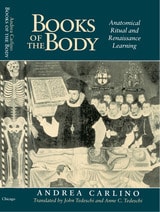
Books of the Body
Anatomical Ritual and Renaissance LearningAndrea Carlino
University of Chicago Press, 1999
We usually see the Renaissance as a marked departure from older traditions, but Renaissance scholars often continued to cling to the teachings of the past. For instance, despite the evidence of their own dissections, which contradicted ancient and medieval texts, Renaissance anatomists continued to teach those outdated views for nearly two centuries.
In Books of the Body, Andrea Carlino explores the nature and causes of this intellectual inertia. On the one hand, anatomical practice was constrained by a reverence for classical texts and the belief that the study of anatomy was more properly part of natural philosophy than of medicine. On the other hand, cultural resistance to dissection and dismemberment of the human body, as well as moral and social norms that governed access to cadavers and the ritual of their public display in the anatomy theater, also delayed anatomy's development.
A fascinating history of both Renaissance anatomists and the bodies they dissected, this book will interest anyone studying Renaissance science, medicine, art, religion, and society.
[more]
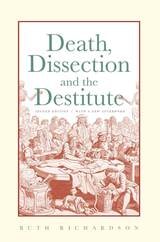
Death, Dissection and the Destitute
Ruth Richardson
University of Chicago Press, 2001
In the early nineteenth century, body snatching was rife because the only corpses available for medical study were those of hanged murderers. With the Anatomy Act of 1832, however, the bodies of those who died destitute in workhouses were appropriated for dissection. At a time when such a procedure was regarded with fear and revulsion, the Anatomy Act effectively rendered dissection a punishment for poverty. Providing both historical and contemporary insights, Death, Dissection, and the Destitute opens rich new prospects in history and history of science. The new afterword draws important parallels between social and medical history and contemporary concerns regarding organs for transplant and human tissue for research.
[more]