Results by title
7 books match the query 'Human settlements'
Becoming Villagers
Comparing Early Village SocietiesEdited by Matthew S. Bandy and Jake R. Fox
University of Arizona Press, 2010
Based on a Society for American Archaeology symposium and subsequent Amerind Advanced Seminar in 2006, Becoming Villagers examines this transformation at various places and times across the globe by focusing not on the origins of agriculture and village life but rather on their consequences. The goal of the volume is to identify regularities in the ways that societies developed in the centuries and millennia following a transition to village life. Using cases that range from China to Bolivia and from the Near East to the American Southwest, leading archaeologists situate their specific areas of specialization in a broad comparative context.
They consider the forces acting to divide and fragment early villages and the social technologies and practices by which those obstacles were, in some cases, overcome. Finally, the volume examines the long-term historical trajectories of these early village societies.
This transformative collection makes a powerful case for a renewed and invigorated archaeological focus on large-scale comparative studies. It will be an essential read for anyone interested not only in early village societies but also in the ways in which archaeology relates to anthropology, other social sciences, and history.
CONTENTS:
- “Becoming Villagers: The Evolution of Early Village Societies,” Matthew S. Bandy and Jake R. Fox
- “Population Growth, Village Fissioning, and Alternative Early Village Trajectories,” Matthew S. Bandy
- “A Scale Model of Seven Hundred Years of Farming Settlements in Southwestern Colorado,” Timothy A. Kohler and Mark D. Varien
- “‘Great Expectations,’ or the Inevitable Collapse of the Early Neolithic in the Near East,” Nigel Goring-Morris and Anna Belfer-Cohen
- “‘Ritualization’ in Early Village Society: The Case of the Lake Titicaca Basin Formative,” Amanda B. Cohen
- “The Sacred and the Secular Revisited: The Essential Tensions of Early Village Society in the Southeastern United States,” Thomas Pluckhahn
- “Substantial Structures, Few People, and the Question of Early Villages in the Mimbres Region of the North American Southwest,” Patricia A. Gilman
- “Sea Changes in Stable Communities: What Do Small Changes in Practices at Catalhoyuk and Chiripa Imply about Community Making?” Christine A. Hastorf
- “The Emergence of Early Villages in the American Southwest: Cultural Issues and Historical Perspectives,” Richard H. Wilshusen and James M. Potter
- “A Persistent Early Village Settlement System on the Bolivian Southern Altiplano,” Jake R. Fox
- “First Towns in the Americas: Searching for Agriculture, Population Growth, and Other Enabling Conditions,” John E. Clark, Jon L. Gibson, and James Zeidler
- “The Evolution of Early Yangshao Period Village Organization in the Middle Reaches of Northern China's Yellow River Valley,” Christian E. Peterson and Gideon Shelach
Complex Communities
The Archaeology of Early Iron Age West-Central JordanBenjamin W. Porter
University of Arizona Press, 2013
These settlements emerged during a period of recovery following the political and economic collapse of Bronze Age Mediterranean societies. Scholars have characterized west-central Jordan’s political organization during this time as an incipient Moabite state. Complex Communities argues instead that the settlements were a collection of independent, self-organizing entities. Each community constructed substantial villages with fortifications, practiced both agriculture and pastoralism, and built and stocked storage facilities. From these efforts to produce and store resources, especially food, wealth was generated and wealthier households gained power over their neighbors. However, power was limited by the fact that residents could—and did—leave communities and establish new ones.
Complex Communities reveals that these settlements moved through adaptive cycles as they adjusted to a changing socionatural system. These sustainability-seeking communities have lessons to offer not only the archaeologists studying similar struggles in other locales, but also to contemporary communities facing negative climate change. Readers interested in resilience studies, Near Eastern archaeology, historical ecology, and the archaeology of communities will welcome this volume.
Detachment from Place
Beyond an Archaeology of Settlement AbandonmentMaxime Lamoureux-St-Hilaire
University Press of Colorado, 2019
Detachment from Place is the first comparative and interdisciplinary volume on the archaeology of settlement abandonment, with contributions focusing on materiality, ideology, the environment, and social construction of space. The volume sheds new light on an important but underexamined aspect of settlement abandonment wherein sedentary groups undergoing the process of abandonment leave behind many meaningful elements of their inhabited landscape. The process of detaching from place—which could last centuries—transformed inhabitants into migrants and transformed settled, constructed, and agricultural landscapes into imagined ones that continued to figure significantly in the identities of migrant groups.
Drawing on case studies from the Americas, Africa, and Asia, the volume explores how relationships between ancient peoples and the places they lived were transformed as they migrated elsewhere. Contributors focus on social structure, ecology, and ideology to study how people and places both disentangled from each other and remained tied together during this process. From Huron-Wendat villages and Classic Maya palaces to historical villages in Togo and the great Southeast Asian Medieval capital of Bagan, specific cultural, historical, and environmental factors led ancient peoples to detach from their homes and embark on migrations that altered social memory and cultural identity—as evidenced in the archaeological record.
Detachment from Place provides new insights into transfigurations of community identity, political organization, social and economic relations, religion, warfare, and agricultural practices and will be of interest to landscape archaeologists as well as researchers focused on collective memory, population movement, migratory patterns, and interaction.
Contributors:
Tomas Q. Barrientos, Jennifer Birch, Eduardo José Bustamante Luna, Catherine M. Cameron, Marcello A. Canuto, Jeffrey H. Cohen, Michael D. Danti, Phillip de Barros, Pete Demarte, Donna M. Glowacki, Gyles Iannone, Louis Lesage, Patricia A. McAnany, Asa R. Randall, Kenneth E. Sassaman
In the Land of the Patriarchs
Design and Contestation in West Bank SettlementsNoam Shoked
University of Texas Press, 2023
2024 On The Brinck Book Award and Lecture Series, University of New Mexico
2024 PROSE Award, Architecture–Urban Planning, Association of American Publishers
An on-the-ground account of the design and evolution of West Bank settlements, showing how one of the world’s most contested landscapes was produced by unexpected conflicts and collaborations among widely divergent actors.
Since capturing the West Bank in 1967, Israel has overseen the construction of scores of settlements across the territory’s rocky hilltops. The settlements are part of a fierce political conflict. But they are not just hotly contested political ventures. They are also something more everyday: residential architectural projects.
In the Land of the Patriarchs is an on-the-ground account of the design and evolution of West Bank settlements. Noam Shoked shows how settlements have been shaped not only by the decisions of military generals, high-profile politicians, and prominent architects but also by a wide range of actors, including real estate developers, environmental consultants, amateur archeologists, and Israelis who feel unserved by the country’s housing system. The patterns of design and construction they have inspired reflect competing worldviews and aesthetic visions, as well as everyday practices not typically associated with the politics of the Israeli occupation. Revealing the pragmatic choices and contingent circumstances that drive what appears to be a deliberately ideological landscape, Shoked demonstrates how unpredictable the transformation of political passion into brick and mortar can be.

Learning from the Land
Wisconsin Land Use; 2nd EditionBobbie Malone
Wisconsin Historical Society Press, 2011
How has the landscape of Wisconsin affected its history? How have people living here changed that landscape over time? What are the implications for the future? The second edition of Learning from the Land addresses these and other questions, asking elementary and middle school readers to think about land use issues throughout Wisconsin's history. This revised edition includes expanded chapters on logging and the lumber industry, land use and planning, and agriculture in the 20th century from farmers' markets to organic farming. New profiles of Gaylord Nelson, pioneer of Earth Day, and Will Allen, founder of Growing Power in Milwaukee, round out this history of land use in Wisconsin.
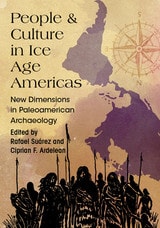
People and Culture in Ice Age Americas
New Dimensions in Paleoamerican ArchaeologyRafael Suarez and Ciprian F. Ardelean
University of Utah Press, 2018
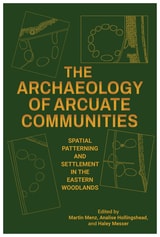
The Archaeology of Arcuate Communities
Spatial Patterning and Settlement in the Eastern WoodlandsEdited by Martin Menz, Analise Hollingshead, and Haley Messer
University of Alabama Press, 2024
A comparative archaeological synthesis examining the spatial, social, and ceremonial logics underpinning circular community formations across the Eastern Woodlands from 10,000 BC to the sixteenth century.
The Archaeology of Arcuate Communities is an edited collection of ten essays that illuminate how Indigenous communities of the Eastern Woodlands, from 10,000 BC to the 1550s, are analyzed and interpreted by archaeologists today. Volume editors Martin Menz, Analise Hollingshead, and Haley Messer define the persistent circular or “arcuate” pattern of Native settlements in this region as a spatial manifestation of community activities that reinforced group identity alongside plazas, mounds, and other architectural features.
The varied case studies in this volume focus on specific communities, how they evolved, and the types of archaeological data that have been used to assess them. Part I, “Defining the Domestic Unit in Arcuate Communities,” reveals social distinctions between households and household clusters in arcuate communities, how they differ in terms of stylistic patterns and exchange, and how they combined to form distinct social groups at different scales within a broader community. Part II, “Organizing Principles of Arcuate Communities,” broadens the scope to identify the organizing principles of entire arcuate communities, such as the central role of plazas in structuring their development, how the distribution of households and central features within communities was contested and reorganized, and the importance of mounds in both delineating arcuate communities and marking their position on the landscape. Part III, “Comparison and Change in Arcuate Communities,” comprises case studies that examine changes in the organization of arcuate communities over time. Rounding out the volume is a concluding chapter that assesses how and why communities around the world formed in circular patterns.
A valuable resource for archaeologists, this collection will also be of interest to those seeking to learn about Native North American settlement, ceremony, and community organization.