Results by title
5 books match the query 'Human skin color in literature'
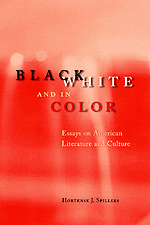
Black, White, and in Color
Essays on American Literature and CultureHortense J. Spillers
University of Chicago Press, 2003
A landmark, career-spanning collection by a critic whom Henry Louis Gates, Jr. lauded as "a major thinker"
Black, White, and in Color offers a long-awaited collection of major essays by Hortense Spillers, one of the most influential and inspiring black critics of the past twenty years. Spanning her work from the early 1980s, in which she pioneered a broadly poststructuralist approach to African American literature, and extending through her turn to cultural studies in the 1990s, these essays display her passionate commitment to reading as a fundamentally political act-one pivotal to rewriting the humanist project.
Spillers is best known for her race-centered revision of psychoanalytic theory and for her subtle account of the relationships between race and gender. She has also given literary criticism some of its most powerful readings of individual authors, represented here in seminal essays on Ralph Ellison, Gwendolyn Brooks, and William Faulkner. Ultimately, the essays collected in Black, White, and in Color all share Spillers's signature style: heady, eclectic, and astonishingly productive of new ideas. Anyone interested in African American culture and literature will want to read them.
[more]

Staging Blackness
Representations of Race in German-Speaking Drama and TheaterPriscilla Dionne Layne and Lily Tonger-Erk, Editors
University of Michigan Press, 2024
Staging Blackness provides a multifaceted look at how Blackness has been staged in Germany from the eighteenth century, the birth of German national theater, until the present. In recent years, the German stage has been at the forefront of discussions about race, from cases of blackface to fights for better representation within the professional community. These debates frequently invoke larger discussions about the politics of race in German theater and their origins and beyond.
Written by scholars and theater professionals with a wide variety of historical and theoretical expertise, the chapters seek to explore the connections between the German discourse on national theater and emerging ideas about race, analyze how dramaturges deal with older representations of Blackness in current productions, and discuss the contributions Black German playwrights and dramaturges have made to this discourse. Historians question how these plays were staged in their time, while cultural studies scholars contemplate how to interpret the function of race in these plays and how they can continue to be staged today.
Written by scholars and theater professionals with a wide variety of historical and theoretical expertise, the chapters seek to explore the connections between the German discourse on national theater and emerging ideas about race, analyze how dramaturges deal with older representations of Blackness in current productions, and discuss the contributions Black German playwrights and dramaturges have made to this discourse. Historians question how these plays were staged in their time, while cultural studies scholars contemplate how to interpret the function of race in these plays and how they can continue to be staged today.
[more]
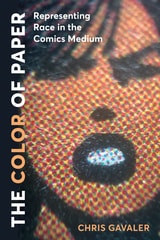
The Color of Paper
Representing Race in the Comics MediumChris Gavaler
The Ohio State University Press, 2026
How does a comics reader understand that a certain race is assigned to a character? In The Color of Paper, Chris Gavaler establishes a formal approach for analyzing racial representations in comics, demonstrating that the ink-on-paper materiality of comics reveals the illogic of metaphorical colors as racial categorizations. Analyzing images by a wide range of comics artists and colorists, including Emilee Denich, Jaime Hernandez, George Herriman, Jack Kirby, and Ben Passmore, Gavaler goes beyond pigment and gradient to explore the formal and material elements of page backgrounds and the negative space of gutters that literally frame race in comics. He surveys major and independent publishers to assess how industry trends and evolving coloring techniques affect racial representation. And, breaking from subjective and overgeneralized analytical norms, Gavaler grounds his analysis in quantitative research on viewers’ responses. The centuries-old relationships between drawn racial markers and assumptions about their meanings continue in a white-dominated culture that benefits from and therefore preserves illusions of their natural accuracy. Denaturalizing racial depictions through formal visual analysis potentially alters racial thinking in ways that extend beyond works on paper and into daily lives.
[more]

The Color of Sex
Whiteness, Heterosexuality, and the Fictions of White SupremacyMason Stokes
Duke University Press, 2001
In The Color of Sex Mason Stokes offers new ways of thinking about whiteness by exploring its surprisingly ambivalent partnership with heterosexuality. Stokes examines a wide range of white-supremacist American texts written and produced between 1852 and 1915—literary romances, dime novels, religious and scientific tracts, film—and exposes whiteness as a tangled network of racial and sexual desire. Stokes locates these white-supremacist texts amid the anti-racist efforts of African American writers and activists, deepening our understanding of both American and African American literary and cultural history.
The Color of Sex reveals what happens when race and sexuality meet, when white desire encounters its own ambivalence. As Stokes argues, whiteness and heterosexuality exist in anxious relation to one another. Mutually invested in “the normal,” they support each other in their desperate insistence on the cultural logic of exclusion. At the same time, however, they threaten one another in their attempt to create and sustain a white future, since reproducing whiteness necessarily involves the risk of contamination
Charting the curious movements of this “white heterosexuality,” The Color of Sex inaugurates a new moment in our ongoing attempt to understand the frenzied interplay of race and sexuality in America. As such, it will appeal to scholars interested in race theory, sexuality studies, and American history, culture, and literature.
[more]
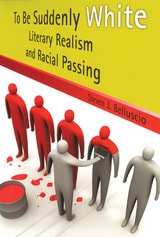
To Be Suddenly White
Literary Realism and Racial PassingSteven J. Belluscio
University of Missouri Press, 2006
To Be Suddenly White explores the troubled relationship between literary passing and literary realism, the dominant aesthetic motivation behind the late-nineteenth and early-twentieth-century ethnic texts considered in this study. Steven J. Belluscio uses the passing narrative to provide insight into how the representation of ethnic and racial subjectivity served, in part, to counter dominant narratives of difference.
To Be Suddenly White offers new readings of traditional passing narratives from the African American literary tradition, such as James Weldon Johnson’s The Autobiography of an Ex-Coloured Man, Nella Larsen’s Passing, and George Schuyler’s Black No More. It is also the first full-length work to consider a number of Jewish American and Italian American prose texts, such as Mary Antin’s The Promised Land, Anzia Yezierska’s Bread Givers, and Guido d’Agostino’s Olives on the Apple Tree, as racial passing narratives in their own right. Belluscio also demonstrates the contradictions that result from the passing narrative’s exploration of racial subjectivity, racial difference, and race itself.
When they are seen in comparison, ideological differences begin to emerge between African American passing narratives and “white ethnic” (Jewish American and Italian American) passing narratives. According to Belluscio, the former are more likely to engage in a direct critique of ideas of race, while the latter have a tendency to become more simplistic acculturation narratives in which a character moves from a position of ethnic difference to one of full American identity.
The desire “to be suddenly white” serves as a continual point of reference for Belluscio, enabling him to analyze how writers, even when overtly aware of the problematic nature of race (especially African American writers), are also aware of the conditions it creates, the transformations it provokes, and the consequences of both. Byexamining the content and context of these works, Belluscio elucidates their engagement with discourses of racial and ethnic differences, assimilation, passing, and identity, an approach that has profound implications for the understanding of American literary history.
[more]