Results by title
23 books match the query 'Human trafficking'
Brokered Subjects
Sex, Trafficking, and the Politics of FreedomElizabeth Bernstein
University of Chicago Press, 2018
Challenging Perspectives on Street-Based Sex Work
Katie Hail-Jares
Temple University Press, 2017
Are sex workers victims, criminals, or just trying to make a living? Over the last five years, public policy and academic discourse have moved from criminalization of sex workers to victim-based understanding, shaped by human trafficking. While most research focuses on macro-level policies and theories, less is known about the on-the-ground perspectives of people whose lives are impacted by sex work, including attorneys, social workers, police officers, probation officers, and sex workers themselves.
Challenging Perspectives on Street-Based Sex Work brings the voices of lower-echelon sex workers and those individuals charged with policy development and enforcement into conversation with one another. Chapters highlight some of the current approaches to sex work, such as diversion courts, trafficking task forces, law enforcement assisted diversion and decriminalization. It also examines how sex workers navigate seldom-discussed social phenomenon like gentrification, pregnancy, imperialism, and being subjects of research. Through dialogue, our authors reveal the complex reality of engaging in and regulating sex work in the United States and through American aid abroad.
Contributors include: Aneesa A. Baboolal, Marie Bailey-Kloch, Mira Baylson, Nachale “Hua” Boonyapisomparn, Belinda Carter, Jennifer Cobbina, Ruby Corado, Eileen Corcoran, Kate D’Adamo, Edith Kinney, Margot Le Neveu, Martin A. Monto, Linda Muraresku, Erin O’Brien, Sharon Oselin. Catherine Paquette, Dan Steele, Chase Strangio, Signy Toquinto, and the editors.

Children of Other Worlds
Exploitation in the Global MarketJeremy Seabrook
Pluto Press, 2001
Economies of Gender
Masculinity, "Mail Order Brides," and Women’s LaborJulia H. Meszaros
Rutgers University Press, 2026
Economies of Violence
Transnational Feminism, Postsocialism, and the Politics of Sex TraffickingJennifer Suchland
Duke University Press, 2015
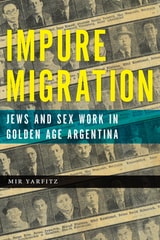
Impure Migration
Jews and Sex Work in Golden Age ArgentinaMir Yarfitz
Rutgers University Press, 2019

JARMAN (all this maddening beauty) and other plays
Caridad Svich
Intellect Books, 2016
“Svich is one of the finest poet/playwrights of this generation. . . . She is a playwright whose plays perform like dramatic poems that are wondrous to the ear and moving to the heart.”—Seth Gordon, Repertory Theatre of St. Louis
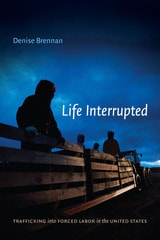
Life Interrupted
Trafficking into Forced Labor in the United StatesDenise Brennan
Duke University Press, 2014
All royalties from this book will be donated to the nonprofit Survivor Leadership Training Fund administered through the Freedom Network.
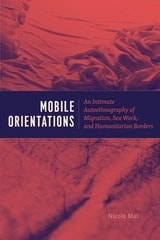
Mobile Orientations
An Intimate Autoethnography of Migration, Sex Work, and Humanitarian BordersNicola Mai
University of Chicago Press, 2018
Using a bold blend of personal narrative and autoethnography, Mai provides intimate portrayals of sex workers from sites including the Balkans, the Maghreb, and West Africa who decided to sell sex as the means to achieve a better life. Mai explores the contrast between how migrants understand themselves and their work and how humanitarian and governmental agencies conceal their stories, often unwittingly, by addressing them all as helpless victims. The culmination of two decades of research, Mobile Orientations sheds new light on the desires and ambitions of migrant sex workers across the world.
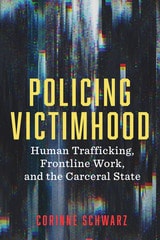
Policing Victimhood
Human Trafficking, Frontline Work, and the Carceral StateCorinne Schwarz
Rutgers University Press, 2023
In Policing Victimhood, Corinne Schwarz interviewed with service providers in the Midwestern US, a region that, though colloquially understood as “flyover country,” regularly positions itself as a leader in state-level anti-trafficking policies and collaborative networks. These frontline workers’ perceptions and narratives are informed by their interpersonal, day-to-day encounters with exploited or trafficked persons. Their insights underscore how anti-trafficking policies are put into practice and influenced by specific ideologies and stereotypes. Extending the reach of street-level bureaucracy theory to anti-trafficking initiatives, Schwarz demonstrates how frontline workers are uniquely positioned to perpetuate or radically counter punitive anti-trafficking efforts.
Taking a cue from anti-carceral feminist critiques and critical trafficking studies, Schwarz argues that ongoing anti-trafficking efforts in the US expand the punitive arm of the state without addressing the role of systemic oppression in perpetuating violence. The violence inherent to the carceral state—and required for its continued expansion—is the same violence that perpetuates the exploitation of human trafficking. In order to solve the “problem” of human trafficking, advocates, activists, and scholars must divest from systems that center punishment and radically reinvest their efforts in dismantling the structural violence that perpetuates social exclusion and vulnerability, what she calls the “-isms” and “-phobias” that harm some at the expense of others’ empowerment. Policing Victimhood encourages readers to imagine a world without carceral violence in any of its forms.

Sex Trafficking, Scandal, and the Transformation of Journalism, 1885-1917
Gretchen Soderlund
University of Chicago Press, 2013
The Banality of Good
The UN's Global Fight against Human TraffickingLieba Faier
Duke University Press, 2024
The Darién Gap
A Reporter's Journey through the Deadly Crossroads of the AmericasBelén Fernández
Rutgers University Press, 2025
The narrow Darién Gap, the only land bridge connecting South and Central America, encompasses a spectacularly hostile jungle, covered in steep mountains, dense rainforests, and flood-prone marshes. Known in Spanish as el infierno verde, or “the green hell,” it is one of the most inhospitable places in the world. Its terrain is too treacherous for roads, yet hundreds of thousands of refuge seekers contend with its horrors every year in the hopes of reaching the United States, still some three thousand miles away. And of the countless who set out for the border, an untold number never arrive.
In this book, journalist Belén Fernández travels through the Darién Gap to report on the dehumanizing and deadly stretch of land that has become a mass graveyard for migrants. Fernández’s journey brings her into contact with refuge seekers, people smugglers, law enforcement officials, and many more whose stories bring life to a place overwhelmingly associated with death. Combining history, on-the-ground reporting, travelogue, memoir, and searing politico-economic analysis, she shines light on a largely made-in-the-USA crisis that has come to define our modern era.
Engrossing and heartrending, The Darién Gap is a poignant and compassionate indictment of structural inequality and institutionalized inhumanity in a world where the have-nots must risk death for a chance at a better life—or any life at all.

The New Refugees
Crime and Forced Displacement in Latin AmericaEdited by David James Cantor and Nicolás Rodríguez Serna
University of London Press, 2016
In Latin America, recent years have seen an unprecedented rise in the number of people forced to flee from their homes due to the activities of organized criminal groups. What are the reasons behind this emerging crisis of forced displacement in the Americas? Who are these criminal groups and how do they operate in Central America, Mexico and Colombia? Who are the victims and how can their needs be met in these violent and insecure contexts? Can law and policy offer a humanitarian response to this crisis? As the first book to deal with this rapidly evolving phenomenon, this innovative collection offers a range of fresh perspectives from leading experts working across Latin America.
The Real Economy
Essays in Ethnographic TheoryEdited by Federico Neiburg and Jane I. Guyer
HAU, 2020
An ambitious anthropology of economy, this volume questions how assemblages of vernacular and scientific realizations and enactments of the economy are linked to ideas of truth and moral value; how these multiple and shifting realities become present and entangle with historically and socially situated lives; and how the formal realizations of the concept of the “real” in the governance of economies engage with the experiential lives of ordinary people. Featuring essays from some of the world’s most prominent economic anthropologists, The Real Economy is a milestone collection in economic anthropology that crosses disciplinary boundaries and adds new life to social studies of the economy.

The Rhetoric of White Slavery and the Making of National Identity
Leslie J Harris
Michigan State University Press, 2023
The Seductions of Quantification
Measuring Human Rights, Gender Violence, and Sex TraffickingSally Engle Merry
University of Chicago Press, 2016
With The Seductions of Quantification, leading legal anthropologist Sally Engle Merry investigates the techniques by which information is gathered and analyzed in the production of global indicators on human rights, gender violence, and sex trafficking. Although such numbers convey an aura of objective truth and scientific validity, Merry argues persuasively that measurement systems constitute a form of power by incorporating theories about social change in their design but rarely explicitly acknowledging them. For instance, the US State Department’s Trafficking in Persons Report, which ranks countries in terms of their compliance with antitrafficking activities, assumes that prosecuting traffickers as criminals is an effective corrective strategy—overlooking cultures where women and children are frequently sold by their own families. As Merry shows, indicators are indeed seductive in their promise of providing concrete knowledge about how the world works, but they are implemented most successfully when paired with context-rich qualitative accounts grounded in local knowledge.
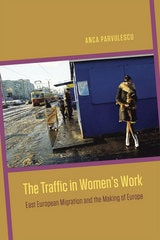
The Traffic in Women's Work
East European Migration and the Making of EuropeAnca Parvulescu
University of Chicago Press, 2014
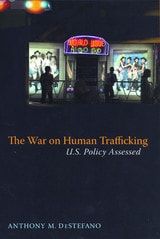
The War on Human Trafficking
U.S. Policy AssessedAnthony M. DeStefano
Rutgers University Press, 2008
The public's understanding of human trafficking is comprised of terrible stories like these, which the media covers in dramatic, but usually short-lived bursts. The more complicated, long-term story of how policy on trafficking has evolved has been largely ignored. In The War on Human Trafficking, Anthony M. DeStefano covers a decade of reporting on the policy battles that have surrounded efforts to abolish such practices, helping readers to understand the forced labor of immigrants as a major global human rights story.
DeStefano details the events leading up to the creation of the Trafficking Victims Protection Act of 2000, the federal law that first addressed the phenomenon of trafficking in persons. He assesses the effectiveness of the 2000 law and its progeny, showing the difficulties encountered by federal prosecutors in building criminal cases against traffickers. The book also describes the tensions created as the Bush Administration tried to use the trafficking laws to attack prostitution and shows how the American response to these criminal activities was impacted by the events of September 11th and the War in Iraq.
Parsing politics from practice, this important book gets beyond sensational stories of sexual servitude to show that human trafficking has a much broader scope and is inextricable from the powerful economic conditions that impel immigrants to put themselves at risk.
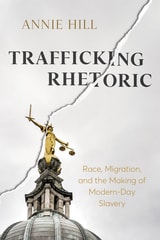
Trafficking Rhetoric
Race, Migration, and the Making of Modern-Day SlaveryAnnie Hill
The Ohio State University Press, 2024
Honorable Mention, 2025 NCA Public Address Division’s Marie Hochmuth Nichols Award
Human trafficking has generated intense global concern, with stories of sex slavery and images of women forced into prostitution so persuasive that states have raced to respond ahead of empirical data and clear definitions of the crime. In Trafficking Rhetoric, Annie Hill analyzes the entanglement of state veneration and state violence by tracking how the United Kingdom points to the alleged crimes of others in order to celebrate itself and conceal its own aggression. Hill compares the UK’s acclaimed rescue approach to human trafficking with its hostile approach to migration, arguing that they are two sides of the same coin—one that relies on rhetorical constructions of “trafficked women” and “illegal migrants” to materialize the UK as an Anglo-white space.
Drawing from official estimates, policy papers, NGO reports, news stories, and awareness campaigns and situating them in the broader EU context, Hill accounts for why the UK’s antitrafficking agenda emerged with such rhetorical force in the early twenty-first century. Trafficking Rhetoric reframes controversies over labor, citizenship, and migration while challenging the continued traction of race-baiting and gender bias in determining who has the right to live, work, and belong in the nation.

Trafficking Women’s Human Rights
Julietta Hua
University of Minnesota Press, 2011
The history of human beings bought and sold, forced into lives of abject servitude or sexual slavery, is a story as old as civilization and yet still of global concern today. How this story is told, Julietta Hua argues, says much about our cultural beliefs. Through a critical inquiry into representations of human trafficking, she reveals the political, social, and cultural strains underlying our current preoccupation with this issue and the difficulty of framing human rights in universal terms.
In Trafficking Women’s Human Rights, Hua maps the ways in which government, media, and scholarship have described sex trafficking for U.S. consumption. As her investigation takes us from laws like the Victims of Trafficking and Violence Protection Act to political speeches and literary and media images, it uncovers dark assumptions about race, difference, and the United States’ place in the world expressed—and often promoted—by such images. The framing itself, exploiting dichotomies of victim/agent, rescued/rescuer, trafficked/smuggled, illustrates the limits of universalism in addressing human rights.
Uniquely broad in scope, this work considers the laws of human trafficking in conjunction with popular culture. In doing so, it constructively draws attention to the ways in which notions of racialized sexualities form our ideas about national belonging, global citizenship, and, ultimately, human rights.
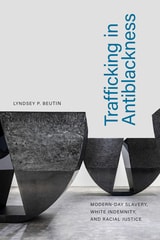
Trafficking in Antiblackness
Modern-Day Slavery, White Indemnity, and Racial JusticeLyndsey P. Beutin
Duke University Press, 2023
Trafficking in Slavery’s Wake
Law and the Experience of Women and Children in AfricaBenjamin N. Lawrance
Ohio University Press, 2012
Women and children have been bartered, pawned, bought, and sold within and beyond Africa for longer than records have existed. This important collection examines the ways trafficking in women and children has changed from the aftermath of the “end of slavery” in Africa from the late nineteenth century to the present.
The formal abolition of the slave trade and slavery did not end the demand for servile women and children. Contemporary forms of human trafficking are deeply interwoven with their historical precursors, and scholars and activists need to be informed about the long history of trafficking in order to better assess and confront its contemporary forms. This book brings together the perspectives of leading scholars, activists, and other experts, creating a conversation that is essential for understanding the complexity of human trafficking in Africa.
Human trafficking is rapidly emerging as a core human rights issue for the twenty-first century. Trafficking in Slavery’s Wake is excellent reading for the researching, combating, and prosecuting of trafficking in women and children.
Contributors: Margaret Akullo, Jean Allain, Kevin Bales, Liza Stuart Buchbinder, Bernard K. Freamon, Susan Kreston, Benjamin N. Lawrance, Elisabeth McMahon, Carina Ray, Richard L. Roberts, Marie Rodet, Jody Sarich, and Jelmer Vos.