Results by title
5 books match the query 'Humanism in literature'
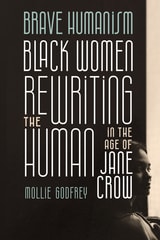
Brave Humanism
Black Women Rewriting the Human in the Age of Jane CrowMollie Godfrey
The Ohio State University Press, 2025
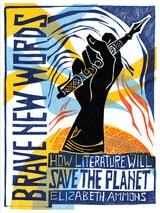
Brave New Words
How Literature Will Save the PlanetAmmons, Elizabeth
University of Iowa Press, 2010
The activist tradition in American literature has long testified to the power of words to change people and the power of people to change the world, yet in recent years many professional humanists have chosen to distract themselves with a postmodern fundamentalism of indeterminacy and instability rather than engage with social and political issues. Throughout her bold and provocative call to action, Elizabeth Ammons argues that the responsibility now facing humanists is urgent: inside and outside academic settings, they need to revive the liberal arts as a progressive cultural force that offers workable ideas and inspiration in the real-world struggle to achieve social and environmental justice.
Brave New Words challenges present and future literary scholars and teachers to look beyond mere literary critique toward the concrete issue of social change and how to achieve it. Calling for a profound realignment of thought and spirit in the service of positive social change, Ammons argues for the continued importance of multiculturalism in the twenty-first century despite attacks on the concept from both right and left. Concentrating on activist U.S. writers—from ecocritics to feminists to those dedicated to exposing race and class biases, from Jim Wallis and Cornel West to Winona LaDuke and Paula Moya and many others—she calls for all humanists to link their work to the progressive literature of the last half century, to insist on activism in the service of positive change as part of their mission, and to teach the power of hope and action to their students.
As Ammons clearly demonstrates, much of American literature was written to expose injustice and motivate readers to work for social transformation. She challenges today’s academic humanists to address the issues of hope and purpose by creating a practical activist pedagogy that gives students the knowledge to connect their theoretical learning to the outside world. By relying on the transformative power of literature and replacing nihilism and powerlessness with conviction and faith, the liberal arts can offer practical, useful inspiration to everyone seeking to create a better world.
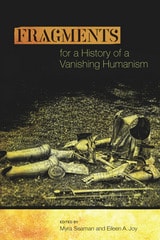
Fragments for a History of a Vanishing Humanism
Edited by Myra Seaman and Eileen A. Joy
The Ohio State University Press, 2016
This volume, edited by Myra Seaman and Eileen A. Joy, insists on the always provisional and contingent formations of the human, and of various humanisms, over time, while also aiming to demonstrate the different ways these formations emerge (and also disappear) in different times and places, from the most ancient past to the most contemporary present. The essays are offered as “fragments” because the authors do not believe there can ever be a “total history” of either the human or the post/human as they play themselves out in differing historical contexts. At the same time, the volume as a whole argues that defining what “the human” (or “post/human”) is has always been an ongoing, never finished cultural project.

Heroes and Humanities
Detective Fiction and CultureRay B. Browne
University of Wisconsin Press, 1986
The present study of American, Australian, and Canadian detective fiction concerns literature which speaks in the ways of heroes and humanities about the human condition. All authors studied here, to one degree or another, demonstrate their concern with human society, some more strongly than others, but all with their eyes on the human situation and human existence. At times these studies lean toward the tragic in their outlook and development. In all instances they center on the humanistic.
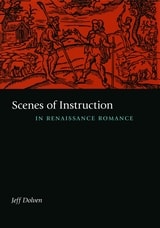
Scenes of Instruction in Renaissance Romance
Jeff Dolven
University of Chicago Press, 2007
We take it for granted today that the study of poetry belongs in school—but in sixteenth-century England, making Ovid or Virgil into pillars of the curriculum was a revolution. Scenes of Instruction in Renaissance Romance explores how poets reacted to the new authority of humanist pedagogy, and how they transformed a genre to express their most radical doubts.
Jeff Dolven investigates what it meant for a book to teach as he traces the rivalry between poet and schoolmaster in the works of John Lyly, Philip Sydney, Edmund Spenser, and John Milton. Drawing deeply on the era’s pedagogical literature, Dolven explores the links between humanist strategies of instruction and romance narrative, rethinking such concepts as experience, sententiousness, example, method, punishment, lessons, and endings. In scrutinizing this pivotal moment in the ancient, intimate contest between art and education, Scenes of Instruction in Renaissance Romance offers a new view of one of the most unconsidered—yet fundamental—problems in literary criticism: poetry’s power to please and instruct.