Results by title

17 books match the query 'Humanitarianism'

cover of Above the Fray: The Red Cross and the Making of the Humanitarian NGO Sector

Above the Fray

The Red Cross and the Making of the Humanitarian NGO Sector

Shai M. Dromi

University of Chicago Press, 2020

From Lake Chad to Iraq, nongovernmental organizations (NGOs) provide relief around the globe, and their scope is growing every year. Policy makers and activists often assume that humanitarian aid is best provided by these organizations, which are generally seen as impartial and neutral. In Above the Fray, Shai M. Dromi investigates why the international community overwhelmingly trusts humanitarian NGOs by looking at the historical development of their culture. With a particular focus on the Red Cross, Dromi reveals that NGOs arose because of the efforts of orthodox Calvinists, demonstrating for the first time the origins of the unusual moral culture that has supported NGOs for the past 150 years.

Drawing on archival research, Dromi traces the genesis of the Red Cross to a Calvinist movement working in mid-nineteenth-century Geneva. He shows how global humanitarian policies emerged from the Red Cross founding members’ faith that an international volunteer program not beholden to the state was the only ethical way to provide relief to victims of armed conflict. By illustrating how Calvinism shaped the humanitarian field, Dromi argues for the key role belief systems play in establishing social fields and institutions. Ultimately, Dromi shows the immeasurable social good that NGOs have achieved, but also points to their limitations and suggests that alternative models of humanitarian relief need to be considered.
[more]
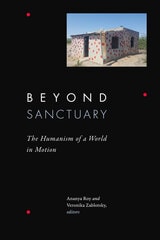
cover of Beyond Sanctuary: The Humanism of a World in Motion

Beyond Sanctuary

The Humanism of a World in Motion

Ananya Roy and Veronika Zablotsky, editors

Duke University Press, 2025

The contributors to Beyond Sanctuary examine how the liberal democracies of the West recognize and include racial others through technologies of state power that promise but rarely grant sanctuary and refuge. Conceptualized at a time of resurgent white nationalism, this volume critically interrogates not only right-wing xenophobia but also the liberal ruse of asylum and its place in Western humanism. Drawing on the liberatory histories and countercartographies of migrant movements and the intellectual traditions of the Black radical tradition, Indigenous studies, postcolonial thought, and critical refugee studies, the contributors analyze the colonial-racial logics of humanitarian reason and its carceral geographies of camps and crossings. Whether analyzing guerrilla art projects that memorialize female migrants who died crossing the US-Mexico border, schools for undocumented students, housing solidarity movements in state-run camps in Greece, or transnational struggles for abolition, this collection foregrounds ideas and practices of fugitivity and freedom that refuse and reworld the West.

Contributors. Leisy Abrego, Damon Azali-Rojas, Amy Sara Carroll, Sharad Chari, Nicholas De Genova, Ricardo Dominguez, Lorgia García-Peña, Sarah Haley, Gaye Theresa Johnson, Moon-Kie Jung, Maria Kaika, Saree Makdisi, Kyle T. Mays, Ananya Roy, Charles Sepulveda, SA Smythe, Vanessa E. Thompson, Charalampos Tsavdaroglou, João H. Costa Vargas, Rinaldo Walcott, Veronika Zablotsky, Maite Zubiaurre

[more]
cover of Brokered Subjects: Sex, Trafficking, and the Politics of Freedom

Brokered Subjects

Sex, Trafficking, and the Politics of Freedom

Elizabeth Bernstein

University of Chicago Press, 2018
Brokered Subjects digs deep into the accepted narratives of sex trafficking to reveal the troubling assumptions that have shaped both right- and left-wing agendas around sexual violence. Drawing on years of in-depth fieldwork, Elizabeth Bernstein sheds light not only on trafficking but also on the broader structures that meld the ostensible pursuit of liberation with contemporary techniques of power. Rather than any meaningful commitment to the safety of sex workers, Bernstein argues, what lies behind our current vision of trafficking victims is a transnational mix of putatively humanitarian militaristic interventions, feel-good capitalism, and what she terms carceral feminism: a feminism compatible with police batons.
[more]
cover of Capitalist Humanitarianism

Capitalist Humanitarianism

Lucia Hulsether

Duke University Press, 2023

The struggle against neoliberal order has gained momentum over the last five decades---to the point that economic elites have not only adapted to the Left's critiques but incorporated them for capitalist expansion. Venture funds expose their ties to slavery and pledge to invest in racial equity. Banks pitch microloans as a path to indigenous self-determination. Fair-trade brands narrate consumption as an act of feminist solidarity with women artisans in the global South. In Capitalist Humanitarianism Lucia Hulsether examines these projects and the contexts of their emergence. Blending historical and ethnographic styles, and traversing intimate and global scales, Hulsether tracks how neoliberal self-critique creates new institutional hegemonies that, in turn, reproduce racial and neocolonial dispossession. From the archives of Christian fair traders to luxury social entrepreneurship conferences, from US finance offices to Guatemalan towns flooded with their loan products, from service economy desperation to the internal contradictions of social movements, Hulsether argues that capitalist humanitarian projects are fueled as much by a profit motive as by a hope that racial capitalism can redeem the losses that accumulate in its wake.
[more]
cover of French Colonial Documentary: Mythologies of Humanitarianism

French Colonial Documentary

Mythologies of Humanitarianism

Peter J. Bloom

University of Minnesota Press, 2008

Despite altruistic goals, humanitarianism often propagates foreign, and sometimes unjust, power structures where it is employed. Tracing the visual rhetoric of French colonial humanitarianism, Peter J. Bloom’s unexpected analysis reveals how the project of remaking the colonies in the image of France was integral to its national identity.

French Colonial Documentary investigates how the promise of universal citizenship rights in France was projected onto the colonies as a form of evolutionary interventionism. Bloom focuses on the promotion of French education efforts, hygienic reform, and new agricultural techniques in the colonies as a means of renegotiating the social contract between citizens and the state on an international scale. Bloom’s insightful readings disclose the pervasiveness of colonial iconography, including the relationship between “natural man” and colonial subjectivity; representations of the Senegalese Sharpshooters as obedient, brave, and sexualized colonial subjects; and the appeal of exotic adventure narratives in the trans-Saharan film genre.

Examining the interconnection between French documentary realism and the colonial enterprise, Bloom demonstrates how the colonial archive is crucial to contemporary debates about multiculturalism in France.


Peter J. Bloom is associate professor of film and media studies at the University of California-Santa Barbara.y debates about multiculturalism in France.

[more]
cover of Humanitarian Violence: The U.S. Deployment of Diversity

Humanitarian Violence

The U.S. Deployment of Diversity

Neda Atanasoski

University of Minnesota Press, 2013

When is a war not a war? When it is undertaken in the name of democracy, against the forces of racism, sexism, and religious and political persecution? This is the new world of warfare that Neda Atanasoski observes in Humanitarian Violence, different in name from the old imperialism but not so different in kind. In particular, she considers U.S. militarism—humanitarian militarism—during the Vietnam War, the Soviet-Afghan War, and the 1990s wars of secession in the former Yugoslavia.

What this book brings to light—through novels, travel narratives, photojournalism, films, news media, and political rhetoric—is in fact a system of postsocialist imperialism based on humanitarian ethics. In the fiction of the United States as a multicultural haven, which morally underwrites the nation’s equally brutal waging of war and making of peace, parts of the world are subject to the violence of U.S. power because they are portrayed to be homogeneous and racially, religiously, and sexually intolerant—and thus permanently in need of reform. The entangled notions of humanity and atrocity that follow from such mediations of war and crisis have refigured conceptions of racial and religious freedom in the post–Cold War era. The resulting cultural narratives, Atanasoski suggests, tend to racialize ideological differences—whereas previous forms of imperialism racialized bodies. In place of the European racial imperialism, U.S. settler colonialism, and pre–civil rights racial constructions that associated racial difference with a devaluing of nonwhite bodies, Humanitarian Violence identifies an emerging discourse of race that focuses on ideological and cultural differences and makes postsocialist and Islamic nations the potential targets of U.S. disciplining violence.
[more]
cover of Humanitarianism from Below?: Universalism and the Politics of Inhumanity

Humanitarianism from Below?

Universalism and the Politics of Inhumanity

Edited by Till Mostowlansky and Elmira Muratova

University College London, 2026

The first global comparative analysis of the role of humanitarianism from below in political and social change.

Drawing on original ethnographic and historical research, Humanitarianism from Below? addresses a wide audience of scholars and students in humanitarian and development studies, anthropology, and political science. Drawing from timely case studies on the war in Ukraine, the Ebola pandemic in West Africa, the 2023 Turkey-Syria earthquakes, and the global flows of aid from Arab states to the Persian Gulf, the book considers humanitarianism’s multiple histories and offers a profound reassessment of humanitarian pluralism today. It critically discusses humanitarianism as a historically, politically, and culturally contingent phenomenon that entails unequal relations of power and multiple forms of universalism, as well as issues of dehumanization and inhumanity.
[more]
cover of Humanity's Ruins: Ethics, Feminism, and Genocidal Humanitarianism

Humanity's Ruins

Ethics, Feminism, and Genocidal Humanitarianism

Danielle Bouchard

Duke University Press, 2025

In Humanity’s Ruins, Danielle Bouchard examines how genocidal aspirations animate contemporary Western humanitarian projects and discourses. Drawing on anticolonial and antiracist feminist critique, Bouchard argues that humanitarianism has functioned in the Cold War and post-Cold War eras to perpetuate longer-lived, fundamentally racist conceptualizations of humanity’s defining characteristics. She examines the aesthetics of humanitarian texts, which are filled with figures of the wounded, dead, and disappeared—the atomic bomb victim whose only remainder is a shadow imprinted on concrete, the grievously injured Muslim woman, the vanished members of Amazonian “uncontacted” tribes, the dying African—to elucidate how the appearance of these figures reaffirms a genocidal view of humanity that aligns with the continuation of Western imperial warfare. Humanitarian discourses conceive of humanity as a community which, by definition, is under existential threat from some humans who are explicitly or implicitly understood as needing to be eliminated. Bouchard invokes “humanity’s ruins” to expose the genocidal fantasy of a human world in which such threat has been eliminated in the interest of supposedly ensuring humanity’s survival.
[more]
cover of Immediations: The Humanitarian Impulse in Documentary

Immediations

The Humanitarian Impulse in Documentary

Pooja Rangan

Duke University Press, 2017
Endangered life is often used to justify humanitarian media intervention, but what if suffering humanity is both the fuel and outcome of such media representations? Pooja Rangan argues that this vicious circle is the result of immediation, a prevailing documentary ethos that seeks to render human suffering urgent and immediate at all costs. Rangan interrogates this ethos in films seeking to “give a voice to the voiceless,” an established method of validating the humanity of marginalized subjects, including children, refugees, autistics, and animals. She focuses on multiple examples of documentary subjects being invited to demonstrate their humanity: photography workshops for the children of sex workers in Calcutta; live eyewitness reporting by Hurricane Katrina survivors; attempts to facilitate speech in nonverbal autistics; and painting lessons for elephants. These subjects are obliged to represent themselves using immediations—tropes that reinforce their status as the “other” and reproduce definitions of the human that exclude non-normative modes of thinking, being, and doing. To counter these effects, Rangan calls for an approach to media that aims not to humanize but to realize the full, radical potential of giving the camera to the other.
[more]
cover of Making Human: World Order and the Global Governance of Human Dignity

Making Human

World Order and the Global Governance of Human Dignity

Matthew S. Weinert

University of Michigan Press, 2015
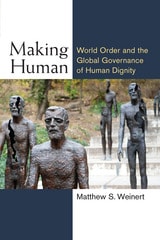
Differences between human beings have long been used to justify a range of degrading, exclusionary, and murderous practices that strip people of their humanity and dignity. While considerable scholarship has been devoted to such dehumanization, Matthew S. Weinert asks how we might conceive its reverse—humanization, or what it means to “make human.”

Weinert proposes an account of making human centered on five mechanisms: reflection, recognition, resistance, replication of dominant mores, and responsibility. Examining cases such as the UN Security Council’s engagements with crises and the International Court of Justice’s grappling with Kosovo’s unilateral declaration of independence, he illustrates the distinct and contingent ways these mechanisms have been deployed. Theoretically, the cases evince a complex, evolving relationship between state-centric and human-centric views of society, ultimately revealing the normative potentialities of both.

Though the case studies concern specific human relations issues on an international level, Weinert argues in favor of starting from the shared problem of being human and of living in a world in which the humanity of countless groups has been demeaned or denied. Working outward from that point, he proposes, we obtain a more pragmatically grounded understanding of the social construction of the human being.
[more]
cover of Mapping Crisis: Participation, Datafication and Humanitarianism in the Age of Digital Mapping

Mapping Crisis

Participation, Datafication and Humanitarianism in the Age of Digital Mapping

Edited by Doug Specht

University of London Press, 2020
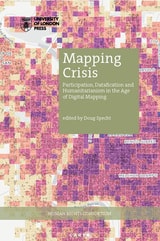
The digital age throws questions of representation, participation, and humanitarianism back to the fore, as machine learning, algorithms, and big data centers take over the process of mapping the subjugated and subaltern. Mapping Crisis questions whether it is the map itself that is in crisis. This book brings together critical perspectives on the role that mapping people, knowledges, and data now plays in humanitarian work, both in cartographic terms and through data visualizations. Since the rise of Google Earth in 2005, there has been an explosion in the use of mapping tools to quantify and assess the needs of the poor, including those affected by climate change and the wider neo-liberal agenda. Yet, while there has been a huge upsurge in the data produced around these issues, the representation of people remains questionable. Some have argued that representation has diminished as people are increasingly reduced to data points. In turn, this data has become ever more difficult to analyze without vast computing power, leading to a dependency on the old colonial powers to refine the data of the poor, before selling it back to them.
[more]
cover of Philanthropy in Democratic Societies: History, Institutions, Values

Philanthropy in Democratic Societies

History, Institutions, Values

Edited by Rob Reich, Chiara Cordelli, and Lucy Bernholz

University of Chicago Press, 2016

Philanthropy is everywhere. In 2013, in the United States alone, some $330 billion was recorded in giving, from large donations by the wealthy all the way down to informal giving circles. We tend to think of philanthropy as unequivocally good, but as the contributors to this book show, philanthropy is also an exercise of power. And like all forms of power, especially in a democratic society, it deserves scrutiny. Yet it rarely has been given serious attention. This book fills that gap, bringing together expert philosophers, sociologists, political scientists, historians, and legal scholars to ask fundamental and pressing questions about philanthropy’s role in democratic societies.
           
The contributors balance empirical and normative approaches, exploring both the roles philanthropy has actually played in societies and the roles it should play. They ask a multitude of questions: When is philanthropy good or bad for democracy? How does, and should, philanthropic power interact with expectations of equal citizenship and democratic political voice? What makes the exercise of philanthropic power legitimate? What forms of private activity in the public interest should democracy promote, and what forms should it resist? Examining these and many other topics, the contributors offer a vital assessment of philanthropy at a time when its power to affect public outcomes has never been greater. 
[more]
cover of Private Virtues, Public Vices: Philanthropy and Democratic Equality

Private Virtues, Public Vices

Philanthropy and Democratic Equality

Emma Saunders-Hastings

University of Chicago Press, 2022

 A thought-provoking challenge to our ideas about philanthropy, marking it as a deeply political activity that allows the wealthy to dictate more than we think.
 

Philanthropy plays a huge role in supporting the provision of many public goods in contemporary societies. As a result, decisions that affect public outcomes and people’s diverse interests are often dependent on the preferences and judgments of the rich. Political theorist Emma Saunders-Hastings argues that philanthropy is a deeply political activity. She asks readers to look at how the power wielded by philanthropy impacts democracy and deepens political inequality by enabling the wealthy to exercise outsize influence in public life and by putting in place paternalistic relationships between donors and their intended beneficiaries. If philanthropy is to be made compatible with a democratic society of equals, it must be judged not simply on the benefits it brings but on its wider political consequences. Timely and thought-provoking, Private Virtues, Public Vices will challenge readers’ thoughts on what philanthropy is and how it truly affects us.
 
[more]
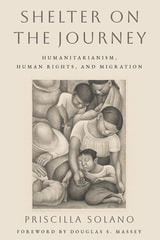
cover of Shelter on the Journey: Humanitarianism, Human Rights, and Migration

Shelter on the Journey

Humanitarianism, Human Rights, and Migration

Priscilla Solano

Temple University Press, 2024

Migration journeys are arduous, with migrants tormented by risk, abuse, threats, and xenophobia. Shelters, staffed by humanitarian workers and volunteers, provide safe spaces for those in transit. Shelter on the Journey examines how these sites, often faith-based civil society associations, create solidarity and help politicize migrants, giving them a sense of themselves as an empowered, rights-holding people.

Solano, who volunteered at shelters in Mexico, chronicles the activity in three of the nearly 100 shelters along a unique humanitarian trail that many Central Americans take to reach the United States. She outlines the constraints faced by these sites and their potential to create social transformation and considers how and why migration security is currently framed and managed as both a criminal and humanitarian issue.

Shelter on the Journey explores the politics of the shelters, their social world, and the dynamics of charity and solidarity, as well as the need for humanitarian assistance and advocacy for dignified and free transit migration.
[more]
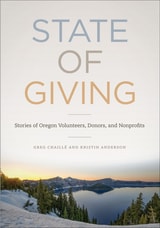
cover of State of Giving: Stories of Oregon Nonprofits, Donors, and Volunteers

State of Giving

Stories of Oregon Nonprofits, Donors, and Volunteers

Greg Chaillé

Oregon State University Press, 2015

State of Giving is at once an authoritative overview of Oregon’s toughest challenges and a
much-needed manifesto for greater civic engagement. Chaillé and Anderson highlight the crucial
role that nonprofits play as pillars of Oregon’s civic structure through their engaging profiles of
the charismatic civic leaders, grassroots organizations, donors, and volunteers who are working
to combat some of Oregon’s most enduring problems, including:

• Education Inequity
• Environmental Conservation
• Social Inequity and Discrimination
• Hunger and Homelessness
• The Urban/Rural Divide
• Arts, Culture, and Heritage Funding

Traversing the state from a remote Great Basin field station to an intercultural center in north
Portland, State of Giving shows the many faces of public engagement in people like education
activist Ron Herndon, volunteer historians Gwen Carr and Willie Richardson, and Wallowa
County philanthropist and rancher Doug McDaniel. Their stories reveal that there are ways
in which we all—regardless of wealth, location, age, or background—can give back to our
communities.

In addition to introducing Oregon’s key areas of need and demonstrating diverse pathways
into civic engagement, the book provides extensive resources for prospective volunteers and
donors. Rousing, accessible, and enlivened by photographs of its people and places, State of Giving
is an essential reference for anyone interested in building a better Oregon, starting today.

[more]
cover of The Beneficiary

The Beneficiary

Bruce Robbins

Duke University Press, 2017
From iPhones and clothing to jewelry and food, the products those of us in the developed world consume and enjoy exist only through the labor and suffering of countless others. In his new book Bruce Robbins examines the implications of this dynamic for humanitarianism and social justice. He locates the figure of the "beneficiary" in the history of humanitarian thought, which asks the prosperous to help the poor without requiring them to recognize their causal role in the creation of the abhorrent conditions they seek to remedy. Tracing how the beneficiary has manifested itself in the work of George Orwell, Virginia Woolf, Jamaica Kincaid, Naomi Klein, and others, Robbins uncovers a hidden tradition of economic cosmopolitanism. There are no easy answers to the question of how to confront systematic inequality on a global scale. But the first step, Robbins suggests, is to acknowledge that we are, in fact, beneficiaries.
[more]
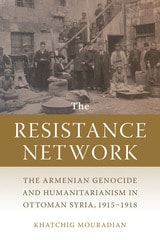
cover of The Resistance Network: The Armenian Genocide and Humanitarianism in Ottoman Syria, 1915–1918

The Resistance Network

The Armenian Genocide and Humanitarianism in Ottoman Syria, 1915–1918

Khatchig Mouradian

Michigan State University Press, 2021

The Resistance Network is the history of an underground network of humanitarians, missionaries, and diplomats in Ottoman Syria who helped save the lives of thousands during the Armenian Genocide. Khatchig Mouradian challenges depictions of Armenians as passive victims of violence and subjects of humanitarianism, demonstrating the key role they played in organizing a humanitarian resistance against the destruction of their people. Piecing together hundreds of accounts, official documents, and missionary records, Mouradian presents a social history of genocide and resistance in wartime Aleppo and a network of transit and concentration camps stretching from Bab to Ras ul-Ain and Der Zor. He ultimately argues that, despite the violent and systematic mechanisms of control and destruction in the cities, concentration camps, and massacre sites in this region, the genocide of the Armenians did not progress unhindered—unarmed resistance proved an important factor in saving countless lives.
[more]