Results by title
3 books match the query 'Hunter, Tera W.'
Labor Histories
Class, Politics, and the Working-Class ExperienceEdited by Eric Arnesen, Julie Greene, and Bruce Laurie
University of Illinois Press, 1998
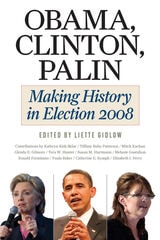
Obama, Clinton, Palin
Making History in Elections 2008Edited by Liette Gidlow
University of Illinois Press, 2011
Election 2008 made American history, but it was also the product of American history. Barack Obama, Hillary Clinton, and Sarah Palin smashed through some of the most enduring barriers to high political office, but their exceptional candidacies did not come out of nowhere. In these timely and accessible essays, a distinguished group of historians explores how the candidates both challenged and reinforced historic stereotypes of race and sex while echoing familiar themes in American politics and exploiting new digital technologies.
Contributors include Kathryn Kish Sklar on Clinton’s gender masquerade; Tiffany Ruby Patterson on the politics of black anger; Mitch Kachun on Michelle Obama and stereotypes about black women’s bodies; Glenda E. Gilmore on black women’s century of effort to expand political opportunities for African Americans; Tera W. Hunter on the lost legacy of Shirley Chisholm; Susan M. Hartmann on why the U.S. has not yet followed western democracies in electing a female head of state; Melanie Gustafson on Palin and the political traditions of the American West; Ronald Formisano on the populist resurgence in 2008; Paula Baker on how digital technologies threaten the secret ballot; Catherine E. Rymph on Palin’s distinctive brand of political feminism; and Elisabeth I. Perry on the new look of American leadership.
The Black Worker
Race, Labor, and Civil Rights Since EmancipationEdited by Eric Arnesen
University of Illinois Press, 2006
Uniting the latest scholarship on race, labor, and civil rights, The Black Worker aims to establish the richness of the African American working-class experience, and the indisputable role of black workers in shaping the politics and history of labor and race in the United States.
To capture the complexity of African Americans’ experiences in the workplace, this reader examines workers engaged in a wide array of jobs, including sharecropping, coal mining, domestic service, longshoring, automobile manufacturing, tobacco processing, railroading, prostitution, lumbering, and municipal employment. The essays’ subjects include black migration, strikebreaking, black conservatism, gender, and the multiple forms of employment discrimination in the South and North. Other contributions deal explicitly with state policy and black workers during the transition from slavery to freedom, World Wars I and II, and the 1960s.
The variety of challenges made by these workers, both quiet and overt, served as clear reminders to the supporters of white supremacy that, despite their best efforts through violence, fraud, and the law, as long as they insisted on racial inequality, the “race question” would never be fully resolved.
Contributors: Eric Arnesen, Beth Tompkins Bates, Cynthia M. Blair, Tera W. Hunter, William Powell Jones, Brian Kelly, Robert Korstad, Nelson Lichtenstein, Joseph A. McCartin, Steven A. Reich, Leslie A. Schwalm, Nan Elizabeth Woodruff