Results by title
6 books match the query 'Hurtado, Aída'
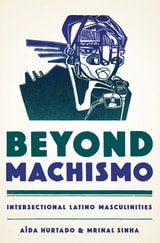
Beyond Machismo
Intersectional Latino MasculinitiesBy Aída Hurtado and Mrinal Sinha
University of Texas Press, 2016
Long considered a pervasive value of Latino cultures both south and north of the US border, machismo—a hypermasculinity that obliterates any other possible influences on men’s attitudes and behavior—is still used to define Latino men and boys in the larger social narrative. Yet a closer look reveals young, educated Latino men who are going beyond machismo to a deeper understanding of women’s experiences and a commitment to ending gender oppression. This new Latino manhood is the subject of Beyond Machismo.
Applying and expanding the concept of intersectionality developed by Chicana feminists, Aída Hurtado and Mrinal Sinha explain how the influences of race, class, ethnicity, sexuality, and gender shape Latinos’ views of manhood, masculinity, and gender issues in Latino communities and their acceptance or rejection of feminism. In particular, the authors show how encountering Chicana feminist writings in college, as well as witnessing the horrors of sexist oppression in the United States and Latin America, propels young Latino men to a feminist consciousness. By focusing on young, high-achieving Latinos, Beyond Machismo elucidates this social group’s internal diversity, thereby providing a more nuanced understanding of the processes by which Latino men can overcome structural obstacles, form coalitions across lines of difference, and contribute to movements for social justice.
Chicana/o Identity in a Changing U.S. Society
¿Quién Soy? ¿Quiénes Somos?Aída Hurtado and Patricia Gurin
University of Arizona Press, 2004
As the United States witnesses a major shift in its population—from a white majority to a country where no single group predominates—the new mix not only affects relations between ethnic groups but also influences how individuals view themselves. This book addresses the development of individual and social identity within the context of these new demographic and cultural shifts. It identifies the contemporary forces that shape group identity in order to show how Chicana/os' sense of personal identity and social identity develops and how these identities are affected by changes in social relations.
The authors, both nationally recognized experts in social psychology, are concerned with the subjective definitions individuals have about the social groups with which they identify, as well as with linguistic, cultural, and social contexts. Their analysis reveals what the majority of Chicanas/os experience, using examples from music, movies, and the arts to illustrate complex concepts. In considering ¿Quién Soy? ("Who Am I?"), they discuss how individuals develop a positive sense of who they are as Chicanas/os, with an emphasis on the influence of family, schools, and community. Regarding ¿Quiénes Somos? ("Who Are We?"), they explore Chicanas/os' different group memberships that define who they are as a people, particularly reviewing the colonization history of the American Southwest to show how Chicanas/os' group identity is influenced by this history. A chapter on "Language, Culture, and Community" looks at how Chicanas/os define their social identities inside and outside their communities, whether in the classroom, neighborhood, or region. In a final chapter, the authors speculate how Chicana/o identity will change as Chicanas/os become a significant proportion of the U.S. population and as such factors as immigration, intermarriage, and improvements in social standing influence the process of identification. At the end of each chapter is an engaging exercise that reinforces its main argument and shows how psychological approaches are applicable to real life. Chicana/o Identity in a Changing U.S. Society is an unprecedented introduction to psychological issues that students can relate to and understand. It complements other titles in the Mexican American Experience series to provide a balanced view of issues that affect Mexican Americans today.
How We Came to Be
An Intellectual Genealogy of Chicano ScholarsEdited by Teresa Córdova, Aída Hurtado, Francisco J. Hernández, Avelardo Valdez; Foreword by Juan González
University of Arizona Press, 2026
This work chronicles the lives and legacies of Chicana and Chicano scholars whose formative experiences in the Chicano Movement shaped the development of Chicano studies and transformed higher education. Originating from the Reuniónes de Colegas—gatherings of veteran scholars reflecting on their shared histories—the volume features sixteen essays organized into five thematic sections that explore the intersections of activism, scholarship, and institutional change.
The contributors document how grassroots organizing evolved into academic inquiry, leading to the creation of departments, student support systems, and policy reforms that advanced equity and representation in universities. Essays address how community-engaged research influenced urban planning, health advocacy, and cultural production, while also highlighting Indigenous and transnational epistemologies that redefined theoretical frameworks in Chicano studies. The volume concludes with reflections on academic leadership and the breaking of barriers by Chicana scholars in higher education administration.
Together, these essays offer a powerful intellectual history and a testament to a generation’s enduring commitment to social justice. How We Came to Be is both a scholarly archive and a call to action, preserving the legacy of those who built Chicano studies and inspiring future generations to continue the work of transformation within and beyond the academy.
Contributors
José Calderón
Gilberto Cárdenas
Teresa Carrillo
Teresa Córdova
Estevan Flores
Yvette G. Flores
Felipe Gonzales
Deena J. González
Francisco J. Hernández
Inés Hernández-Ávila
Francisco Hernández Vázquez
Aída Hurtado
Larry Trujillo
Avelardo Valdez
Carlos G. Vélez-Ibáñez
James Diego Vigil
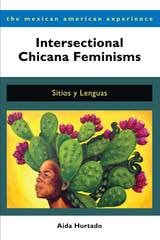
Intersectional Chicana Feminisms
Sitios y LenguasAída Hurtado
University of Arizona Press, 2020
Aída Hurtado, a leading Chicana feminist and scholar, traces the origins of Chicanas’ efforts to bring attention to the effects of gender in Chicana and Chicano studies. Highlighting the innovative and pathbreaking methodologies developed within the field of Chicana feminisms—such as testimonio, conocimiento, and autohistoria—this book offers an accessible introduction to Chicana theory, methodology, art, and activism. Hurtado also looks at the newest developments in the field and the future of Chicana feminisms.
The book includes short biographies of key Chicana feminists, additional suggested readings, and exercises with each chapter to extend opportunities for engagement in classroom and workshop settings.
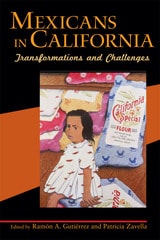
Mexicans in California
Transformations and ChallengesEdited by Ramon A. Gutierrez and Patricia Zavella
University of Illinois Press, 2008
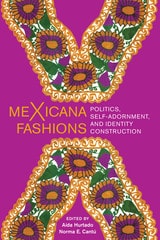
meXicana Fashions
Politics, Self-Adornment, and Identity ConstructionEdited by Aída Hurtado and Norma E. Cantú
University of Texas Press, 2020
2020 Second Place, Best Nonfiction Multi Author, International Latino Book Awards
Collecting the perspectives of scholars who reflect on their own relationships to particular garments, analyze the politics of dress, and examine the role of consumerism and entrepreneurialism in the production of creating and selling a style, meXicana Fashions examines and searches for meaning in these visible, performative aspects of identity.
Focusing primarily on Chicanas but also considering trends connected to other Latin American communities, the authors highlight specific constituencies that are defined by region (“Tejana style,” “L.A. style”), age group (“homie,” “chola”), and social class (marked by haute couture labels such as Carolina Herrera and Oscar de la Renta). The essays acknowledge the complex layers of these styles, which are not mutually exclusive but instead reflect a range of intersections in occupation, origin, personality, sexuality, and fads. Other elements include urban indigenous fashion shows, the shifting quinceañera market, “walking altars” on the Days of the Dead, plus-size clothing, huipiles in the workplace, and dressing in drag. Together, these chapters illuminate the full array of messages woven into a vibrant social fabric.