Results by title
3 books match the query 'Husserl's Phenomenology'
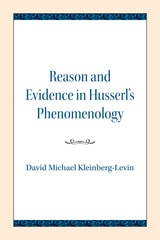
Reason and Evidence in Husserl's Phenomenology
David Michael Kleinberg-Levin
Northwestern University Press, 1970
In Reason and Evidence in Husserl's Phenomenology David Michael Kleinberg-Levin examines Husserl’s concept of necessary, a priori, and absolutely certain indubitable evidence, which he terms apodictic, and his related concept of complete evidence, which he terms adequate. To do so it explicates some of the more general relevant features of phenomenology as a whole.
[more]
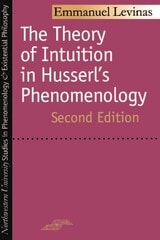
Theory of Intuition in Husserl's Phenomenology
Second EditionEmmanuel Levinas
Northwestern University Press, 1995
In this landmark study, Emmanuel Levinas discusses the aspects and function of intuition in Husserl's thought and its meaning for philosophical self-reflection. An essential, and illuminating explication of central issues in Husserl's phenomenology, it is also important as a formative work of one of this century's most distinguished philosophers.
[more]
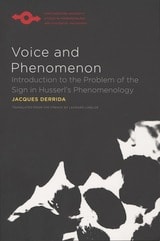
Voice and Phenomenon
Introduction to the Problem of the Sign in Husserl's PhenomenologyJacques Derrida, Translated from the French by Leonard Lawlor
Northwestern University Press, 2011
Published in 1967, when Derrida is 37 years old, Voice and Phenomenon appears at the same moment as Of Grammatology and Writing and Difference. All three books announce the new philosophical project called “deconstruction.” Although Derrida will later regret the fate of the term “deconstruction,” he will use it throughout his career to define his own thinking. While Writing and Difference collects essays written over a 10 year period on diverse figures and topics, and Of Grammatology aims its deconstruction at “the age of Rousseau,” Voice and Phenomenon shows deconstruction engaged with the most important philosophical movement of the last hundred years: phenomenology.
Only in relation to phenomenology is it possible to measure the importance of deconstruction. Only in relation to Husserl’s philosophy is it possible to understand the novelty of Derrida’s thinking. Voice and Phenomenon therefore may be the best introduction to Derrida’s thought in general. To adapt Derrida’s comment on Husserl’s Logical Investigations, it contains “the germinal structure” of Derrida’s entire thought. Lawlor’s fresh translation of Voice and Phenomenon brings new life to Derrida’s most seminal work.
Only in relation to phenomenology is it possible to measure the importance of deconstruction. Only in relation to Husserl’s philosophy is it possible to understand the novelty of Derrida’s thinking. Voice and Phenomenon therefore may be the best introduction to Derrida’s thought in general. To adapt Derrida’s comment on Husserl’s Logical Investigations, it contains “the germinal structure” of Derrida’s entire thought. Lawlor’s fresh translation of Voice and Phenomenon brings new life to Derrida’s most seminal work.
[more]