Results by title
2 books match the query 'Hydrotherapy'
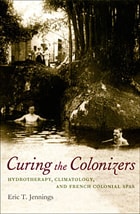
Curing the Colonizers
Hydrotherapy, Climatology, and French Colonial SpasEric T. Jennings
Duke University Press, 2006
Combining the histories of empire, leisure, tourism, culture, and medicine, Eric T. Jennings sheds new light on the workings of empire by examining the rationale and practice of French colonial hydrotherapy between 1830 and 1962. He traces colonial acclimatization theory and the development of a “science” of hydrotherapy appropriate to colonial spaces, and he chronicles and compares the histories of spas in several French colonies—Guadeloupe, Madagascar, Tunisia, and Réunion—and in France itself. Throughout Curing the Colonizers, Jennings illuminates the relationship between indigenous and French colonial therapeutic knowledge as well as the ultimate failure of the spas to make colonialism physically or morally safe for the French.
Wash and Be Healed
The Water-Cure Movement and Women's HealthSusan E. Cayleff
Temple University Press, 1991
In a century characterized by dramatic health-care remedies—bloodletting, purging, and leeching, for example—hydropathy was one of the most celebrated alternative forms of medical care. Unlike these other cures, however, hydropathy, which entailed various applications of cold water, also staunchly advocated the reformation of such personal habits as diet, exercise, dress, and way of life. Susan E. Cayleff explores the relationship between this fascinating sect of nineteenth-century medicine and the women who took the cure.
Wash and Be Healed investigates the theories, practices, medical and social philosophies, institutions, and the most prominent proponents of the water-cure movement and studies them in relation to the diverse reform networks of the nineteenth century. Documenting the popularity and importance of hydropathy among female activists, Cayleff argues that the water-cure movement was overpowered by allopathic (or orthodox) medicine which viewed hydropathy as a crackpot therapeutic largely because of its close association with nineteenth-century social activism. The book gives us an alternative view of social and sexual relationships which should contribute to the growing awareness among scholars that the history of health and healing must be more than the history of allopathic medicine.