Results by title

11 books match the query 'Hygiene'
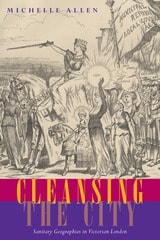
cover of Cleansing the City: Sanitary Geographies in Victorian London

Cleansing the City

Sanitary Geographies in Victorian London

Michelle Allen

Ohio University Press, 2008

Cleansing the City: Sanitary Geographies in Victorian London explores not only the challenges faced by reformers as they strove to clean up an increasingly filthy city but the resistance to their efforts. Beginning in the 1830s, reform-minded citizens, under the banner of sanitary improvement, plunged into London’s dark and dirty spaces and returned with the material they needed to promote public health legislation and magnificent projects of sanitary engineering. Sanitary reform, however, was not always met with unqualified enthusiasm. While some improvements, such as slum clearances, the development of sewerage, and the embankment of the Thames, may have made London a cleaner place to live, these projects also destroyed and reshaped the built environment, and in doing so, altered the meanings and experiences of the city.

From the novels of Charles Dickens and George Gissing to anonymous magazine articles and pamphlets, resistance to reform found expression in the nostalgic appreciation of a threatened urban landscape and anxiety about domestic autonomy in an era of networked sanitary services. Cleansing the City emphasizes the disruptions and disorientation occasioned by purification—a process we are generally inclined to see as positive. By recovering these sometimes oppositional, sometimes ambivalent responses, Michelle Allen elevates a significant undercurrent of Victorian thought into the mainstream and thus provides insight into the contested nature of sanitary modernization.
[more]
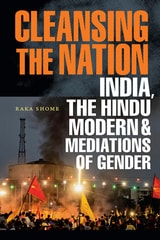
cover of Cleansing the Nation: India, the Hindu Modern, and Mediations of Gender

Cleansing the Nation

India, the Hindu Modern, and Mediations of Gender

Raka Shome

Duke University Press, 2025

In Cleansing the Nation, Raka Shome explores the logics of governmentality of contemporary Hindu nationalism in India by advancing the concept of the “Hindu modern.” Analyzing a national cleanliness program and other development projects, Shome shows how the Hindu modern—a form of national governmentality that disciplines and regulates individual subjects to create desirable “clean” citizens—inscribes Hindu nationalism in India. Focused on security, progress, and development while celebrating and protecting the figure of the upper-caste Hindu woman, the Hindu modern works toward a religious and casteist cleansing of the nation that rewrites Indian modernity as a purified and cleansed Hindu modernity. It shores up caste and religious inequalities around who is authentically Indian, reproducing historical violence against and exclusions of caste, gender, and religion, especially toward Muslims, Dalits, and Adivasis. By outlining how the Hindu modern sutures Hindu-ness to the contemporary Indian national project of modernity, Shome helps us further understand projects of national purification and cleanliness within global populist authoritarian movements.
[more]
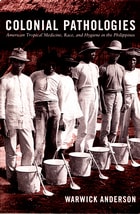
cover of Colonial Pathologies: American Tropical Medicine, Race, and Hygiene in the Philippines

Colonial Pathologies

American Tropical Medicine, Race, and Hygiene in the Philippines

Warwick Anderson

Duke University Press, 2006

Colonial Pathologies is a groundbreaking history of the role of science and medicine in the American colonization of the Philippines from 1898 through the 1930s. Warwick Anderson describes how American colonizers sought to maintain their own health and stamina in a foreign environment while exerting control over and “civilizing” a population of seven million people spread out over seven thousand islands. In the process, he traces a significant transformation in the thinking of colonial doctors and scientists about what was most threatening to the health of white colonists. During the late nineteenth century, they understood the tropical environment as the greatest danger, and they sought to help their fellow colonizers to acclimate. Later, as their attention shifted to the role of microbial pathogens, colonial scientists came to view the Filipino people as a contaminated race, and they launched public health initiatives to reform Filipinos’ personal hygiene practices and social conduct.

A vivid sense of a colonial culture characterized by an anxious and assertive white masculinity emerges from Anderson’s description of American efforts to treat and discipline allegedly errant Filipinos. His narrative encompasses a colonial obsession with native excrement, a leper colony intended to transform those considered most unclean and least socialized, and the hookworm and malaria programs implemented by the Rockefeller Foundation in the 1920s and 1930s. Throughout, Anderson is attentive to the circulation of intertwined ideas about race, science, and medicine. He points to colonial public health in the Philippines as a key influence on the subsequent development of military medicine and industrial hygiene, U.S. urban health services, and racialized development regimes in other parts of the world.
[more]
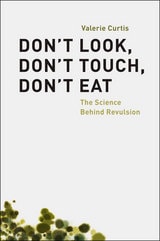
cover of Don't Look, Don't Touch, Don't Eat: The Science Behind Revulsion

Don't Look, Don't Touch, Don't Eat

The Science Behind Revulsion

Valerie Curtis

University of Chicago Press, 2013

Every flu season, sneezing, coughing, and graphic throat-clearing become the day-to-day background noise in every workplace. And coworkers tend to move as far—and as quickly—away from the source of these bodily eruptions as possible. Instinctively, humans recoil from objects that they view as dirty and even struggle to overcome feelings of discomfort once the offending item has been cleaned. These reactions are universal, and although there are cultural and individual variations, by and large we are all disgusted by the same things.
            In Don’t Look, Don’t Touch, Don’t Eat, Valerie Curtis builds a strong case for disgust as a “shadow emotion”—less familiar than love or sadness, it nevertheless affects our day-to-day lives. In disgust, biological and sociocultural factors meet in dynamic ways to shape human and animal behavior. Curtis traces the evolutionary role of disgust in disease prevention and hygiene, but also shows that it is much more than a biological mechanism. Human social norms, from good manners to moral behavior, are deeply rooted in our sense of disgust. The disgust reaction informs both our political opinions and our darkest tendencies, such as misogyny and racism. Through a deeper understanding of disgust, Curtis argues, we can take this ubiquitous human emotion and direct it towards useful ends, from combating prejudice to reducing disease in the poorest parts of the world by raising standards of hygiene.
            Don’t Look, Don’t Touch, Don’t Eat reveals disgust to be a vital part of what it means to be human and explores how this deep-seated response can be harnessed to improve the world.  
[more]
cover of Empires of Hygiene, Volume 6

Empires of Hygiene, Volume 6

Judith Farquhar and Marta E. Hanson, eds.

Duke University Press, 0

Applying critical research on healing and the body to Asian studies, the articles in Empires of Hygiene challenges assumptions about the universality of medical truth. This special issue of positions investigates how medicine, the craft of healing, also acts as a sort of hygiene—a disciplinary agent against the unruly forces of nature and culture. Assuming the complicity of scientific medical practice with forms of domination and exclusion, the contributors not only demonstrate how medicine has been used as a tool of empire but also the ways in which events and institutions have literally transformed bodily life in Asia.
Featuring a variety of topics and methods, essays in Empires of Hygiene compare the disease that is physically suffered to that which is scientifically classified and identified as a social problem. Diseases such as leprosy and STDs, which have biomedical identities in Western settings but in Asia emerge as inseparable from certain colonial regimes, are examined. Spermatorrhea—a disease that compromises the male body’s ability to reproduce—is discussed in relation to the disarray of the Chinese Republic during the mid-twentieth century. The collection also addresses imperial themes of prewar Japan in the literary works of Mori Rintaro and Shimazaki Tison.

Contributors. Warwick Anderson, Michael Bourdaghs, Judith Farquhar, Marta Hanson, Thomas LaMarre, Philippa Levine, Hugh Shapiro, Nathan Sivin
[more]
cover of Health and Hygiene in Chinese East Asia: Policies and Publics in the Long Twentieth Century

Health and Hygiene in Chinese East Asia

Policies and Publics in the Long Twentieth Century

Angela Ki Che Leung and Charlotte Furth, eds.

Duke University Press, 2010

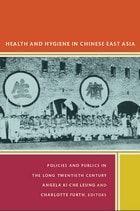
This collection expands the history of colonial medicine and public health by exploring efforts to overcome disease and improve human health in Chinese regions of East Asia from the late nineteenth century to the present. The contributors consider the science and politics of public health policymaking and implementation in Taiwan, Manchuria, Hong Kong, and the Yangzi River delta, focusing mostly on towns and villages rather than cities. Whether discussing the resistance of lay midwives in colonial Taiwan to the Japanese campaign to replace them with experts in “scientific motherhood” or the reaction of British colonists in Shanghai to Chinese diet and health regimes, they illuminate the effects of foreign interventions and influences on particular situations and localities. They discuss responses to epidemics from the plague in early-twentieth-century Manchuria to SARS in southern China, Singapore, and Taiwan, but they also emphasize that public health is not just about epidemic crises. As essays on marsh drainage in Taiwan, the enforcement of sanitary ordinances in Shanghai, and vaccination drives in Manchuria show, throughout the twentieth century public health bureaucracies have primarily been engaged in the mundane activities of education, prevention, and monitoring.

Contributors. Warwick Anderson, Charlotte Furth, Marta E. Hanson, Sean Hsiang-lin Lei, Angela Ki Che Leung, Shang-Jen Li, Yushang Li, Yi-Ping Lin, Shiyung Liu, Ruth Rogaski, Yen-Fen Tseng, Chia-ling Wu, Xinzhong Yu
[more]
cover of Health, Hygiene and Eugenics in Southeastern Europe to 1945

Health, Hygiene and Eugenics in Southeastern Europe to 1945

Christian Promitzer

Central European University Press, 2011

This volume is a collection of chapters that deal with issues of health, hygiene and eugenics in Southeastern Europe to 1945, specifically, in Bosnia-Herzegovina, Bulgaria, Croatia, Greece and Romania. Its major concern is to examine the transfer of medical ideas to society via local, national and international agencies and to show in how far developments in public health, preventive medicine, social hygiene, welfare, gender relations and eugenics followed a regional pattern. This volume provides insights into a region that has to date been marginal to scholarship of the social history of medicine.
[more]
cover of The Body Soviet: Propaganda, Hygiene, and the Revolutionary State

The Body Soviet

Propaganda, Hygiene, and the Revolutionary State

Tricia Starks

University of Wisconsin Press, 2008

In 1918 the People's Commissariat of Public Health began a quest to protect the health of all Soviet citizens, but health became more than a political platform or a tactical decision. The Soviets defined and categorized the world by interpreting political orthodoxy and citizenship in terms of hygiene. The assumed political, social, and cultural benefits of a regulated, healthy lifestyle informed the construction of Soviet institutions and identity. Cleanliness developed into a political statement that extended from domestic maintenance to leisure choices and revealed gender, ethnic, and class prejudices. Dirt denoted the past and poor politics; health and cleanliness signified mental acuity, political orthodoxy, and modernity.

Health, though essential to the revolutionary vision and crucial to Soviet plans for utopia, has been neglected by traditional histories caught up in Cold War debates. The Body Soviet recovers this significant aspect of Soviet thought by providing a cross-disciplinary, comparative history of Soviet health programs that draws upon rich sources of health care propaganda, including posters, plays, museum displays, films, and mock trials. The analysis of propaganda makes The Body Soviet more than an institutional history; it is also an insightful critique of the ideologies of the body fabricated by health organizations.

"A masterpiece that will thoroughly fascinate and delight readers. Starks's understanding of propaganda and hygiene in the early Soviet state is second to none. She tells the stories of Soviet efforts in this field with tremendous insight and ingenuity, providing a rich picture of Soviet life as it was actually lived."— Elizabeth Wood, author of From Baba to Comrade: Gender and Politics in Revolutionary Russia
[more]
cover of The Cult of Health and Beauty in Germany: A Social History, 1890-1930

The Cult of Health and Beauty in Germany

A Social History, 1890-1930

Michael Hau

University of Chicago Press, 2003

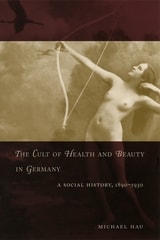
From the 1890s to the 1930s, a growing number of Germans began to scrutinize and discipline their bodies in a utopian search for perfect health and beauty. Some became vegetarians, nudists, or bodybuilders, while others turned to alternative medicine or eugenics. In The Cult of Health and Beauty in Germany, Michael Hau demonstrates why so many men and women were drawn to these life reform movements and examines their tremendous impact on German society and medicine.

Hau argues that the obsession with personal health and fitness was often rooted in anxieties over professional and economic success, as well as fears that modern industrialized civilization was causing Germany and its people to degenerate. He also examines how different social groups gave different meanings to the same hygienic practices and aesthetic ideals. What results is a penetrating look at class formation in pre-Nazi Germany that will interest historians of Europe and medicine and scholars of culture and gender.
[more]
cover of The Hand Book: Surviving in a Germ-Filled World

The Hand Book

Surviving in a Germ-Filled World

Miryam Z. Wahrman

Brandeis University Press, 2016

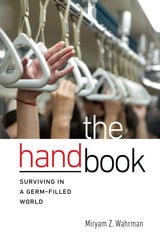
Handwashing, as part of basic hygiene, is a no-brainer. Whenever there’s an outbreak of a contagious disease, we are advised that the first line of defense is proper handwashing. Nonetheless, many people, including healthcare workers, ignore this advice and routinely fail to wash their hands. Those who neglect to follow proper handwashing protocols put us at risk for serious disease—and even death. In this well-researched book, Wahrman discusses the microbes that live among us, both benign and malevolent. She looks at how ancient cultures dealt with disease and hygiene and how scientific developments led to the germ theory, which laid the foundation for modern hygiene. She investigates hand hygiene in clinical settings, where lapses by medical professionals can lead to serious, even deadly, complications. She explains how microbes found on environmental surfaces can transmit disease and offers strategies to decrease transmission from person to person. The book's final chapter explores initiatives for grappling with ever more complex microbial issues, such as drug resistance and the dangers of residing in an interconnected world, and presents practical advice for hand hygiene and reducing infection. With chapters that conclude with handy reference lists, The Hand Book serves as a road map to safer hands and better hygiene and health. It is essential reading for the general public, healthcare professionals, educators, parents, community leaders, and politicians.
[more]
cover of The Sanitary Arts: Aesthetic Culture and the Victorian Cleanliness Campaigns

The Sanitary Arts

Aesthetic Culture and the Victorian Cleanliness Campaigns

Eileen Cleere

The Ohio State University Press, 2014

Eileen Cleere argues in this interdisciplinary study that mid-century discoveries about hygiene and cleanliness not only influenced public health, civic planning, and medical practice but also powerfully reshaped the aesthetic values of the British middle class. By focusing on paintings, domestic architecture, and interior design, The Sanitary Arts: Aesthetic Culture and the Victorian Cleanliness Campaigns shows that the “sanitary aesthetic” significantly transformed the taste of the British public over the nineteenth century by equating robust health and cleanliness with new definitions of beauty and new experiences of aisthesis. Covering everything from connoisseurs to custodians, Cleere demonstrates that Victorian art critics, engineers, and architects—and even novelists from George Eliot to Charles Dickens, Charlotte Mary Young to Sarah Grand—all participated in a vital cultural debate over hygiene, cleanliness, and aesthetic enlightenment.
 
The Sanitary Arts covers the mid-forties controversy over cleaning the dirt from the pictures in the National Gallery, the debate over decorative “dust traps” in the overstuffed Victorian home, and the late-century proliferation of hygienic breeding principles as a program of aesthetic perfectibility, to demonstrate the unintentionally collaborative work of seemingly unrelated events and discourses. Bringing figures like Edwin Chadwick and John Ruskin into close conversation about the sanitary status of beauty in a variety of forms and environments, Cleere forcefully demonstrates that aesthetic development and scientific discovery can no longer be understood as separate or discrete forces of cultural change.
[more]