Results by title

10 books match the query 'Hymns, English'
cover of Folk Songs from the West Virginia Hills

Folk Songs from the West Virginia Hills

PATRICK W. GAINER

West Virginia University Press, 2017

First published in 1975 and long out of print, Folk Songs from the West Virginia Hills is a major work of folklore poised to reach a new generation of readers. Drawing upon Patrick Ward Gainer’s extensive ethnographic fieldwork around West Virginia, it contains dozens of significant folk songs, including not only the internationally famous “Child Ballads,” but such distinctively West Virginian songs as “The West Virginia Farmer” and “John Hardy,” among others.
 
Folk Songs from the West Virginia Hills stands out as a book with multiple audiences. As a musical text, it offers comparatively easy access to a rich variety of folk songs that could provide a new repertoire for Appalachian singers. As an ethnographic text, it has the potential to reintroduce significant data about the musical lives of many West Virginians into conversations around Appalachian music—discourses that are being radically reshaped by scholars working in folklore, ethnomusicology, and Appalachian studies. As a historical document, it gives readers a glimpse into the research methods commonly practiced by mid-twentieth-century folklorists. And when read in conjunction with John Harrington Cox’s Folk Songs of the South (also available from WVU Press), it sheds important light on the significant role that West Virginia University has played in documenting the state’s vernacular traditions.
 
[more]
cover of Millennial Praises: A Shaker Hymnal

Millennial Praises

A Shaker Hymnal

Christian Goodwillie

University of Massachusetts Press, 2009
From the very beginning in the 1770s, singing was an important part of the worship services of the Shakers, formally known as the United Society of Believers in Christ's Second Appearing. Yet until the early nineteenth century, nearly all Shaker songs were wordless—expressed in unknown tongues or as enthusiastic vocalizations. Only when Shaker missionaries moved west into Ohio and Kentucky did they begin composing hymn texts, chiefly as a means of conveying the sect's unconventional religious ideas to new converts. In 1812–13, the Shakers published their first hymnal. This venture, titled Millennial Praises, included the texts without music for one hundred and forty hymns and elucidated the radical and feminist theology of the Shakers, neatly distilled in verse. This scholarly edition of the hymnal joins the texts to original Shaker tunes for the first time. One hundred and twenty-six of the tunes preserved in the Society's manuscript hymnals have been transcribed from Shaker musical notation into modern standard notation, thus opening this important religious and folk repertoire to modern scholars. Many texts are presented with a wide range of variant tunes from Shaker communities in New England, New York, Ohio, and Kentucky. Introductory essays by volume editors Christian Goodwillie and Jane F. Crosthwaite place Millennial Praises in the context of Shaker history and offer a thorough explication of the Society's theology. They track the use of the hymnal from the point of publication up to the present day, beginning with the use of the hymns by both Shaker missionaries and anti-Shaker apostates and ending with the current use of the hymns by the last remaining Shaker family at Sabbathday Lake, Maine. The volume includes a CD of historical recordings of six Shaker songs by Brother Ricardo Belden, the last member of the Society at Hancock Shaker Village.
[more]
cover of Music and the Wesleys

Music and the Wesleys

Edited by Nicholas Temperley and Stephen Banfield

University of Illinois Press, 2010
Providing new insight into the Wesley family, the fundamental importance of music in the development of Methodism, and the history of art music in Britain, Music and the Wesleys examines more than 150 years of a rich music-making tradition in England. John Wesley and his brother Charles, founders of the Methodist movement, considered music to be a vital part of religion, while Charles's sons Charles and Samuel and grandson Samuel Sebastian were among the most important English composers of their time.
 
This book explores the conflicts faced by the Wesleys but also celebrates their triumphs: John's determination to elevate the singing of his flock; the poetry of Charles's hymns and their musical treatment in both Britain and America; the controversial family concerts by which Charles launched his sons on their careers; the prolific output of Charles the younger; Samuel's range and rugged individuality as a composer; the oracular boldness of Sebastian's religious music and its reception around the English-speaking world. Exploring British concert life, sacred music forms, and hymnology, the contributors analyze the political, cultural, and social history of the Wesleys' enormous influence on English culture and religious practices.
 
Contributors are Stephen Banfield, Jonathan Barry, Martin V. Clarke, Sally Drage, Peter S. Forsaith, Peter Holman, Peter Horton, Robin A. Leaver, Alyson McLamore, Geoffrey C. Moore, John Nightingale, Philip Olleson, Nicholas Temperley, J. R. Watson, Anne Bagnall Yardley, and Carlton R. Young.
[more]
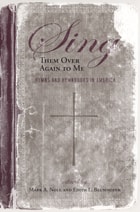
cover of Sing Them Over Again to Me: Hymns and Hymnbooks in America

Sing Them Over Again to Me

Hymns and Hymnbooks in America

Edited by Mark A. Noll and Edith L. Blumhofer

University of Alabama Press, 2006

Hymns and hymnbooks as American historical and cultural icons.

This work is a study of the importance of Protestant hymns in defining America and American religion. It explores the underappreciated influence of hymns in shaping many spheres of personal and corporate life as well as the value of hymns for studying religious life. Distinguishing features of this volume are studies of the most popular hymns (“Amazing Grace,” “O, For a Thousand Tongues to Sing,” “All Hail the Power of Jesus’ Name”), with attention to the ability of such hymns to reveal, as they are altered and adapted, shifts in American popular religion. The book also focuses attention on the role hymns play in changing attitudes about race, class, gender, economic life, politics, and society.
[more]
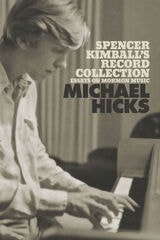
cover of Spencer Kimball's Record Collection: Essays on Mormon Music

Spencer Kimball's Record Collection

Essays on Mormon Music

Michael Hicks

Signature Books, 2020

At times jubilant, at times elegiac, this set of ten essays by music historian Michael Hicks navigates topics that range from the inner musical life of Joseph Smith to the Mormon love of blackface musicals, from endless wrangling over hymnbooks to the compiling of Mormon folk and exotica albums in the 1960s.  It also offers a brief memoir of what happened to LDS Church President Spencer Kimball’s record collection and a lengthy, brooding piece on the elegant strife it takes to write about Mormon musical history in the first place.  There are surprises and provocations, of course, alongside judicious sifting of sources and weighing of evidence. The prose is fresh, the research smart, and the result a welcome mixture of the careful and the carefree from Mormonism’s best-known scholar of musical life.
[more]
cover of The Cashaway Psalmody: Transatlantic Religion and Music in Colonial Carolina

The Cashaway Psalmody

Transatlantic Religion and Music in Colonial Carolina

Stephen A. Marini

University of Illinois Press, 2019

Singing master Durham Hills created The Cashaway Psalmody to give as a wedding present in 1770. A collection of tenor melody parts for 152 tunes and sixty-three texts, the Psalmody is the only surviving tunebook from the colonial-era South and one of the oldest sacred music manuscripts from the Carolinas. It is all the more remarkable for its sophistication: no similar document of the period matches Hills's level of musical expertise, reportorial reach, and calligraphic skill.

Stephen A. Marini, discoverer of The Cashaway Psalmody, offers the fascinating story of the tunebook and its many meanings. From its musical, literary, and religious origins in England, he moves on to the life of Durham Hills; how Carolina communities used the book; and the Psalmody's significance in understanding how ritual song—transmitted via transatlantic music, lyrics, and sacred singing—shaped the era's development. Marini also uses close musical and textual analyses to provide a critical study that offers music historians and musicologists valuable insights on the Pslamody and its period.

Meticulous in presentation and interdisciplinary in scope, The Cashaway Psalmody unlocks an important source for understanding life in the Lower South in the eighteenth century.

[more]
cover of The Complete Works of Robert Browning, Volume IX: With Variant Readings and Annotations

The Complete Works of Robert Browning, Volume IX

With Variant Readings and Annotations

Robert Browning

Ohio University Press, 1990
In seventeen volumes, copublished with Baylor University, this acclaimed series features annotated texts of all of Robert Browning’s known writing. The series encompasses autobiography as well as influences bearing on Browning’s life and career and aspects of Victorian thought and culture.
[more]
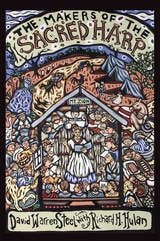
cover of The Makers of the Sacred Harp

The Makers of the Sacred Harp

David Warren Steel with Richard H. Hulan

University of Illinois Press, 2010
This authoritative reference work investigates the roots of the Sacred Harp, the central collection of the deeply influential and long-lived southern tradition of shape-note singing. Where other studies of the Sacred Harp have focused on the sociology of present-day singers and their activities, David Warren Steel and Richard H. Hulan concentrate on the regional culture that produced the Sacred Harp in the nineteenth century and delve deeply into history of its authors and composers. They trace the sources of every tune and text in the Sacred Harp, from the work of B. F. White, E. J. King, and their west Georgia contemporaries who helped compile the original collection in 1844 to the contributions by various composers to the 1936 to 1991 editions.
 
The Makers of the Sacred Harp also includes analyses of the textual influences on the music--including metrical psalmody, English evangelical poets, American frontier preachers, camp meeting hymnody, and revival choruses--and essays placing the Sacred Harp as a product of the antebellum period with roots in religious revivalism. Drawing on census reports, local histories, family Bibles and other records, rich oral interviews with descendants, and Sacred Harp Publishing Company records, this volume reveals new details and insights about the history of this enduring American musical tradition.
[more]
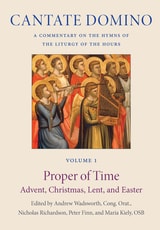
cover of The Proper of Time: Advent, Christmas, Lent, and Easter, Volume 1

The Proper of Time

Advent, Christmas, Lent, and Easter, Volume 1

Andrew Wadsworth

Catholic University of America Press, 2024
Cantate Domino is a five-volume commentary on the texts of the newly translated hymns of the Liturgy of the Hours. The hymns which recently appeared for the first time as a single corpus of English texts, will be included in the forthcoming USCCB revised edition of the Liturgy of the Hours. The hymns are drawn from among the very finest authors of the first millennium: Ambrose, Prudentius, and Gregory the Great together with later authors such as Thomas Aquinas, Leo XIII, and twentieth century authors who composed new hymns to be used in the psalter and celebration of the saints in the present Universal Calendar. The commentary concentrates on the Latin texts of the Liturgia Horarum, elucidated by the recently approved International Commission on English in the Liturgy (ICEL) translations. Commentaries have been prepared by a team of international scholars who bring both the depth of their knowledge together with the insights of those who have prepared liturgical texts in English during the sixty years of ICEL's existence. Previously unpublished material from ICEL's archives, including documents of the Consilium, which prepared the Latin texts for the liturgical books promulgated after the Second Vatican Council, will appear alongside commentaries which identify and explain biblical, classical, and liturgical allusions in the liturgical texts in a way that is of service to clergy, religious, liturgists, and students of the liturgy as well as the non-specialist reader, and all who seek to pray the Prayer of the Church with greater understanding.
[more]
cover of The Story of the Sacred Harp, 1844-1944

The Story of the Sacred Harp, 1844-1944

George Pullen Jackson

Vanderbilt University Press, 1944

The Sacred Harp is the most famous of the shape-note hymnals, a collection of over five hundred four-part a cappella hymns dating back over a hundred and fifty years. Shape-note singing itself is seeing a resurgence in popularity with sings being organized all over the country. And yet, George Pullen Jackson's groundbreaking history of the first hundred years of the hymnal has been out of print and hard to come by for decades. But now, The Story of the Sacred Harp, 1844-1944 is back in print and available for music lovers, historians, and librarians alike.
[more]