Results by title
5 books match the query 'Iconography'
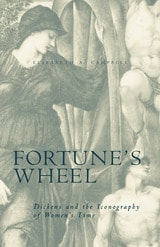
Fortune’s Wheel
Dickens and the Iconography of Women’s TimeElizabeth A. Campbell
Ohio University Press, 2003
In the first half of the nineteenth century, England became quite literally a world on wheels. The sweeping technological changes wrought by the railways, steam-powered factory engines, and progressively more sophisticated wheeled conveyances of all types produced a corresponding revolution in Victorian iconography: the image of the wheel emerged as a dominant trope for power, modernity, and progress.
In Fortune’s Wheel, an original and illuminating study, Elizabeth Campbell explores the ways in which Charles Dickens appropriated and made central to his novels the dominant symbol of his age. Between 1840 and 1860, a transformation took place in Dickens’ thinking about gender and time, and this revolution is recorded in iconographic representations of the goddess Fortune and wheel imagery that appear in his work.
Drawing on a rich history of both literary and visual representations of Fortune, Professor Campbell argues that Dickens’ contribution to both the iconographic and narrative traditions was to fuse the classical image of the wheel with the industrial one. As the wheel was increasingly identified as the official Victorian symbol for British industrial and economic progress, Dickens reacted by employing this icon to figure a more pessimistic historical vision—as the tragic symbol for human fate in the nineteenth century.
Fortune’s Wheel ably portrays the concept that, in both text and illustrations, images of fortune and the wheel in Dickens’ work record his abandonment of a linear, progressive, and arguably masculine view of history to embrace a cyclical model that has been identified with “women’s time.”

Gerard de Lairesse and his Painted Heavens
Iconography, Style and Technique in the Art of Ceiling PaintingMargriet van Eikema Hommes
Amsterdam University Press, 2026
In this book, Margriet van Eikema Hommes, in search of an explanation for this ceiling painting’s intriguing origins, investigates its meaning and purpose. The painter and his patron prove to have been jointly responsible for the iconography, which they repeatedly updated to reflect military and political events in the Disaster Year and the dramatic twists of fate in De Graeff’s own life.
This beautifully illustrated book not only situates the work within its cultural and historical context but also offers an in-depth examination of Lairesse’s painting technique and the way he meticulously designed his ceiling pieces in close dialogue with the architecture of the room.
Gerard de Lairesse and his Painted Heavens
Iconography, Style and Technique in the Art of Ceiling PaintingLynne Richards
Amsterdam University Press, 2027
In this book, Margriet van Eikema Hommes, in search of an explanation for this ceiling painting’s intriguing origins, investigates its meaning and purpose. The painter and his patron prove to have been jointly responsible for the iconography, which they repeatedly updated to reflect military and political events in the Disaster Year and the dramatic twists of fate in De Graeff’s own life.
This beautifully illustrated book not only situates the work within its cultural and historical context but also offers an in-depth examination of Lairesse’s painting technique and the way he meticulously designed his ceiling pieces in close dialogue with the architecture of the room.
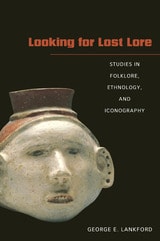
Looking for Lost Lore
Studies in Folklore, Ethnology, and IconographyGeorge E. Lankford
University of Alabama Press, 2008
The Codrus Painter
Iconography and Reception of Athenian Vases in the Age of PericlesAmalia Avramidou
University of Wisconsin Press, 2011
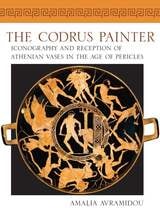
The Codrus Painter was a painter of cups and vases in fifth-century B.C.E. Athens with a distinctive style; he is named after Codrus, a legendary Athenian king depicted on one of his most characteristic vases. He was active as an artist during the rule of Pericles, as the Parthenon was built and then as the troubled times of the Peloponnesian War began. In contrast to the work of fellow artists of his day, the vases of the Codrus Painter appear to have been created almost exclusively for export to markets outside Athens and Greece, especially to the Etruscans in central Italy and to points further west.
Amalia Avramidou offers a thoroughly researched, amply illustrated study of the Codrus Painter that also comments on the mythology, religion, arts, athletics, and daily life of Greece depicted on his vases. She evaluates his style and the defining characteristics of his own hand and of the minor painters associated with him. Examining the subject matter, figure types, and motifs on the vases, she compares them with sculptural works produced during the same period. Avramidou’s iconographic analysis not only encompasses the cultural milieu of the Athenian metropolis, but also offers an original and intriguing perspective on the adoption, meaning, and use of imported Attic vases among the Etruscans.