Results by title
8 books match the query 'Icons'
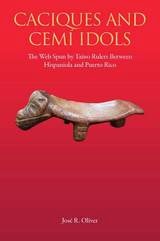
Caciques and Cemi Idols
The Web Spun by Taino Rulers Between Hispaniola and Puerto RicoJose R Oliver
University of Alabama Press, 2009
Cemís are both portable artifacts and embodiments of persons or spirit, which the Taínos and other natives of the Greater Antilles (ca. AD 1000-1550) regarded as numinous beings with supernatural or magic powers. This volume takes a close look at the relationship between humans and other (non-human) beings that are imbued with cemí power, specifically within the Taíno inter-island cultural sphere encompassing Puerto Rico and Hispaniola. The relationships address the important questions of identity and personhood of the cemí icons and their human “owners” and the implications of cemí gift-giving and gift-taking that sustains a complex web of relationships between caciques (chiefs) of Puerto Rico and Hispaniola.
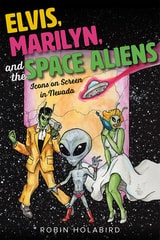
Elvis, Marilyn, and the Space Aliens
Icons on Screen in NevadaRobin Holabird
University of Nevada Press, 2017
Elvis Presley, Marilyn Monroe, and space aliens like the Transformers share a surprising connection along with James Bond, Indiana Jones, and Rocky Balboa. These beloved icons played active roles in movie and television projects set in the state of Nevada. Long time state film commissioner and movie reviewer Holabird explores the blending of icons and Nevada, along with her personal experiences of watching movies, talking with famous people, and showing off a diverse range of stunning and iconic locations like Las Vegas, Reno, Lake Tahoe, and Area 51.
Holabird shows how Nevada’s flash, flair, and fostering of the forbidden provided magic for singers, sexpots, and strange creatures from other worlds. She also gives readers an insider’s look into moviemaking in Nevada by drawing on her extensive experience as a film commissioner. This is a unique take on film history and culture, and Holabird explores eighteen film genres populated by one-of-a-kind characters with ties to Nevada. Along with being a film history of the state of Nevada written by a consummate insider, the book is a fun mixture of research, personal experiences, and analysis about how Nevada became the location of choice for a broad spectrum of well-known films and characters.
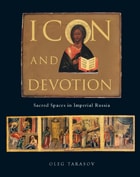
Icon and Devotion
Sacred Spaces in Imperial RussiaOleg Tarasov
Reaktion Books, 2002
By tracing the artistic vocabulary, techniques and working methods of icon painters, Tarasov shows how icons have been integral to the history of Russian art, influenced by folk and mainstream currents alike. As well as articulating the specifically Russian piety they invoke, he analyzes the significance of icons in the cultural life of modern Russia in the context of popular prints and poster design.
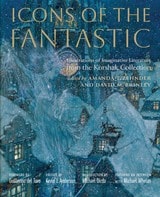
Icons of the Fantastic
Illustrations of Imaginative Literature from The Korshak CollectionAmanda T. Zehnder
University of Delaware Press, 2025
Winner of the 2026 PIA MidAmerica GraphEx Award for Best of Category, Hardcover Book Binding
Finalist for the 2026 Locus Awards in the Illustrated and Art Books category
"The Korshak Collection is a portrait and biography of a man and his family, who once looked upon the dark skies and saw Immortals, gods hunting in the storm clouds. Stephen Korshak decided to dedicate his life to tell us all how the thunder sounded and preserve the outlines of the cosmos for the awe of us all. Enjoy, believe—be amazed." —Guillermo del Toro, from the Foreword
Icons of the Fantastic: Illustrations of Imaginative Literature from the Korshak Collection features artwork by pioneering artists from over 160 years of published works of science fiction and fantasy. The illustrations in the collection appeared on the covers of timeless novels such as the Tarzan series by Edgar Rice Burroughs and classic pulp magazines from the 1930s through 1960s, such as Amazing Stories and Weird Tales. They accompany images of mischievous satyrs, ethereal mermaids, and spell-casting witches for texts ranging from The Tempest, Don Quixote, and Alice's Adventures in Wonderland to works by Edgar Allan Poe and H. G. Wells. Alongside essays about famous illustrators such as Arthur Rackham and Aubrey Beardsley, contributors engage in a critical reassessment of understudied artists such as José Segrelles, Wladyslaw Benda, Margaret Brundage, and Hannes Bok. The book includes a foreword by Guillermo del Toro, a preface by Kevin J. Anderson, an introduction by Michael Dirda, and an interview with renowned contemporary illustration artist Michael Whelan.

Icons of the Left
Benjamin and Eisenstein, Picasso and Kafka after the Fall of CommunismOtto Karl Werckmeister
University of Chicago Press, 1999
Focusing on some of the most celebrated instances of traditional "Western Marxism," Werckmeister shows how such "icons of the Left" have been progressively detached from their political roots in communist activism to the safe distance of utopian or revolutionary speculations. He assesses some recent critiques of "Western Marxism" in popular culture such as Soderbergh's film Kafka, pointing out the historic fallacies that underlie such wholesale repudiations. With this analysis, Werckmeister seeks to clear the ground for a coherent cultural policy of the Left that responds to the continuing crisis of society.

Likeness and Presence
A History of the Image before the Era of ArtHans Belting
University of Chicago Press, 1993
Likeness and Presence looks at the beliefs, superstitions, hopes, and fears that come into play as people handle and respond to sacred
images, and presents a compelling interpretation of the place of the image in Western history.
"A rarity within its genre—an art-historical analysis of iconography which is itself iconoclastic. . . . One of the most intellectually exciting and historically grounded interpretations of Christian iconography." —Graham Howes, Times Literary Supplement
"Likeness and Presence offers the best source to survey the facts of what European Christians put in their churches. . . . An impressively detailed contextual analysis of medieval objects." —Robin Cormack, New York Times Book Review
"I cannot begin to describe the richness or the imaginative grandeur of Hans Belting's book. . . . It is a work that anyone interested in art, or in the history of thought about art, should regard as urgent reading. It is a tremendous achievement."—Arthur C. Danto, New Republic
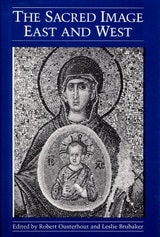
The Sacred Image East and West
Edited by Robert Ousterhout and Leslie Brubaker
University of Illinois Press, 1995
The Technology of Journalism
Cultural Agents, Cultural IconsPatricia L. Dooley
Northwestern University Press, 2007
From the printing press to the telegraph to the camera and beyond, technology has always been tied closely to journalism. In The Technology of Journalism, Patricia L. Dooley proposes a history of news that heeds the social and cultural environments in which both technology and the press emerge and exist.
By placing this history solidly in its cultural context, Dooley can explore the effects of shifts in social, economic, and political systems and the impact of war. One such development with far reaching implications was Matthew Brady’s use of photography during the Civil War. Growth or decline in readership can also influence technological changes in journalism; most recently, the shift toward digital and Web-based journalism has reshaped the press.
Finally, Dooley assesses the legacy and future of print, deciding what happens to print journalism—and all forms of reportage—will depend on the willingness of industry leaders to innovate in ways that will help them connect, through their reporting, to Americans of all ages and walks of life.